
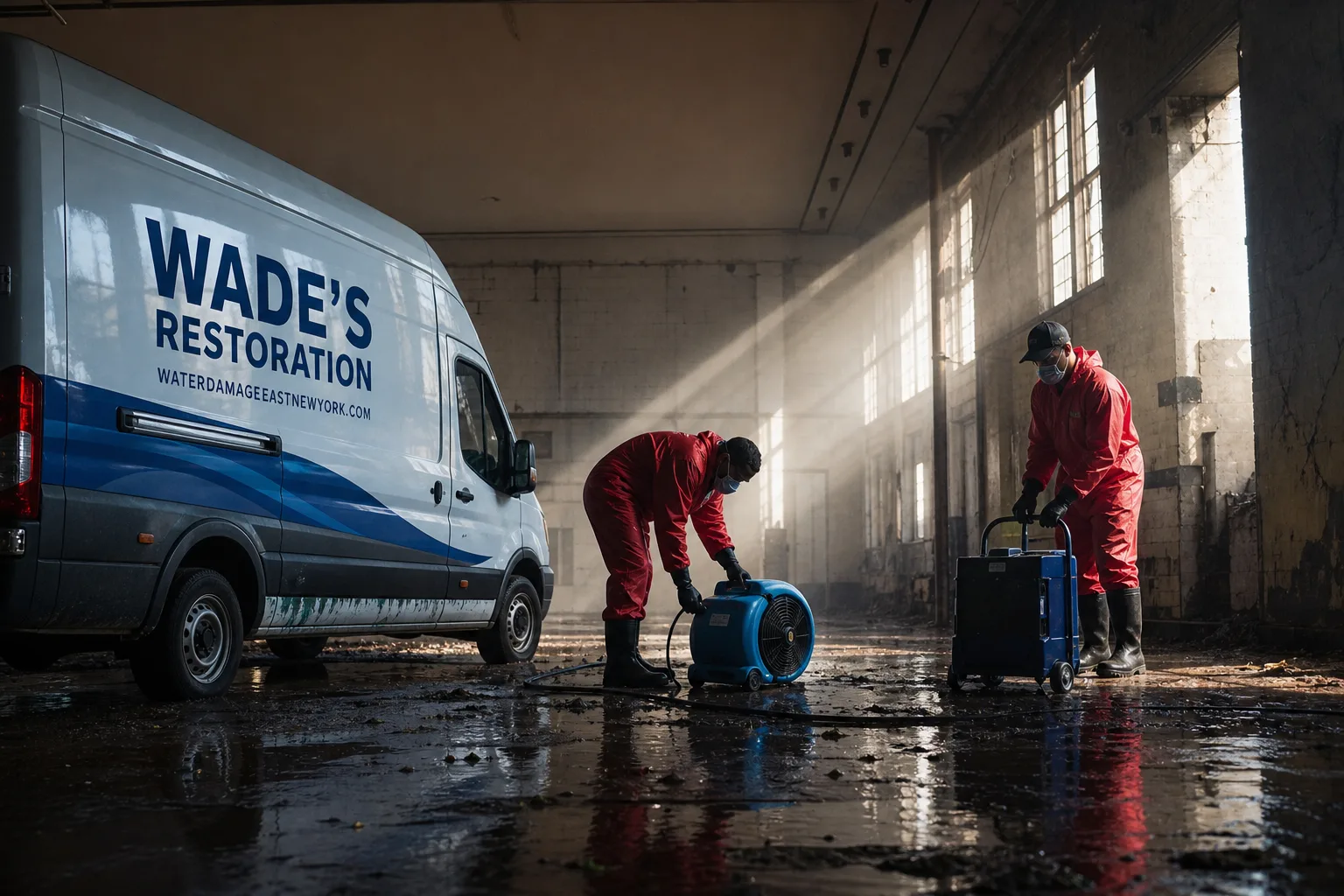
Free visual inspection and a written scope of work before any mitigation begins - photos, moisture readings, and drying logs go in your claim file
The scope we write is the scope we bill. Anything new gets shown to you, in writing, before we touch it.
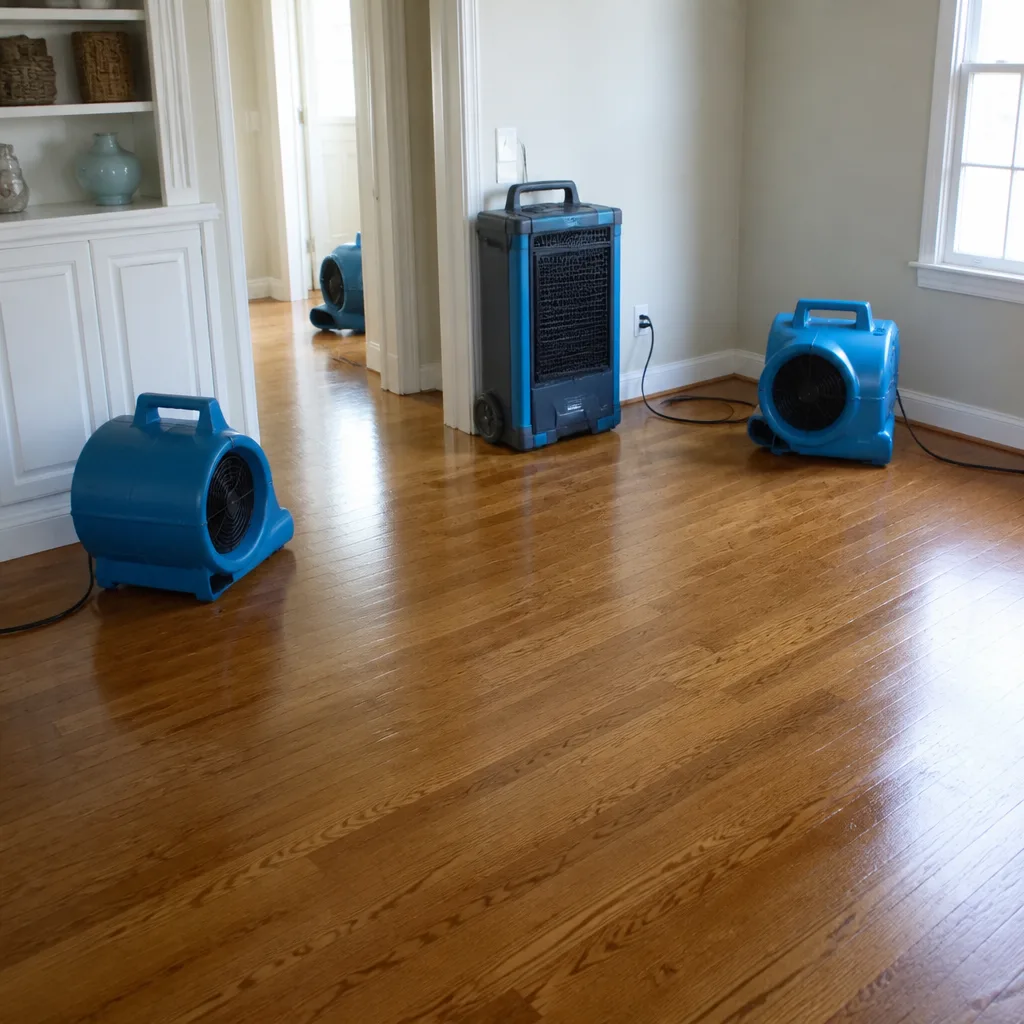
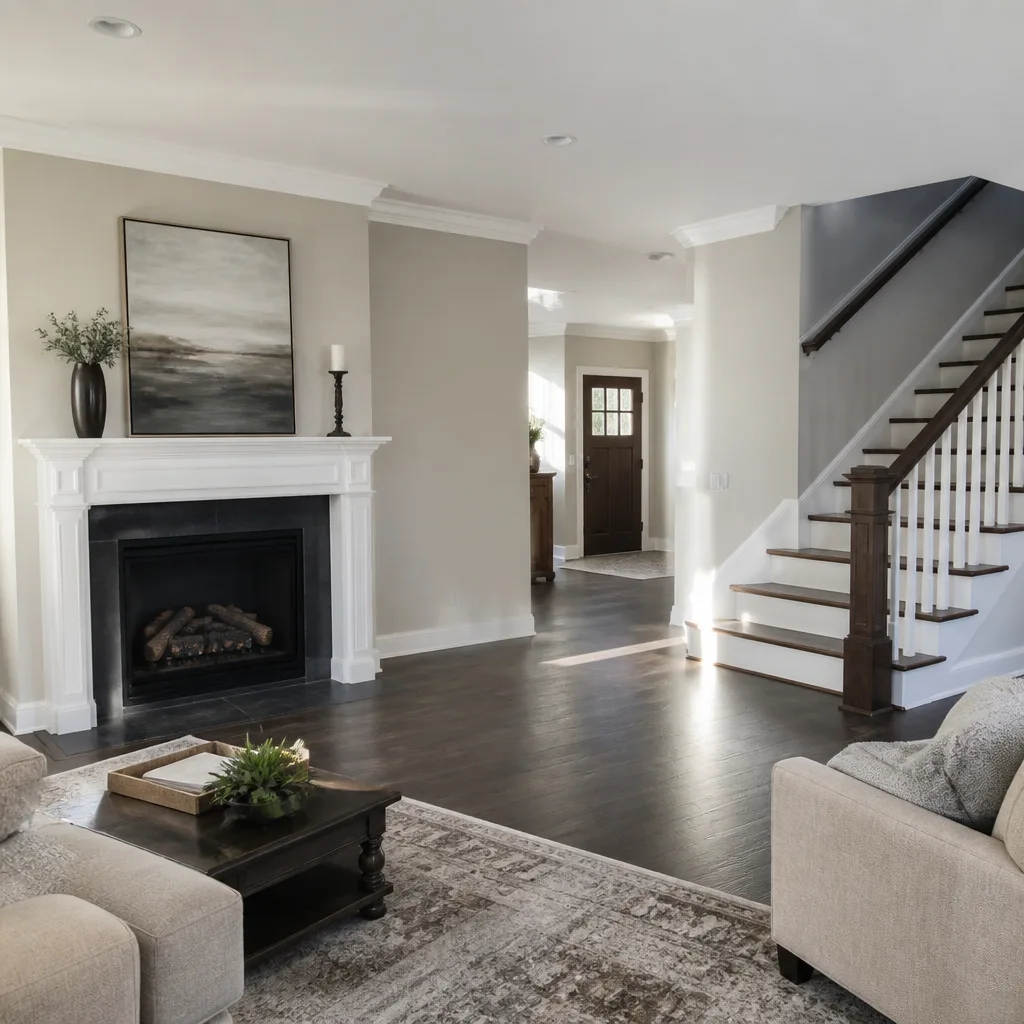
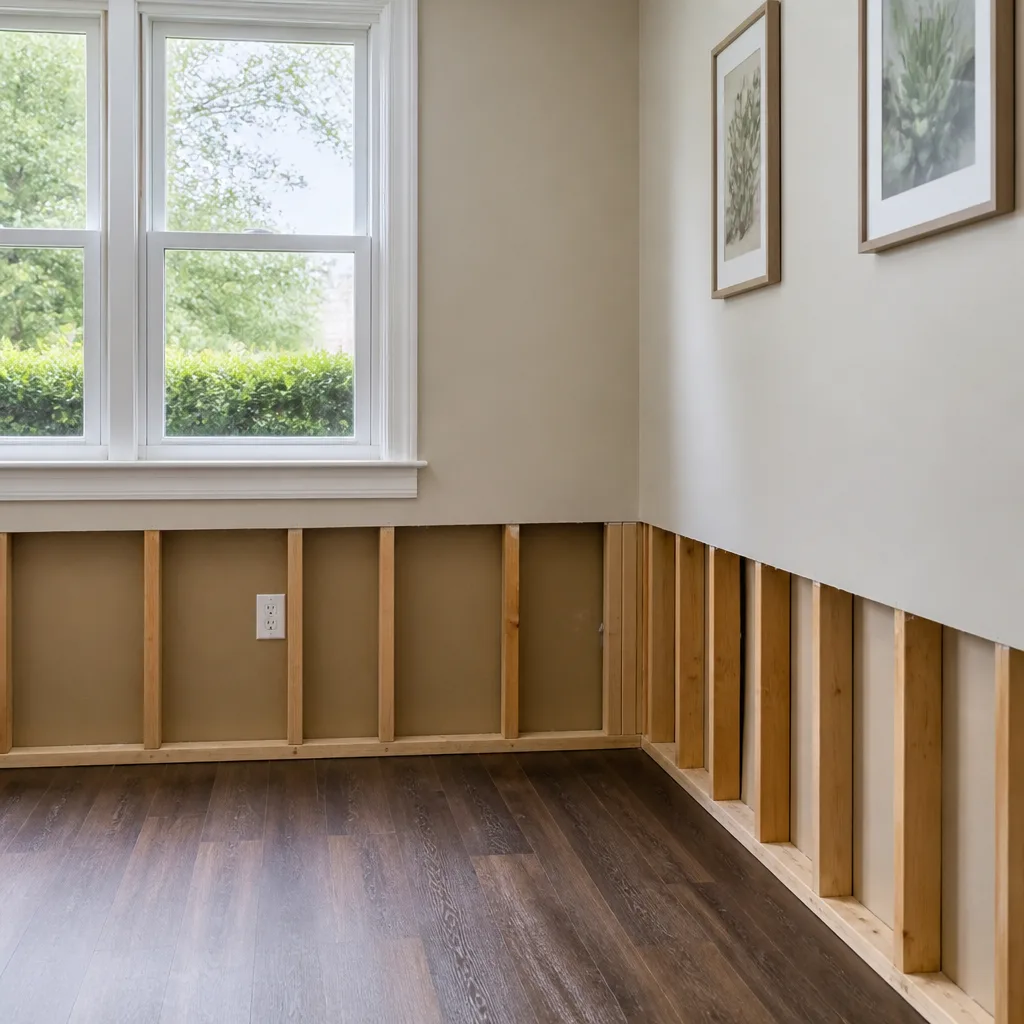
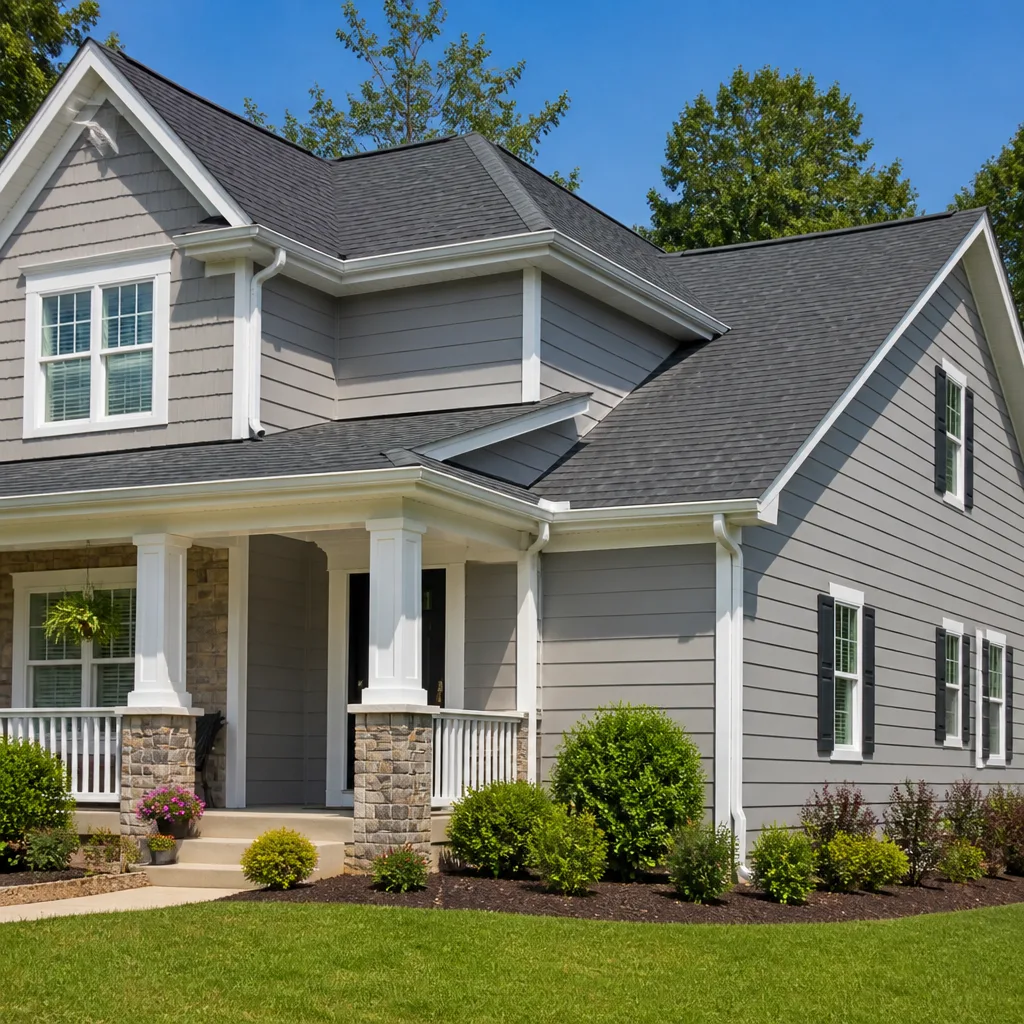
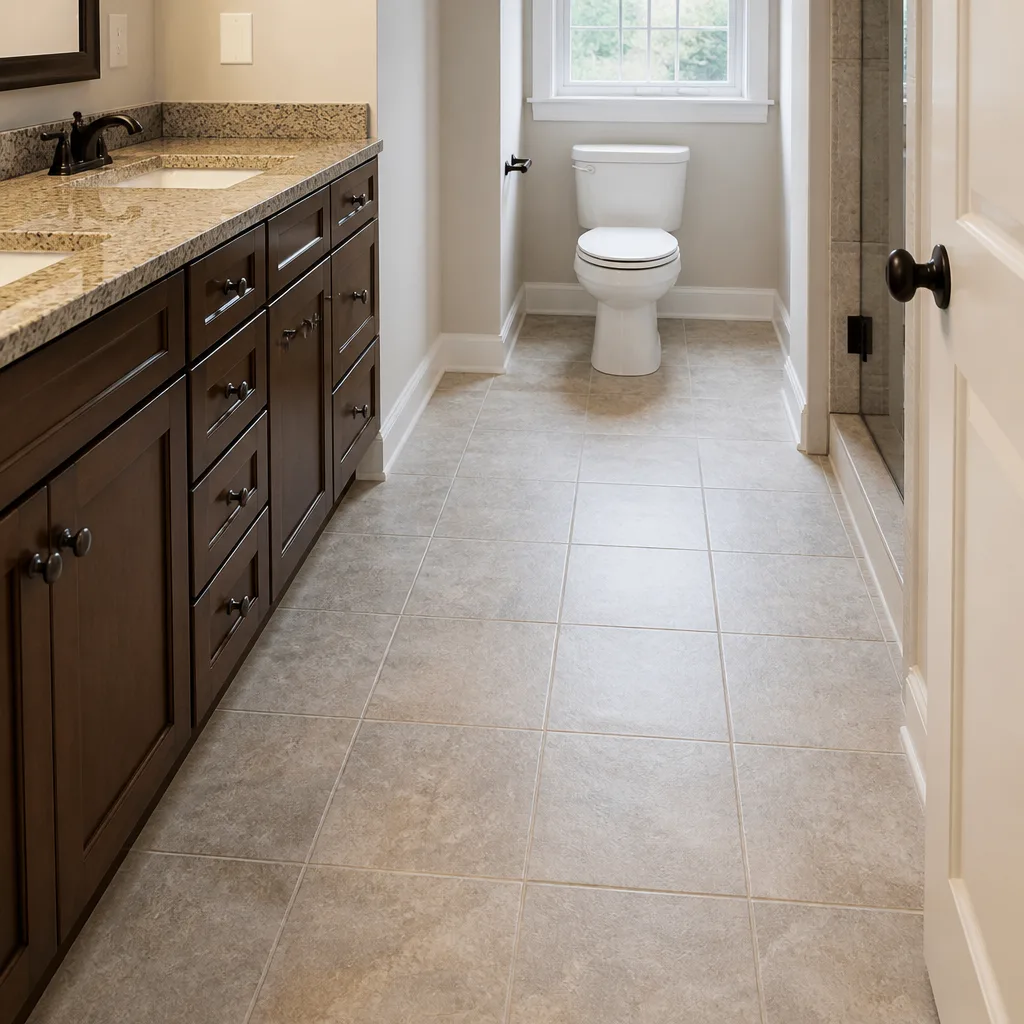
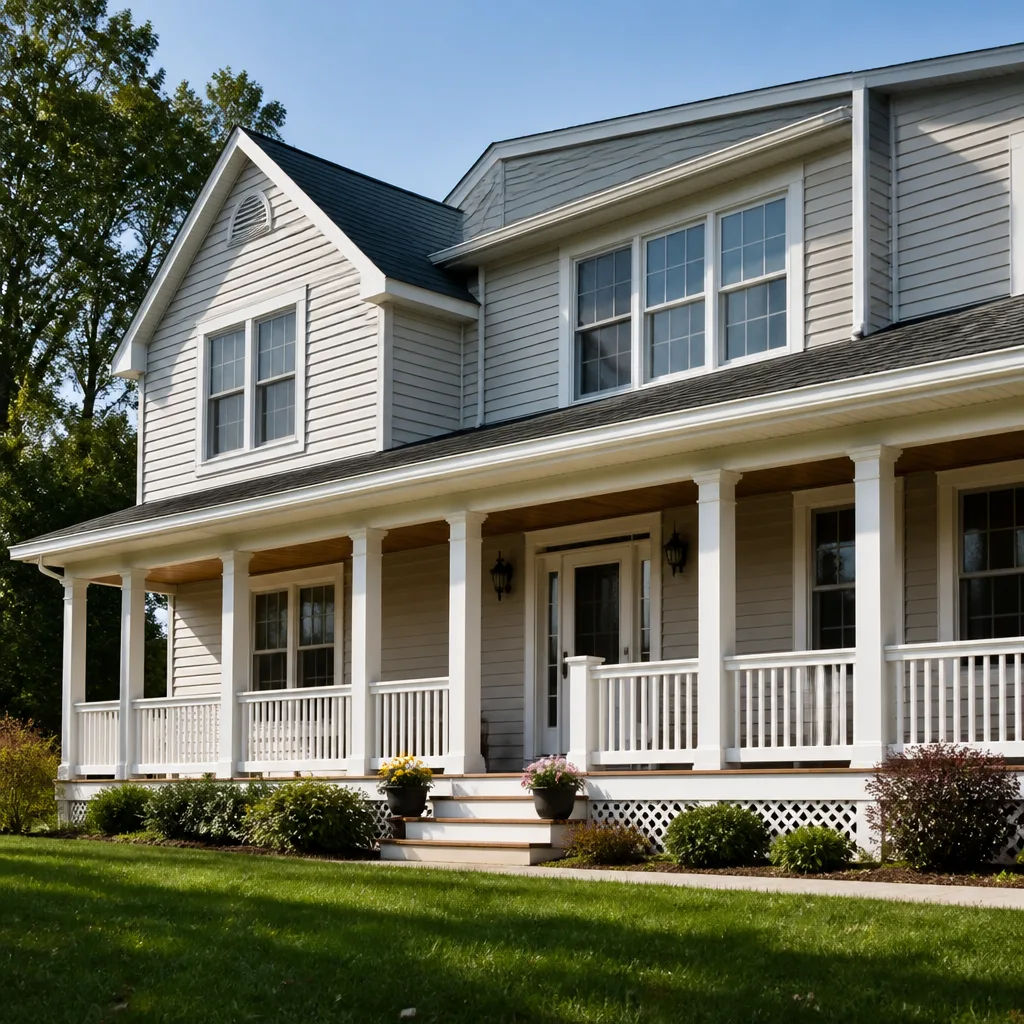
 Before
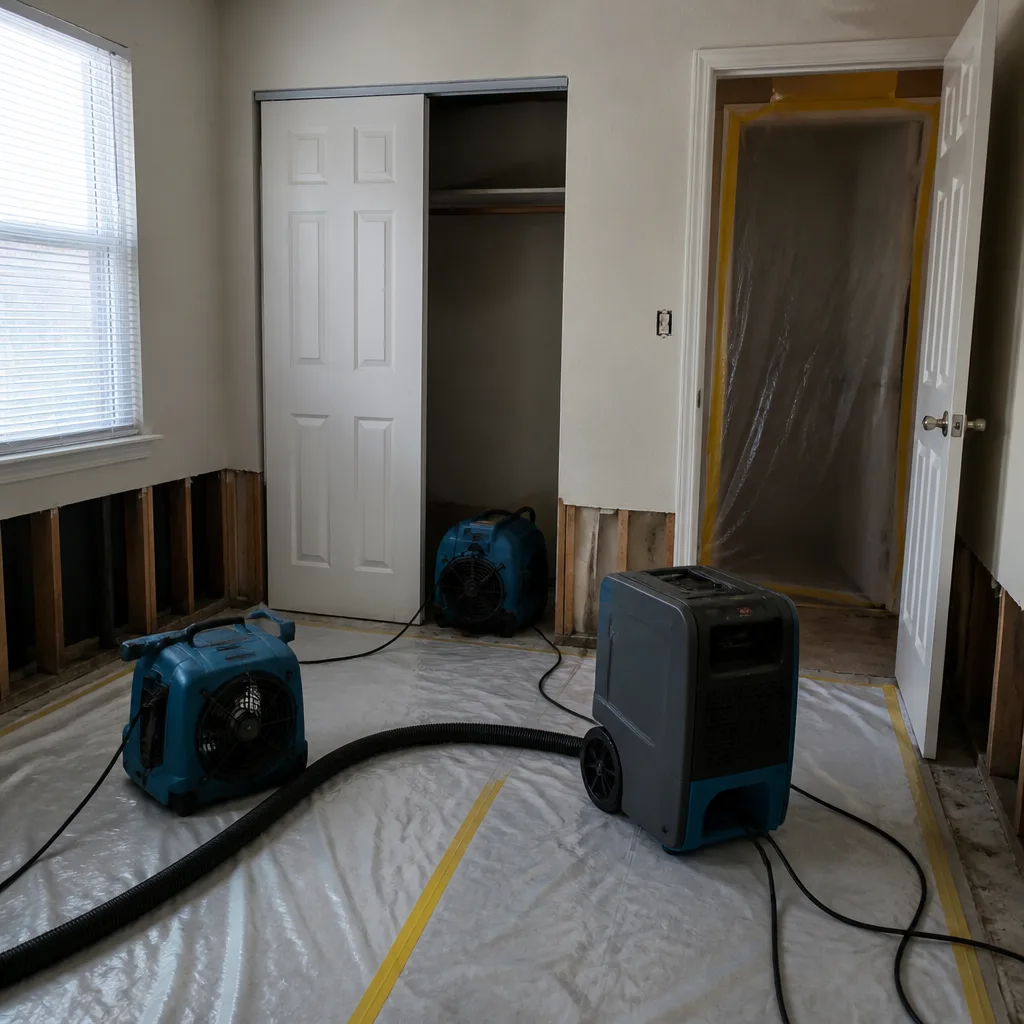 After
After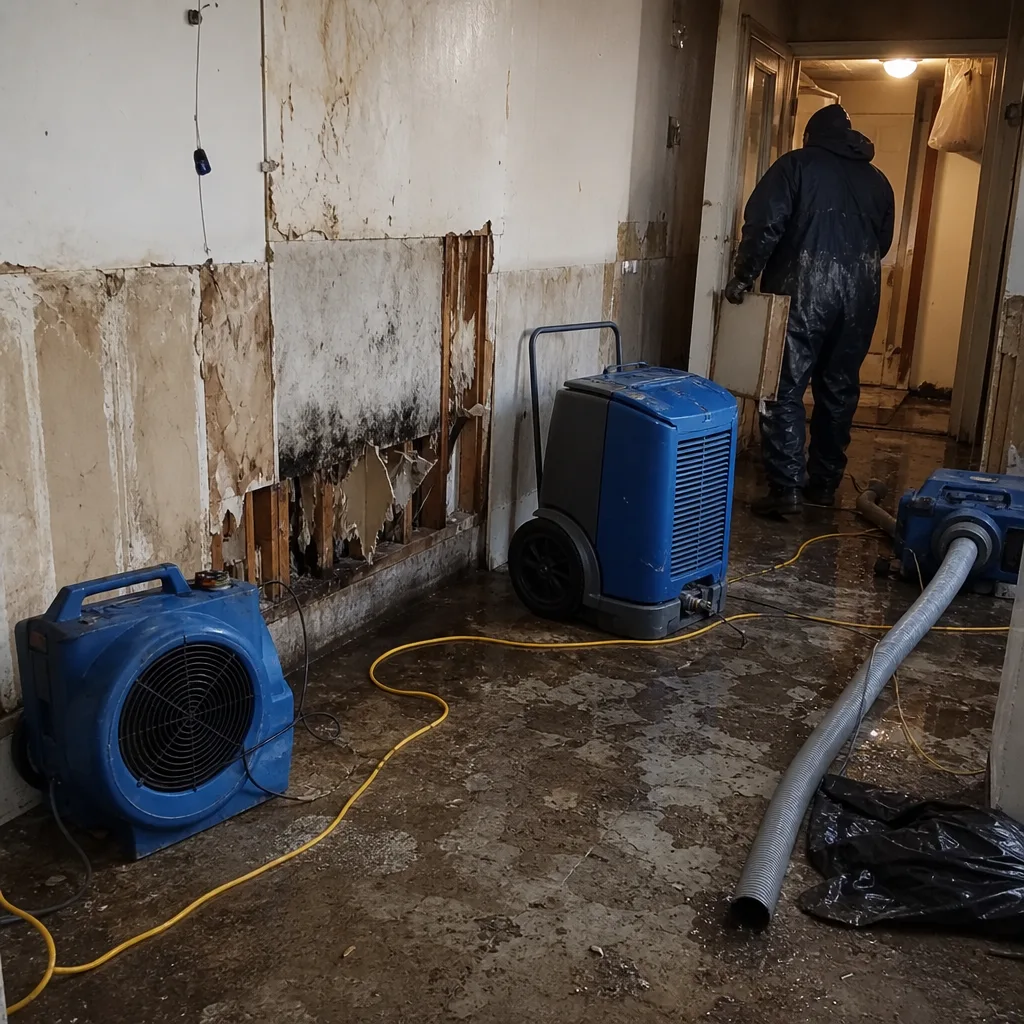 Before
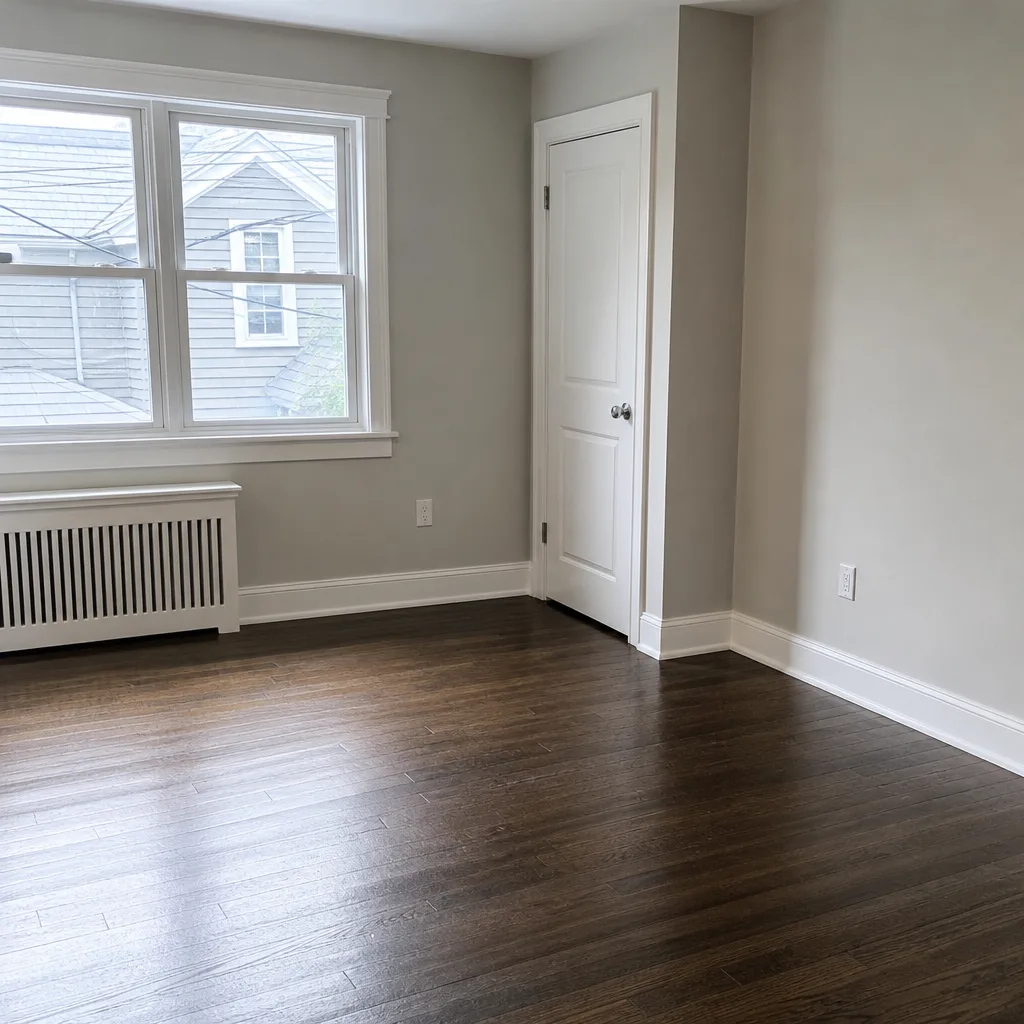 After
After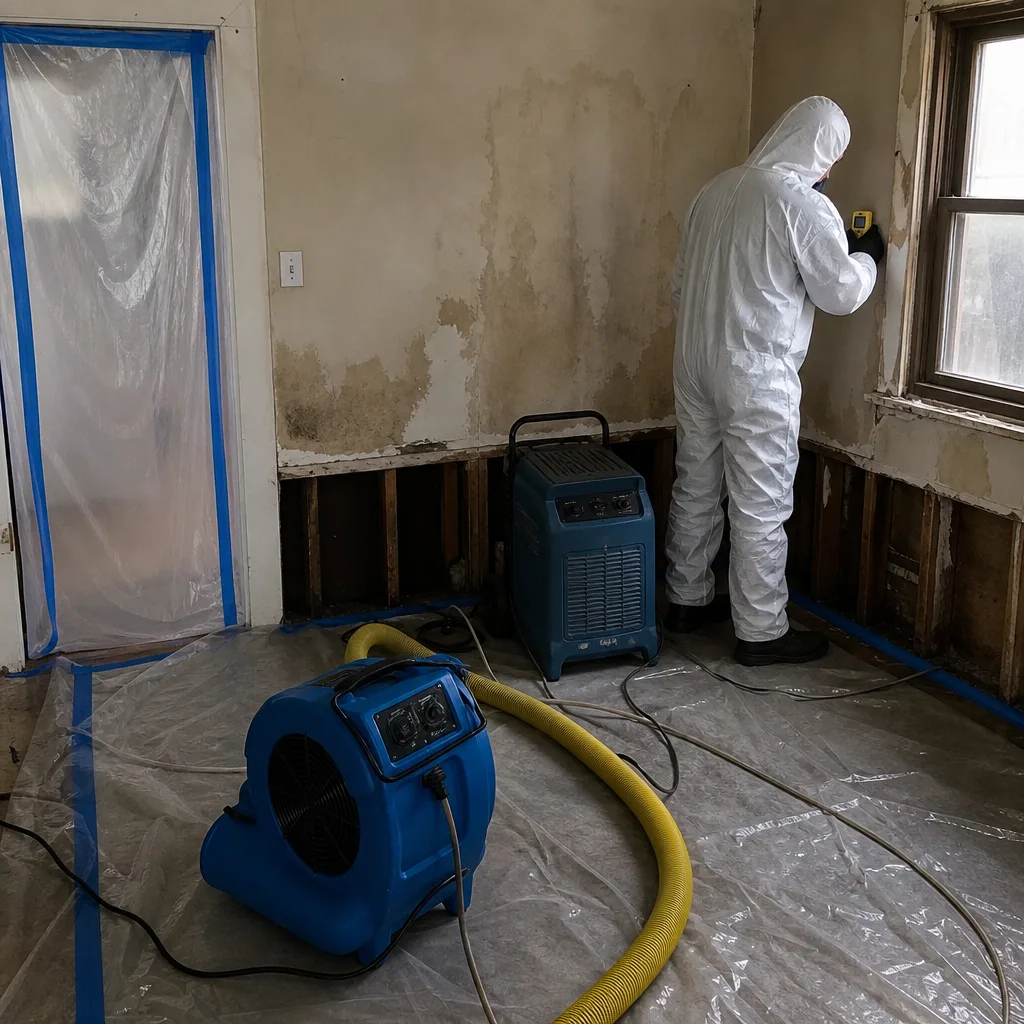 Before
 After
After24/7 Emergency Mold Remediation in South Ozone Park
Mold doesn’t wait for business hours, and neither do we. When you call Wade’s Restoration at (363) 300-2771, a real person answers, day or night. Wade Ferris himself picks up the phone, and he can have a crew at your South Ozone Park door fast, usually inside 45 minutes. The first hour after you spot mold matters: colonies double in size every 24 to 48 hours with enough moisture, which means what looks minor on a Tuesday can be a full containment job by Friday. We offer a free visual inspection. No trip charge inside the county. If you’ve walked into a musty basement off Rockaway Boulevard or a damp crawl space near Baisley Pond Park, call before you move anything. Spores spread when disturbed. We’d rather tell you it’s nothing than arrive too late to keep it from becoming something.
Understanding Mold Remediation Severity in South Ozone Park Properties
Mold remediation is not just scrubbing black spots off a wall. It’s a controlled removal process that starts with identifying the moisture source, then containing the affected area, filtering the air, removing contaminated materials, and verifying with clearance testing. In South Ozone Park, severity usually tracks with the age and construction of the basement. Most homes here are 1940s-1960s brick-and-frame Capes, colonials, and semi-detached row houses. Their foundations are typically parge-coated concrete block. That parge coat absorbs water. Once saturated, it wicks moisture upward into framing and drywall, feeding mold behind the surface where you can’t see it. Severity in these older basements typically falls into three categories: surface colonization on exposed drywall (limited, often treatable without demolition), hidden colonization inside wall cavities (requires controlled demolition and negative air containment), and structural moisture trapped in block foundations (requires drying, antimicrobial treatment, and sometimes masonry sealing). Each one changes the scope, the time, and the price.
Why South Ozone Park Property Owners Choose Wade’s Restoration
- 45-minute response commitment. Wade’s crews are staged near South Ozone Park and can be on-site fast. When mold is spreading, that response window matters.
- 24/7 live answer. No answering service. No automated system. Wade answers his own phone. If he misses it, he calls back. This is how he has run the company since 2007.
- IICRC-certified crews. Our mold teams hold the IICRC AMRT (Applied Microbial Remediation Technician) credential. That means training in containment, air scrubbing, and clearance protocols, not guesswork.
- Free visual inspection. We come out, look, take moisture readings, and tell you what you’re actually dealing with. No charge for that, nobody pressures you into work that isn’t needed.
- Direct insurance billing. We document everything, communicate with your adjuster, and handle the paperwork. You should never have to play middleman between a carrier and a contractor.
- One team from start to finish. The same crew that contains and removes mold also handles the cleanup and reconstruction. You aren’t juggling three companies and three schedules.
Our Mold Remediation Process
Inspection & Assessment
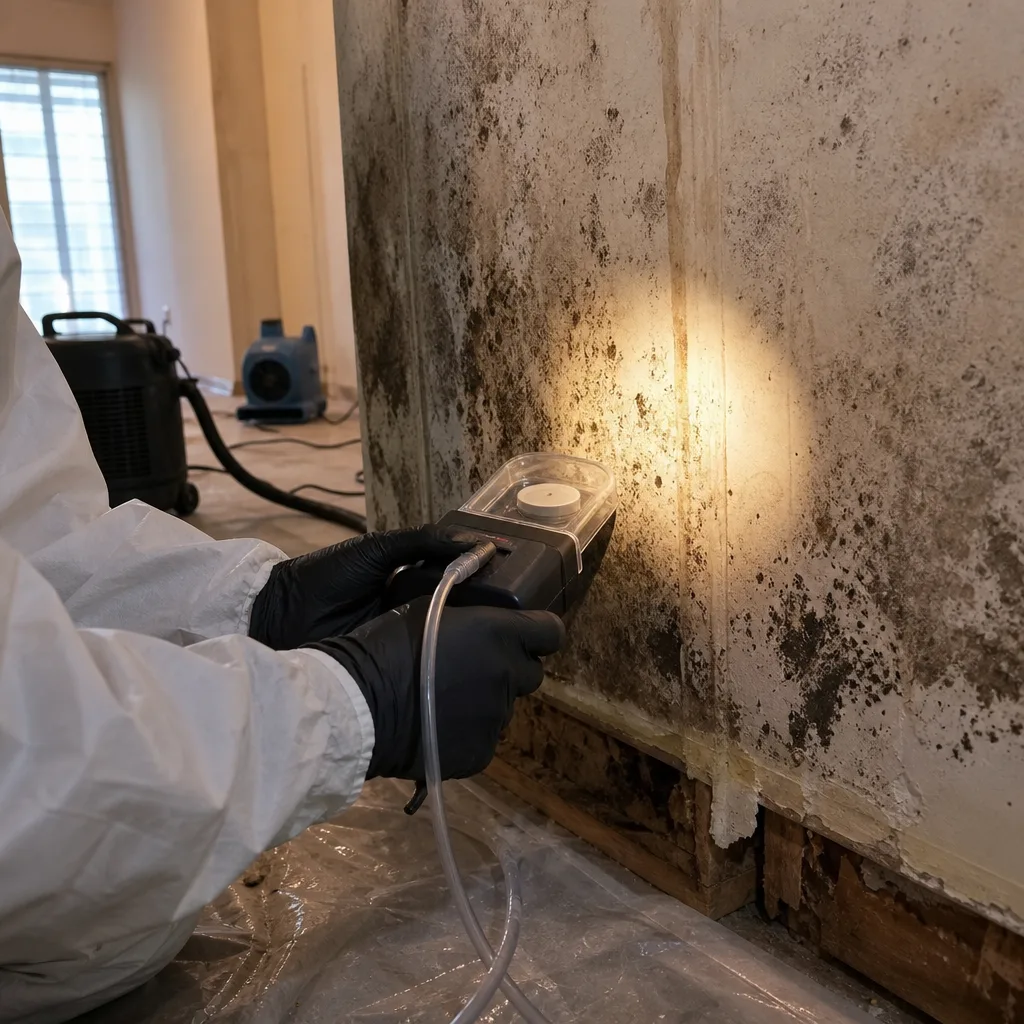
We start with thermal imaging and moisture meters. In South Ozone Park basements, we check parge-coated block foundations first, then trace moisture through framing. If testing is needed, we take air and surface samples to identify spore types and concentration.
Containment & Protection
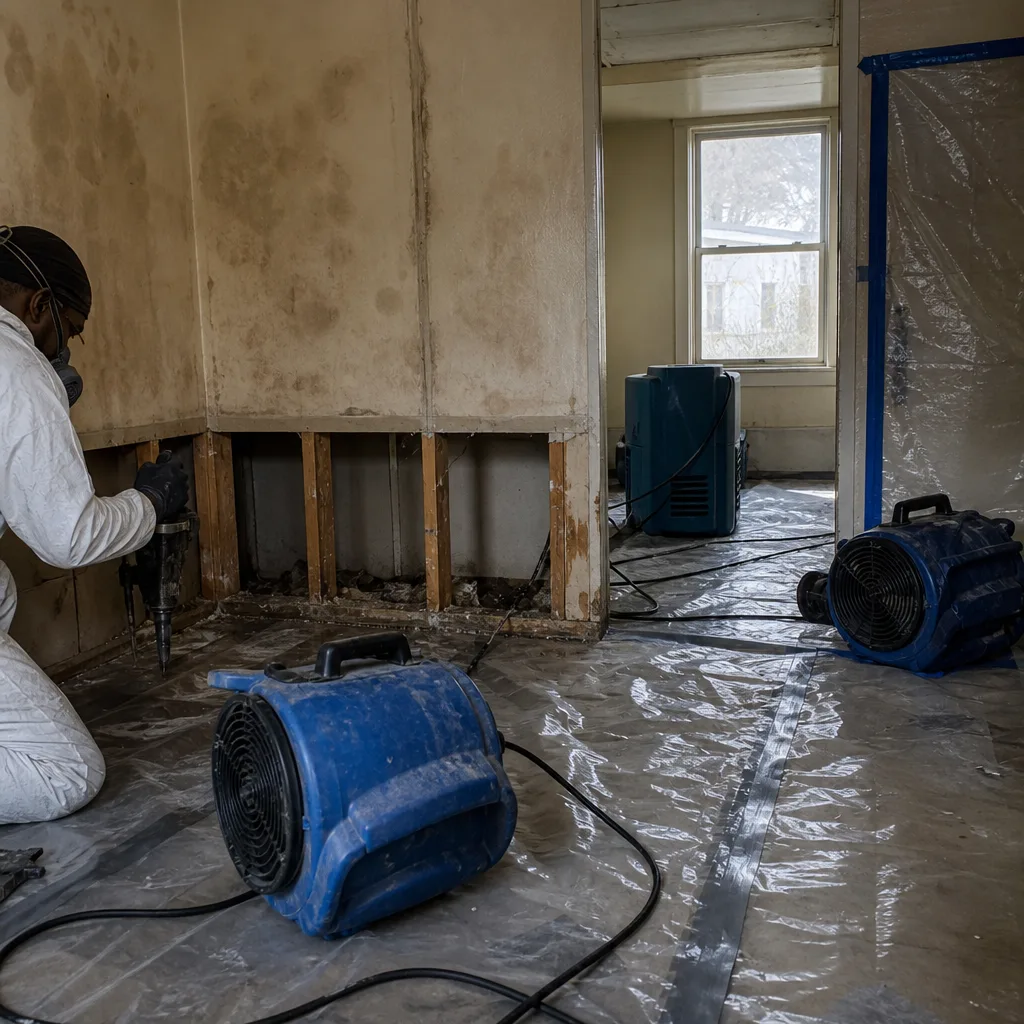
Before we open any wall, we set up HEPA-filtered negative air containment. In tight semi-detached row homes where shared walls complicate isolation, this step prevents cross-contamination into adjacent living space.
Drying & Dehumidification
Dri-Eaz and Phoenix dehumidifiers plus air movers pull moisture from block, framing, and air. We take readings daily and hand you the full moisture log at completion. Most contractors skip this. We don’t.
Removal & Cleaning
Contaminated drywall, insulation, and carpet are bagged and removed under containment. Remaining surfaces are HEPA-vacuumed and wiped with antimicrobial treatments rated for mold remediation.
Specialty Treatment: Crawl Space & Foundation
South Ozone Park crawl spaces sit barely above the water table. We treat block foundations and sill plates with penetrating antimicrobials, then document conditions ahead of any waterproofing or crawl-space encapsulation work.
Repairs & Restoration
The same crew rebuilds what was removed: insulation, drywall, baseboards, paint. Post-Sandy patch work in this neighborhood has too often been cosmetic. We make sure what goes back is dry, tested, and documented.
Need Emergency Mold Remediation in South Ozone Park Now?
Crews minutes away, answering live 24 hours a day. The sooner we start, the less it costs.
Working With Your Insurance Company
Mold claims are scrutinized harder than almost any other restoration claim. Carriers want proof: moisture readings, containment protocols, clearance test results, and a clear line between the initial water event and the mold growth. We build that file from hour one. Wade deals with the adjuster directly. You are never the one stuck relaying information between two sides, and you should know that most NFIP flood policies in South Ozone Park include limited mold coverage only when it results from a covered flood event. That distinction matters. We know how to write the scope so the claim language matches what actually happened. If something is excluded, we tell you before you spend money, not after.
What We Provide Your Insurer
- Thorough documentation of the loss
- Photos of all damage, room by room
- Moisture readings and drying logs
- A detailed, line-item scope of work
- Direct coordination with your carrier
Built for South Ozone Park’s Loss Calendar
South Ozone Park doesn’t get one mold season. It gets a year-round water-damage caseload that feeds mold. January and February bring deep freezes that burst supply lines in unheated basements and crawl spaces, often in homes where the original copper from the 1950s has been patched more times than anyone remembers. March and April bring spring thaw and groundwater rise; basements that stayed dry all winter suddenly seep through cove joints and floor cracks. Summer thunderstorms overwhelm the flat terrain’s drainage capacity, and sump pumps that haven’t cycled in months fail at the worst moment. Autumn nor’easters push Jamaica Bay water toward the Belt Parkway, and every homeowner who remembers Sandy checks their basement twice. The mold follows every one of these events, usually two to seven days later. What makes South Ozone Park different from the rest of Queens is the flood zone. FEMA AE and VE designations aren’t abstract here; they determine insurance rates, elevation requirements, and the standard to which a remediation job must be documented.
Mold Remediation Across South Ozone Park’s Neighborhoods
The homes east of the Van Wyck tend to be mid-century semi-detached and detached houses on compact lots. When mold gets into a shared party wall, containment has to be precise. We have handled jobs where the neighbor’s side of the wall tested clean while the owner’s side needed full removal, and the difference was proper negative air pressure from start to finish. Over near Rockaway Boulevard, blocks run closer to the commercial corridors, and the houses there are often older, with original parge-coated foundations and basement layouts that were never designed for finished living space. That means shorter stud bays, less insulation, and more places for moisture to hide. North of the Belt Parkway, the blocks closest to the bay carry the highest flood risk. We take elevation certificates into account on every quote because they affect not just the work itself but how the claim is filed. And in the pocket around Baisley Pond Park, the water table sits high enough that sump pump replacement is practically a routine maintenance item. A mold problem there is rarely just about mold; it’s about the water that keeps coming back.
Specialized Mold Remediation Services We Offer in South Ozone Park
Mold Inspection & Testing
If you smell must or see staining but aren’t sure whether it’s mold, start here. We use thermal imaging to trace moisture behind walls, air sampling to quantify spore levels, and surface swabs to identify species. In a South Ozone Park semi-detached, we’ll also check the shared wall cavity. If you’re selling a home or renting a unit, written test results give you something a visual inspection never can.
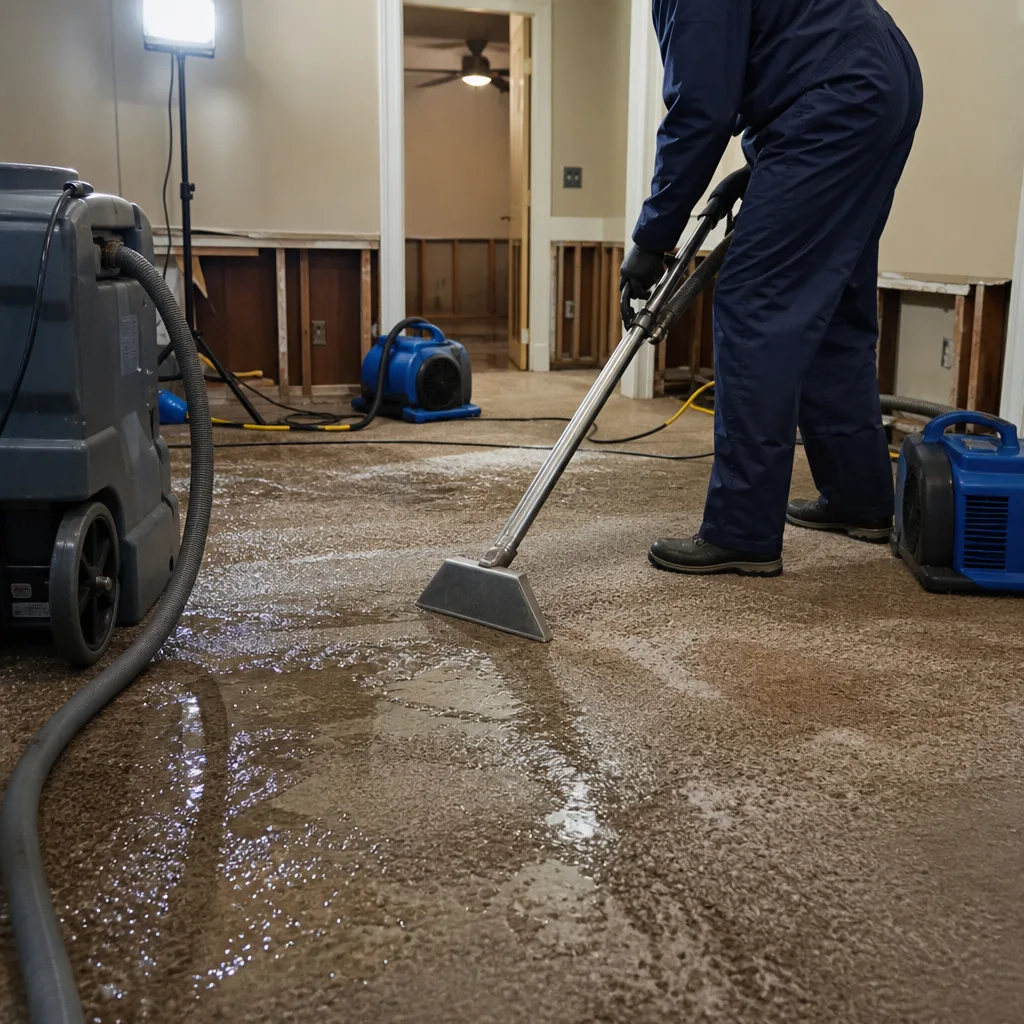
Mold Removal
This is the physical removal of contaminated materials under containment. Drywall, insulation, carpet, trim. In most South Ozone Park basements, this means cutting back 12 to 24 inches above the visible water line and checking the block behind it. You can’t just kill surface mold and leave the colony behind. It comes back.
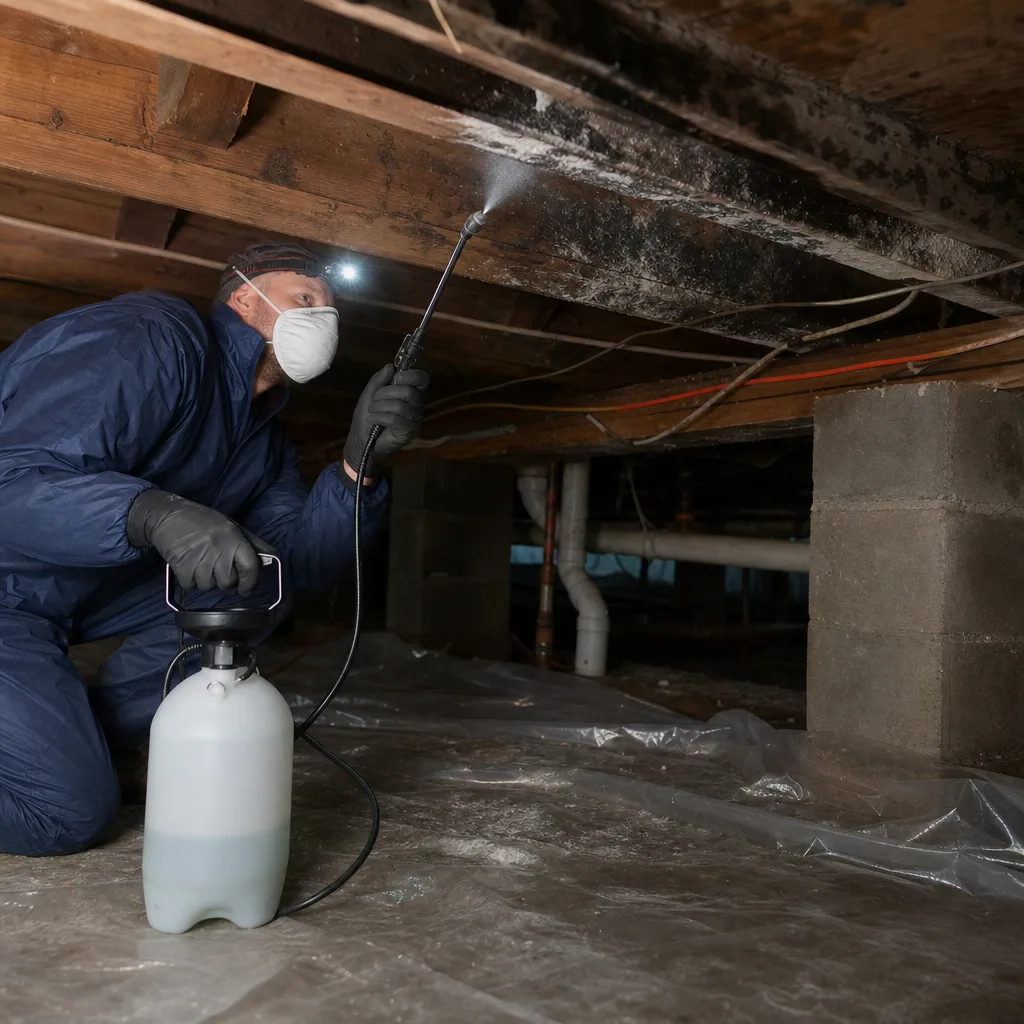
Black Mold Remediation
Stachybotrys chartarum, what people call black mold, grows on saturated cellulose: drywall paper, ceiling tile, cardboard. It needs constant moisture. In South Ozone Park, we most often find it after slow leaks behind walls, not after a single flood. The process is the same as any mold removal, but the containment and clearance protocols are stricter when toxigenic species are present.
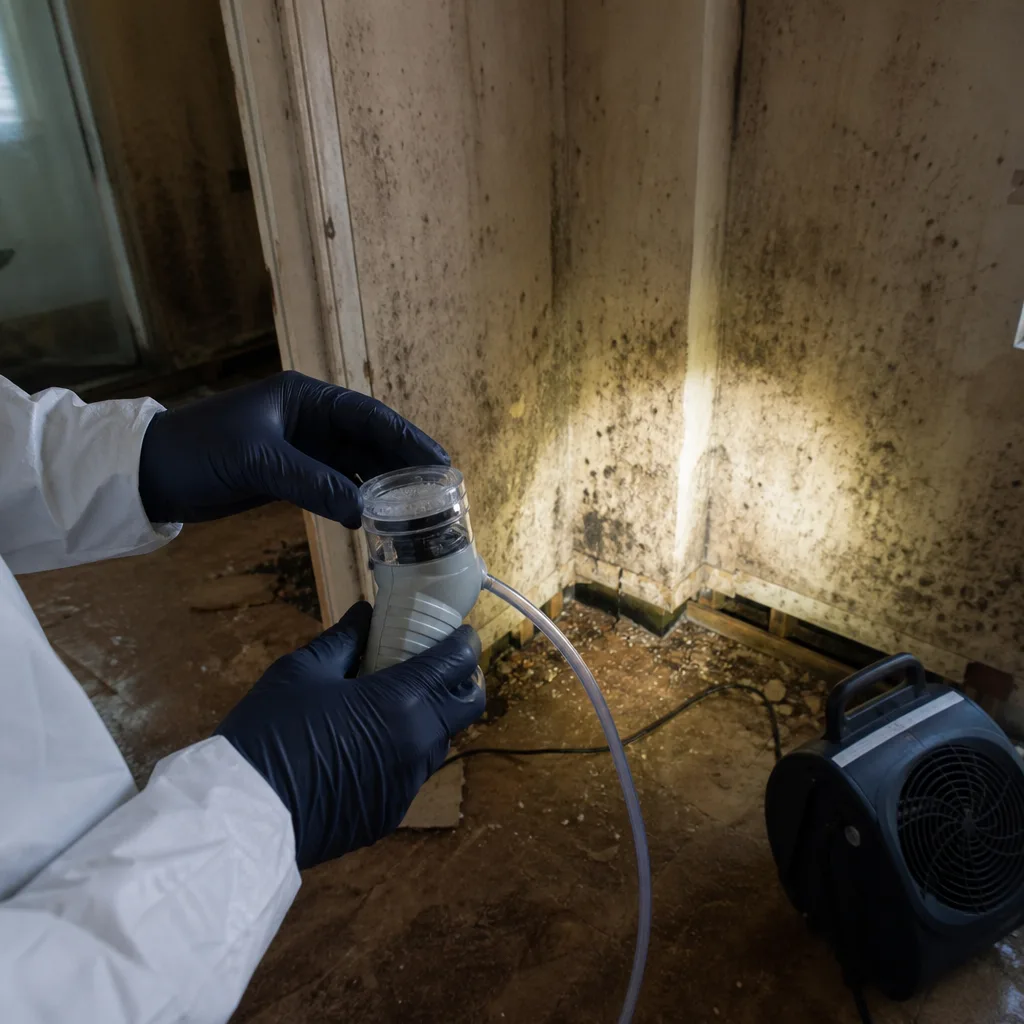
Air Quality Restoration
Mold spores are airborne. During remediation we run HEPA air scrubbers to drop spore counts, and after removal we can do a full air exchange and post-remediation clearance test. For people with asthma, allergies, or immune conditions, this step is the difference between a house that tests clean and a house that actually breathes clean.
Crawl Space Treatment
South Ozone Park has thousands of homes with shallow crawl spaces sitting on block piers over bare dirt. These spaces hold humidity, and that humidity migrates upward. We treat joists and subflooring with antimicrobials, install or upgrade vapor barriers, and set dehumidifiers in tight spaces where they actually fit. If your crawl space just got wet after a storm, this is where mold starts.
What happens when you call
- 1
A real person answersNo phone trees - you reach a local pro.
- 2
You get an upfront price rangeHonest numbers before anyone is dispatched.
- 3
A background-checked tech heads outLicensed & insured, dispatched right away.
- 4
You approve before work beginsNothing starts until you say go.
Mold Remediation Costs in South Ozone Park, NY
Most mold remediation jobs in South Ozone Park run between $1,200 and $6,500. A small isolated section of drywall behind a basement sink might cost $900 to $1,800 with containment and clearance testing. A full finished basement affected after a sump-pump failure runs $3,500 to $8,000, depending on how much drywall and insulation we remove. Semi-detached homes with shared-wall issues tend toward the higher end because containment is more labor-intensive. What moves the price: square footage of affected material, whether the foundation block needs treatment, whether contents need pack-out and cleaning, and whether post-remediation clearance testing is required. Insurance-covered jobs still carry your deductible, and some flood policies cap mold coverage at a fixed dollar amount. The free visual inspection gives us enough to write a fixed scope. You’ll see the number in writing before any work starts. Call (363) 300-2771 and we’ll come look.
We Also Serve Cities Near South Ozone Park
Wade’s Restoration runs crews through Howard Beach, Ozone Park, Richmond Hill, and Woodhaven on the same response basis: live answer, free inspection, no trip charge inside the county. If you’re a few blocks outside South Ozone Park, the same team covers you. Call and we’ll be there.
Serving South Ozone Park, NY - Our Local Coverage Area
We’re based in the South Ozone Park area and know this community well. Use the map below to see our service coverage - if you’re nearby, we can almost certainly help.
South Ozone Park Mold Remediation Questions, Answered
How fast can you get to South Ozone Park?
Normally within 45 minutes. Wade’s crews are staged in the area and he answers the phone himself at (363) 300-2771. In a flood event when call volume spikes, we prioritize by severity: standing water, active leaks, and visible mold first.
Does living in a FEMA AE flood zone affect the mold remediation process in South Ozone Park?
Yes. AE flood zones mean your property sits in an area with a 1% annual flood risk, and that changes how we document the job. We record pre-loss condition, tie mold evidence to the specific flood event, and structure the scope so your NFIP claim language matches what happened. We also factor elevation certificates into rebuild decisions so you don’t get caught with a non-compliant repair.
We had our basement remediated after Sandy in 2013. Could hidden mold still be an issue?
Absolutely. Many Sandy-era repairs in South Ozone Park were done under pressure: crews replaced drywall without proper drying time or clearance testing, and now, over a decade later, those hidden colonies are still active behind seemingly dry walls. If you smell must in a basement that was “fixed” after Sandy, call us for an inspection. We find this constantly.
How do you handle mold in a semi-detached row home where the shared block wall wicks moisture?
Containment has to be exact. We set negative air so spores don’t migrate through the shared wall cavity into the neighbor’s side, and we treat the block itself, not just the drywall in front of it. If moisture is entering through the party wall, we’ll document it for your adjuster because that changes the claim from a simple mold job to a structural moisture issue.
What’s the first step after a sump-pump failure floods our finished basement?
Shut the power if water is near electrical, then call us. The first 24 hours determine whether you get a dry-out or a full mold remediation. We extract the water, set drying equipment, and take moisture readings daily. The sooner we start, the less likely mold takes hold in the drywall wicking that water upward.
Can I just dry the basement myself with fans and a dehumidifier after a flood?
You can try, but you’ll likely miss moisture behind baseboards, in wall cavities, and inside the block foundation itself. Household fans don’t move air at the volume or speed needed for structural drying, and a standard dehumidifier can’t match commercial units. By the time you smell mold, the colony is already established. Call for a free inspection first.
Will insurance cover mold remediation?
Depends on the policy and cause. If mold results from a covered water event (a burst pipe, a sudden leak, a covered flood), most policies include at least some mold coverage, often capped. NFIP flood policies in South Ozone Park carry their own mold limits. We’ll read your policy, document the cause, and tell you exactly what you’re dealing with before work begins.
Can we stay in the home during mold remediation?
Usually yes, but not in the affected area. Containment isolates the work zone, and we set negative air pressure to keep spores from spreading. If the mold is extensive or if someone in the home has a respiratory condition, we may recommend staying elsewhere for a day or two. We’ll tell you upfront.
Written by Wade Ferris, owner and operator of Wade’s Restoration. Wade founded the company in 2007, answers his own phone, and stands behind every mold remediation job in South Ozone Park with the 90-Day Done Right Promise in writing.