
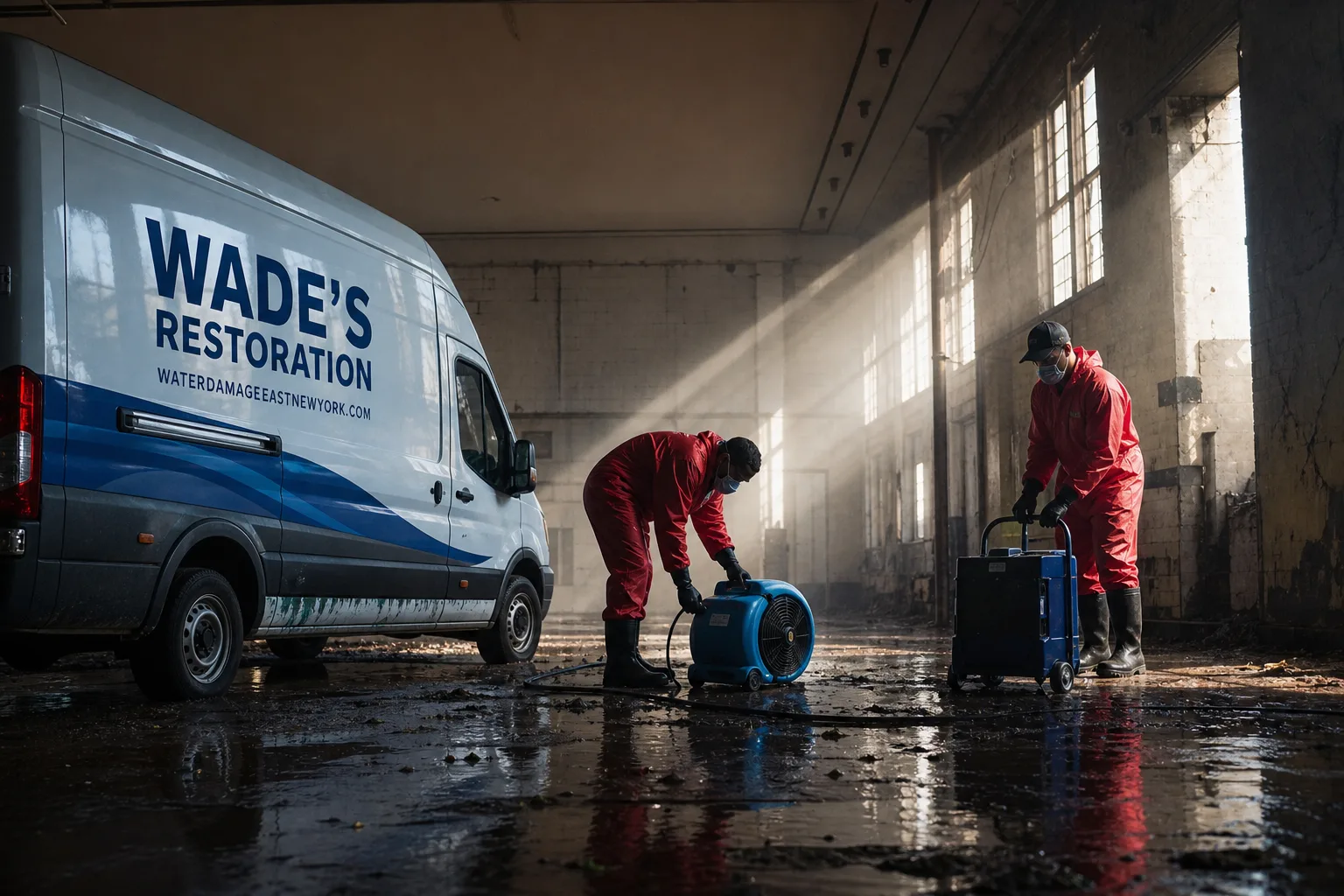
Free visual inspection and a written scope of work before any mitigation begins - photos, moisture readings, and drying logs go in your claim file
The scope we write is the scope we bill. Anything new gets shown to you, in writing, before we touch it.
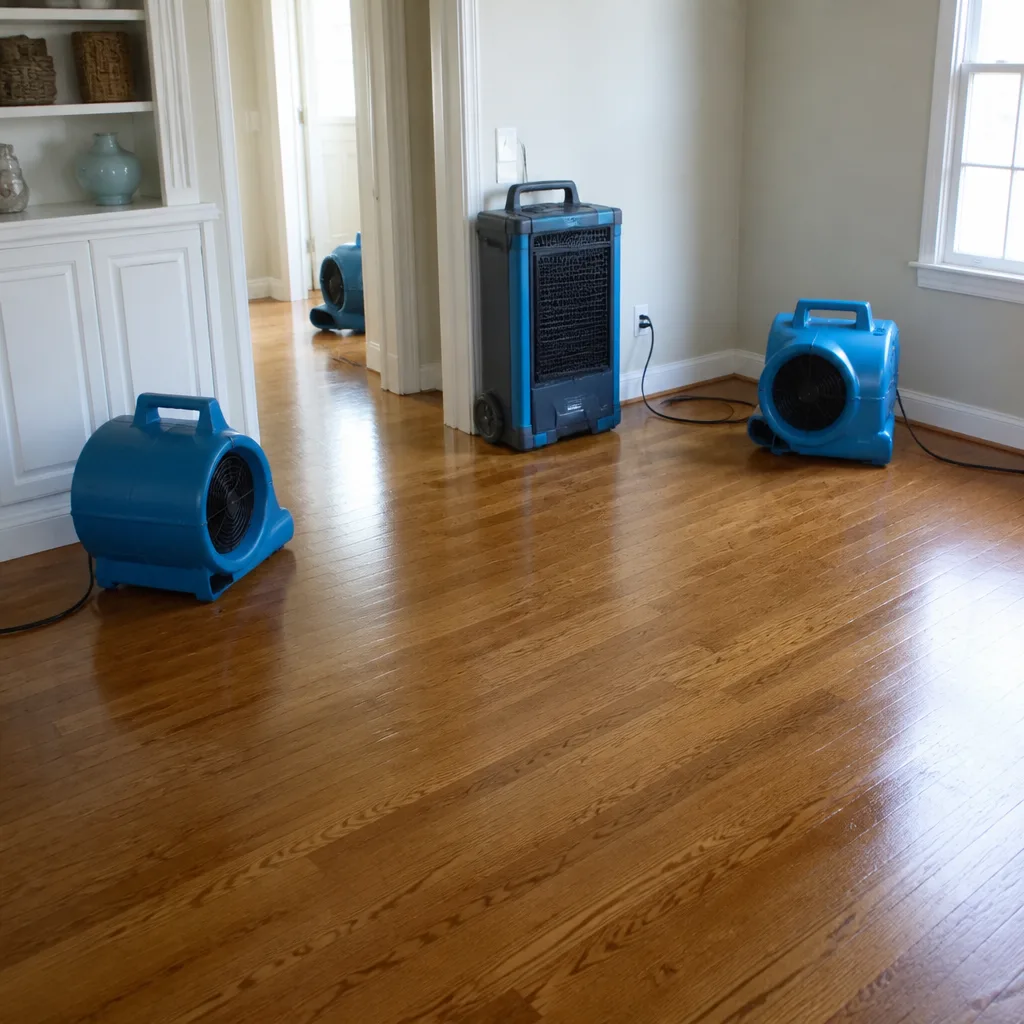
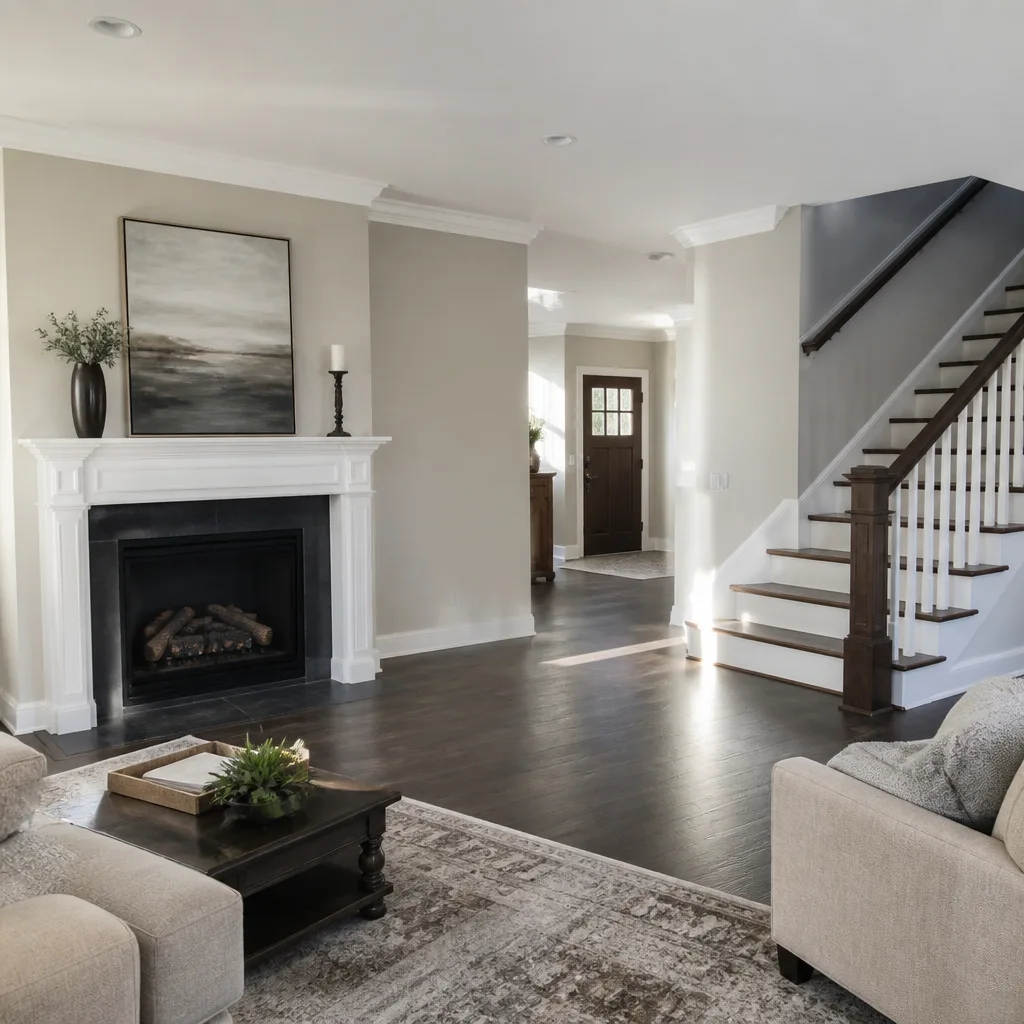
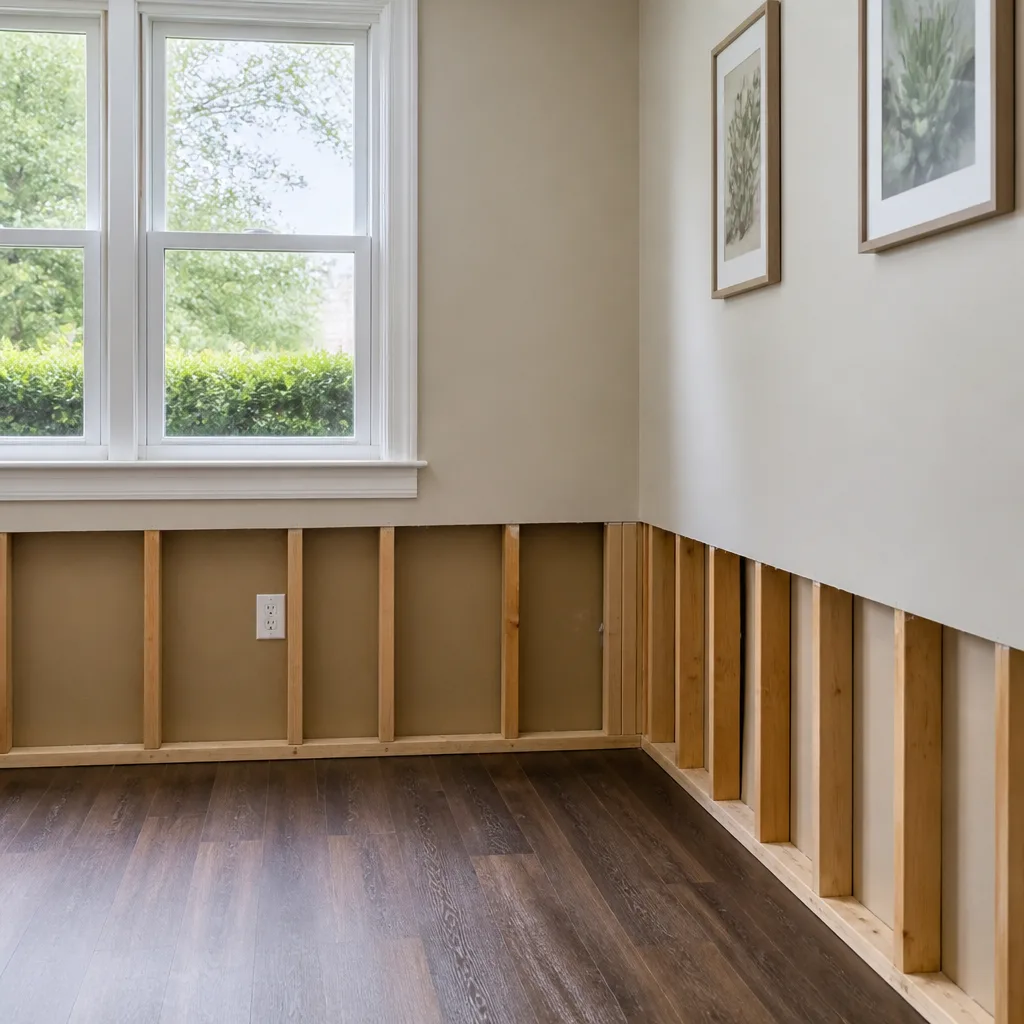

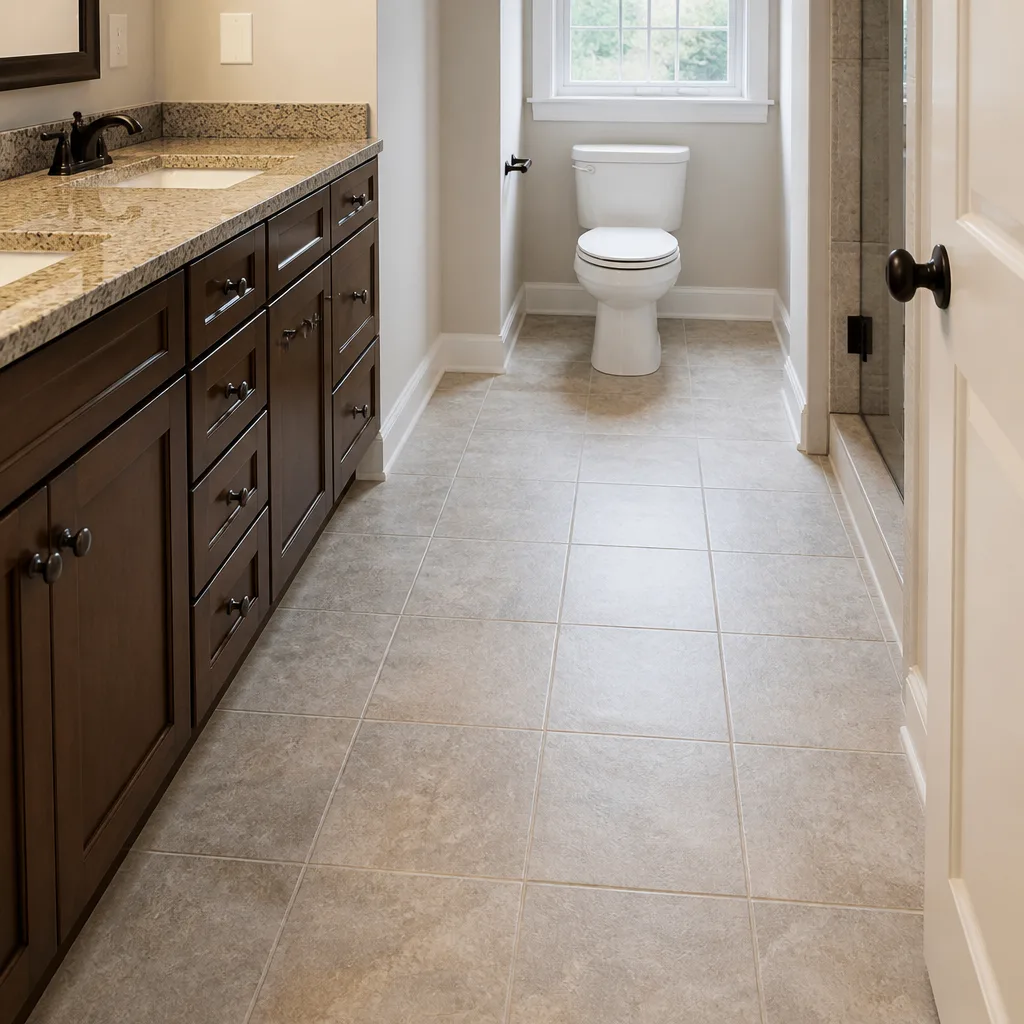
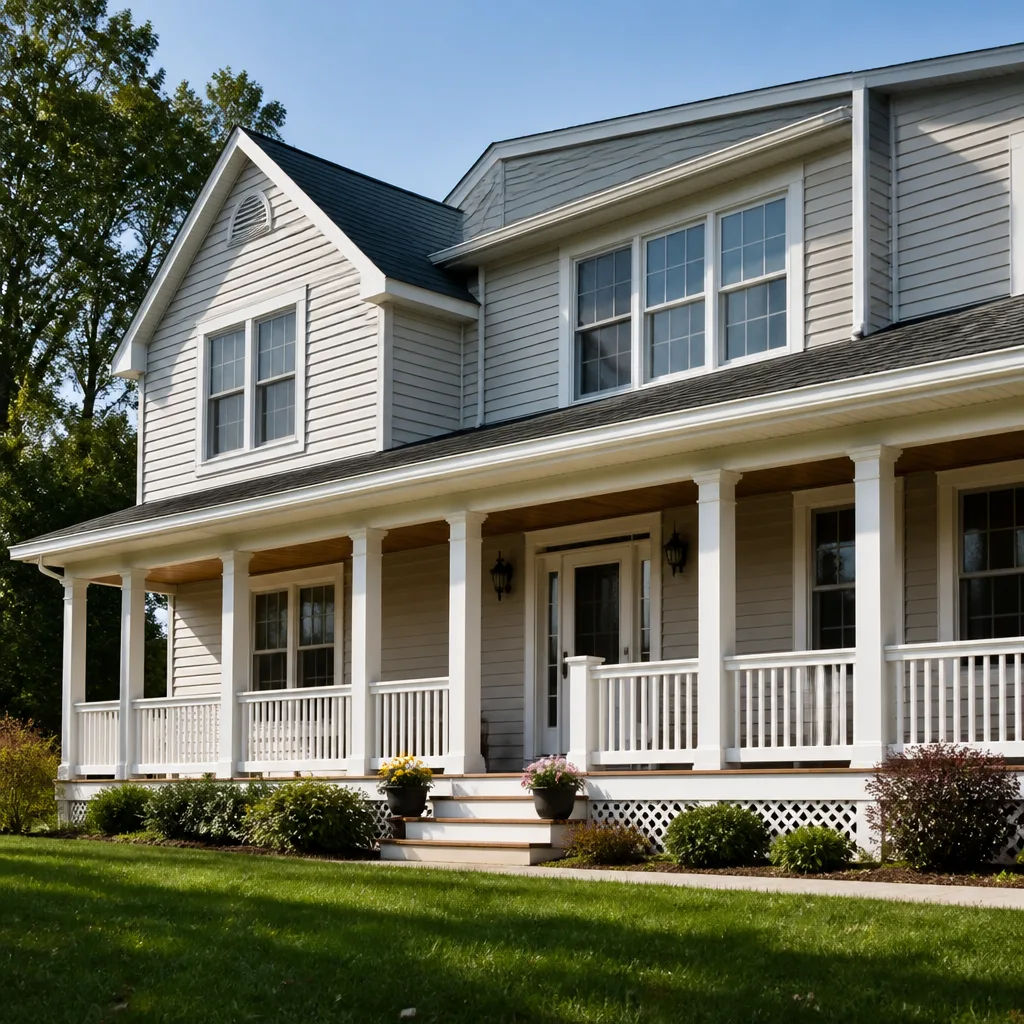
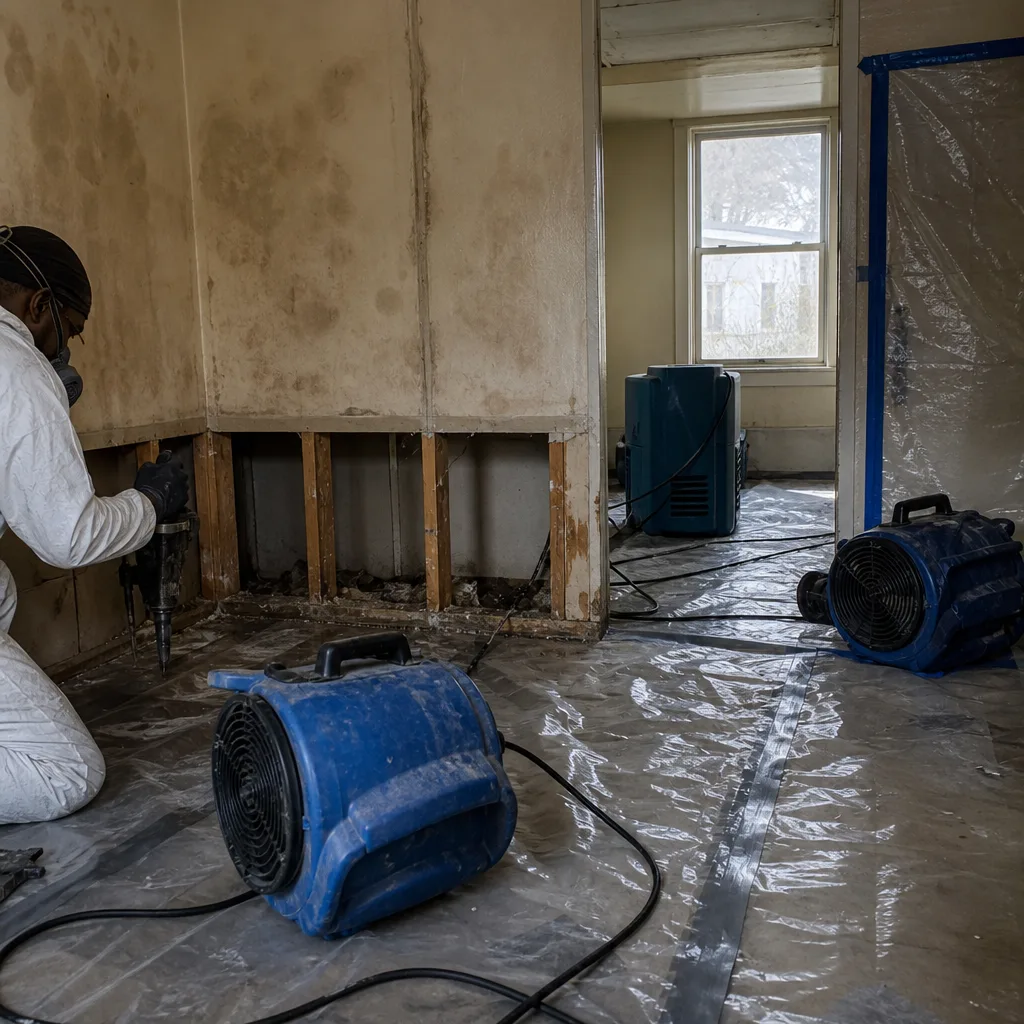 Before
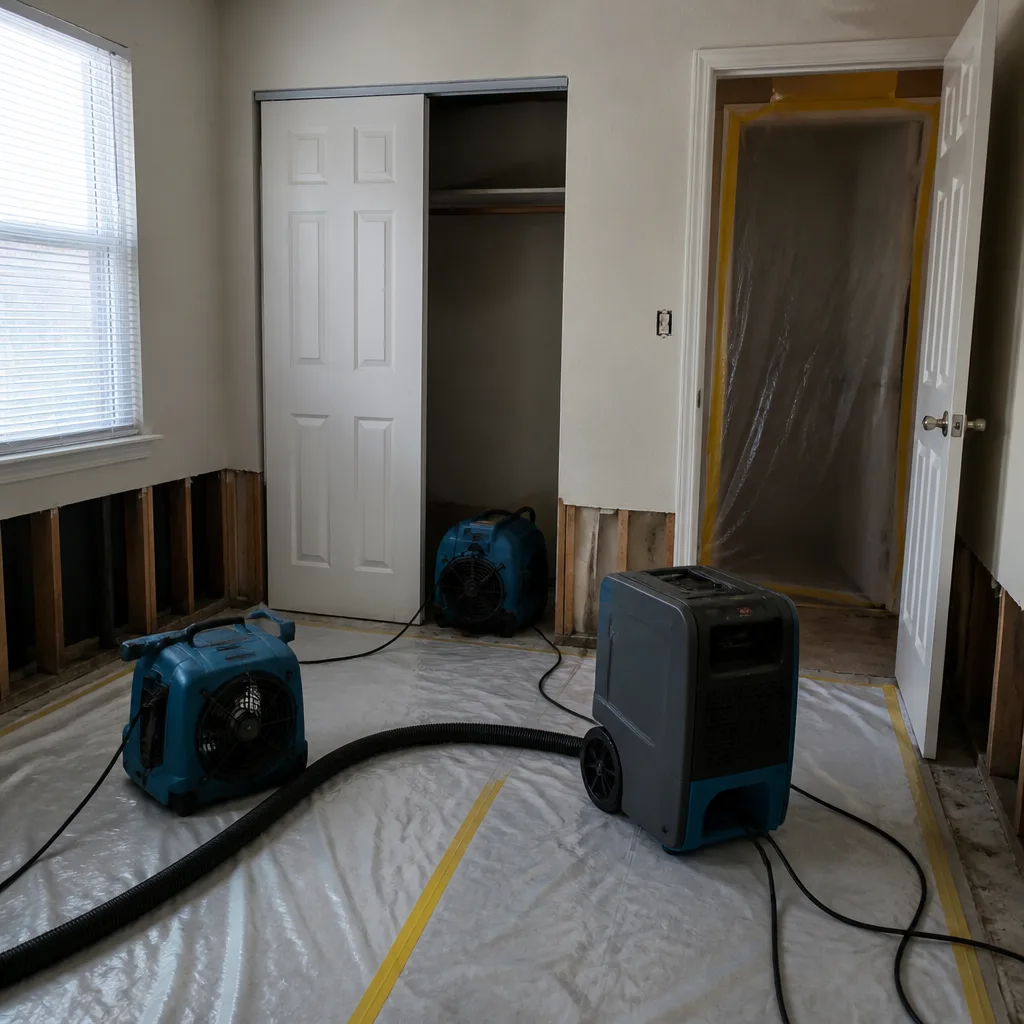 After
After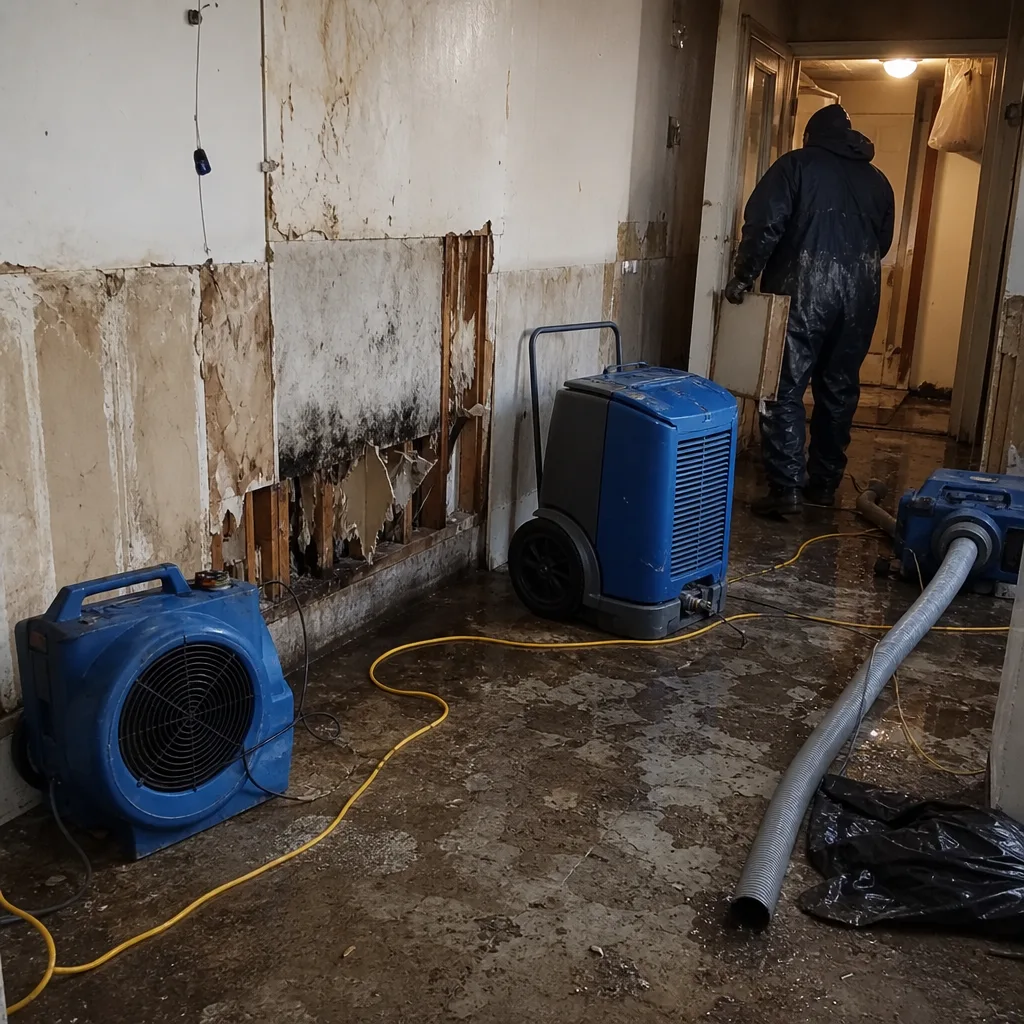 Before
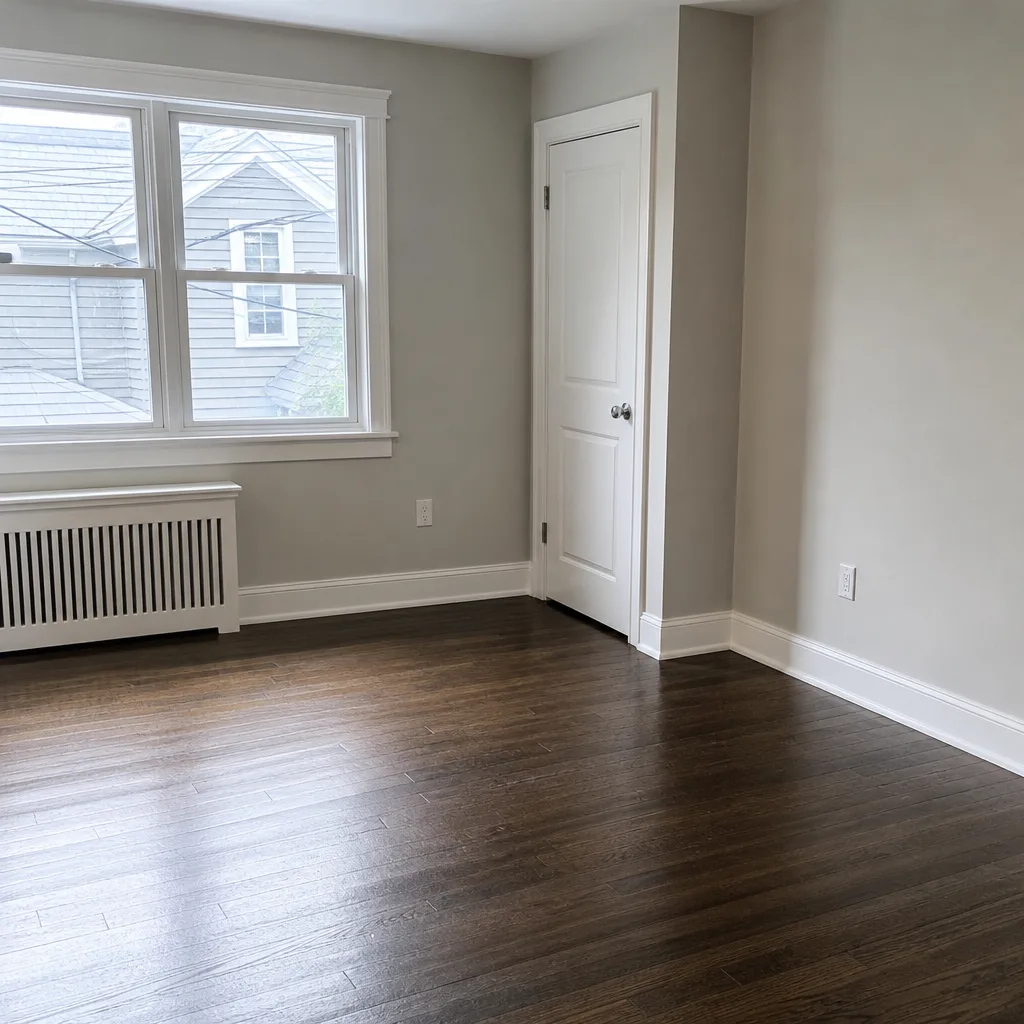 After
After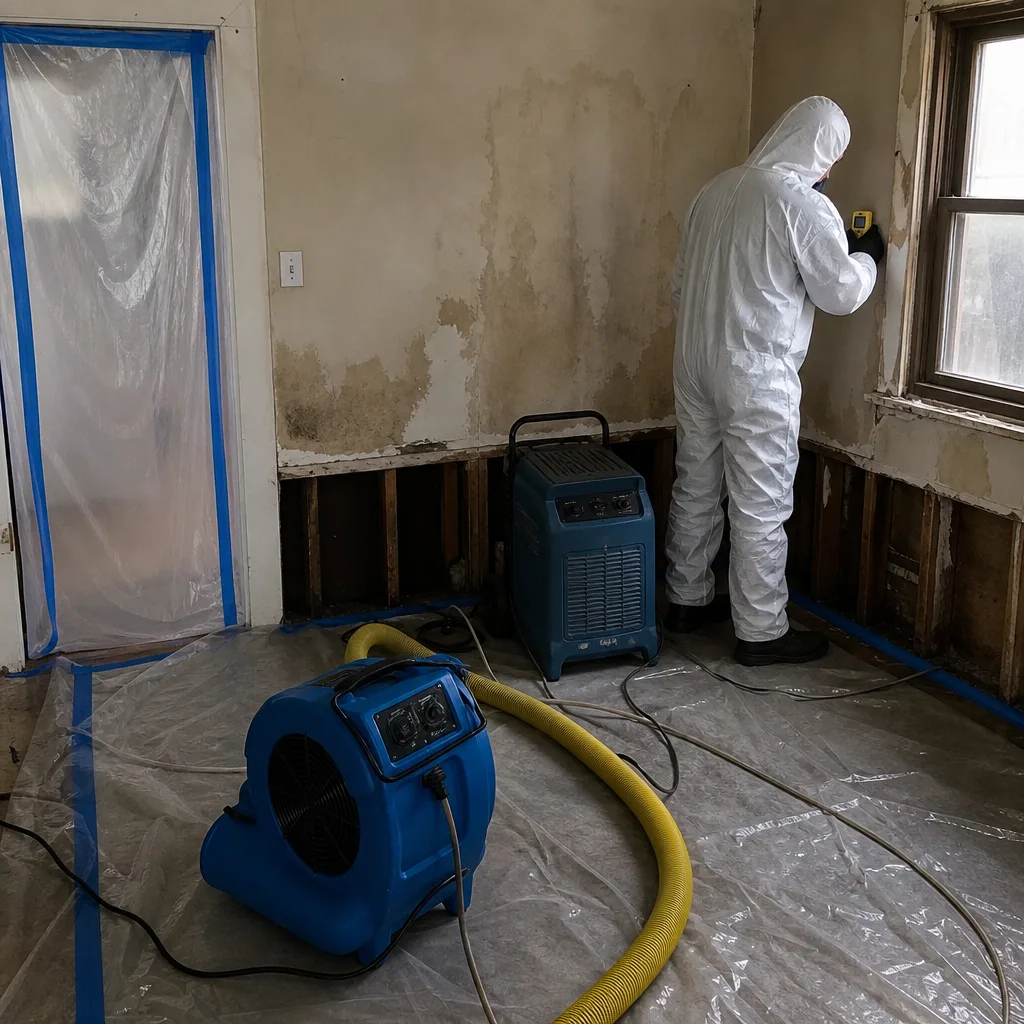 Before
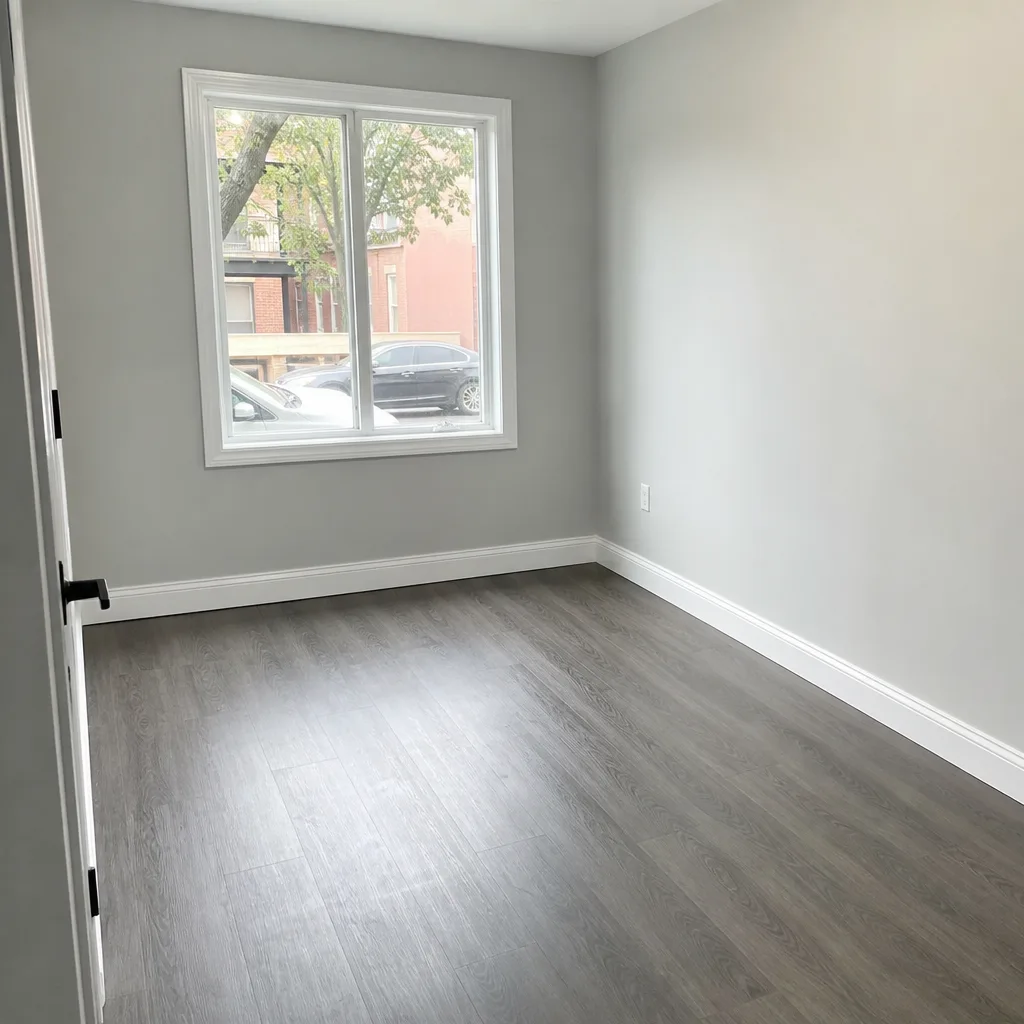 After
After24/7 Emergency Storm & Disaster Restoration in East Flatbush
Storm damage in East Flatbush doesn’t wait for business hours, and neither do we. Wade Ferris answers his own phone at (363) 300-2771 around the clock, and his crews can be rolling toward your block within 45 minutes of your call. Whether a nor’easter just tore the parapet off your attached brick two-family or a summer downpour pushed sewage up through your basement floor drain, the first hour determines how much gets saved and how much gets torn out. Call us the moment you see water where it shouldn’t be. We’ll walk the damage with you, give you a straight answer on scope, and get to work. The visual inspection is free, and if it’s inside our county, so is the trip.
Understanding Storm & Disaster Restoration Severity in East Flatbush Properties
Not all storm water is equal. Restoration crews classify floodwater in three categories, and in East Flatbush, the ugly truth is that most storm flooding lands in Category 3. That’s the classification for water containing sewage, pathogens, and other contaminants, and it’s what happens when Brooklyn’s combined sewer system surcharges during heavy rain. Stormwater and raw sewage share the same pipes here, so when the system backs up through basement floor drains across Flatbush, Church Avenue, and Linden Boulevard, you’re not dealing with a clean-water pipe break. You’re dealing with black water that requires full containment, antimicrobial treatment, and removal of saturated porous materials.
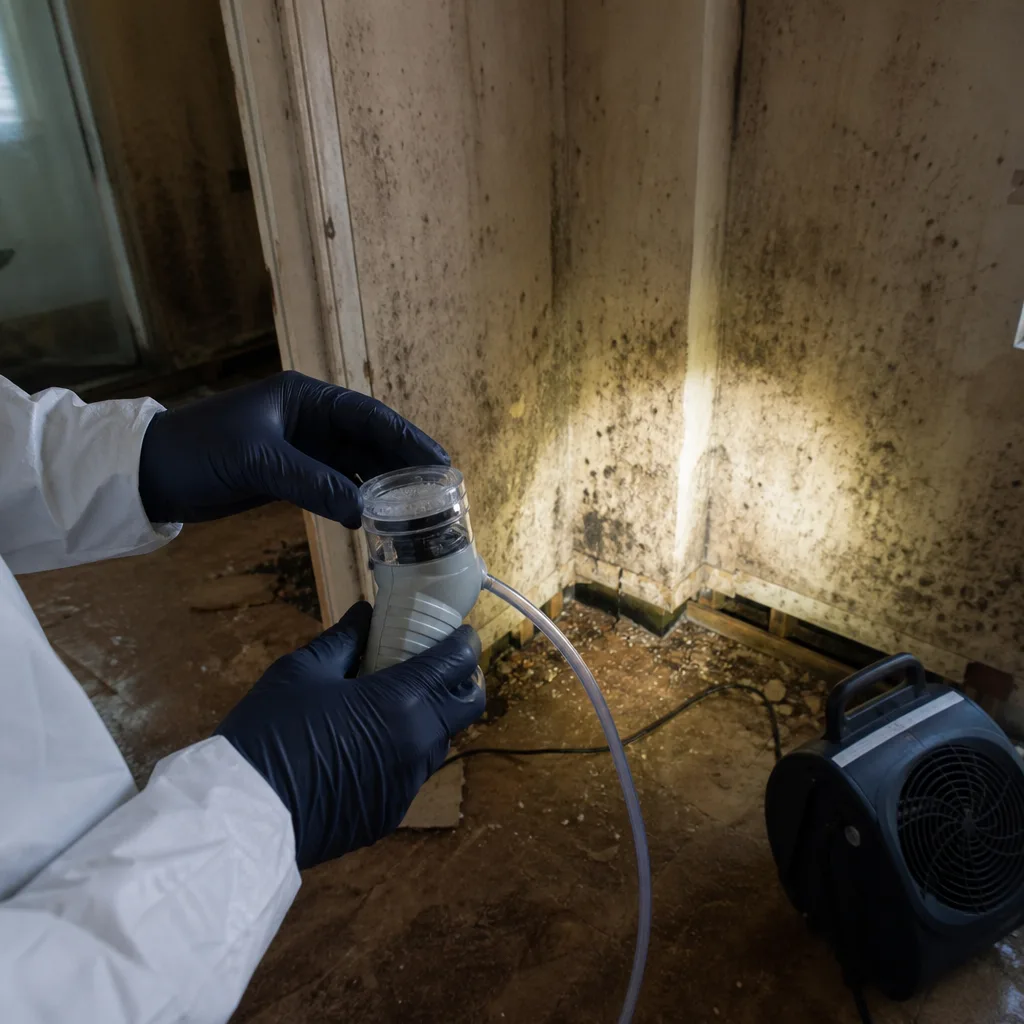
The other severity factor hiding in East Flatbush homes is the building envelope itself. These 1920s and 1930s brick row houses and semi-detached two-families release moisture slowly; brick holds water and plaster-and-lath walls hide it deep. A moisture meter reading taken only at the drywall surface can miss saturated plaster underneath for weeks, which is how “a little water stain” becomes a full mold remediation. We map moisture with thermal imaging and take readings at multiple depths before we declare anything dry.
Why East Flatbush Property Owners Choose Wade’s Restoration
- 45-minute response commitment - Wade dispatches crews from the NYC office straight into East Flatbush the moment you hang up. You won’t wait half a day while water keeps rising.
- 24/7 live answer, every single time - No answering service. No voicemail at 2 a.m. Wade picks up his own phone, day or night, and if he can’t get to you immediately, he’ll tell you exactly who’s coming and when.
- IICRC-certified crews - The people Wade sends carry WRT and ASD certifications for water damage, plus AMRT where mold is involved. They’ve trained on the exact failure modes common to East Flatbush’s attached brick stock.
- Free visual inspection - Before any work starts, you get an honest walkthrough of what’s actually damaged, what can be dried, and what has to go. No pressure, no scare tactics.
- Direct insurance billing - Wade works with your adjuster directly, so you’re not stuck relaying numbers between a carrier and a contractor. He’s done this since 2007 and knows exactly what documentation insurers need.
- One team from extraction to rebuild - The same crew that pumps out your basement is the crew that hangs new drywall and paints. No third-party subs showing up with no context on what happened.
Our Storm & Disaster Restoration Process
Inspection & Assessment
We arrive, walk the property, and document everything: visible damage, moisture readings, the water’s source, and the water’s category. In East Flatbush basements, we’re specifically checking for sewage contamination and checking whether the space has DOB legalization status before we touch anything. You get a straight answer on scope before any equipment comes off the truck.
Extraction & Stabilization
Submersible pumps and truck-mounted extractors go in first. We pull the standing water, remove saturated debris, and stabilize the structure so nothing gets worse. For storm damage, this also means emergency board-up and roof tarping where wind or falling branches opened the envelope.
Drying & Dehumidification
Dri-Eaz dehumidifiers and high-velocity air movers run continuously, with hygrometers logging moisture levels every day. We don’t guess at dryness. The numbers tell us when the structure is actually dry, and we hand you the full moisture log at the end.
Cleaning & Sanitization
For Category 3 water, cleaning means antimicrobial treatment and HEPA air scrubbing to capture airborne contaminants. Every affected surface gets treated, not just the ones that look dirty. We also remove and dispose of contaminated porous materials properly, sealed and tagged for the landfill.
Specialty Treatment for Plaster & Masonry
East Flatbush homes have original plaster-and-lath walls and brick envelopes that need a different approach than drywall tear-out in a suburban split-level. We use injection drying for wall cavities and monitor the slow release of moisture from brick, so hidden mold doesn’t bloom three weeks after we leave.
Repairs & Restoration
Once the structure is dry and tested, we rebuild: new drywall, plaster repair, flooring, trim, paint. The same crew that did the mitigation does the finish work, so nothing gets lost in translation. Your home looks like the storm never happened.
Need Emergency Storm & Disaster Restoration in East Flatbush Now?
Crews minutes away, answering live 24 hours a day. The sooner we start, the less it costs.
Working With Your Insurance Company
Storm and flood claims in East Flatbush get messy fast, especially when sewer backups and basement apartments are involved. Wade has handled adjusters from every major carrier since 2007, and he knows what makes a claim move and what makes it stall. From the first hour, we’re documenting everything: photos of the damage room by room, moisture readings, a line-item scope of work, and the full drying log. When your adjuster calls, Wade talks to them directly. You’re not stuck in the middle translating contractor-speak into insurance-speak. If there’s a dispute about scope, Wade’s documentation gives your adjuster exactly what they need to approve the work the first time.
What We Provide Your Insurer
- Thorough documentation of the loss
- Photos of all damage, room by room
- Moisture readings and drying logs
- A detailed, line-item scope of work
- Direct coordination with your carrier
Built for East Flatbush’s Loss Calendar
East Flatbush storms follow a rhythm, and after two decades of working these blocks, we know the calendar. January and February bring the deep freezes that burst supply lines in uninsulated basement walls and exterior hose bibs, and the water finds its way through utility penetrations into finished basements. March and April are thaw season, when saturated ground and heavy rains push hydrostatic pressure against brick foundations, and seepage finds every mortar crack. Summer is flash-flood season: short, violent convective downpours overwhelm the combined sewers along Church Avenue and Remsen Avenue, and raw sewage backs up through floor drains. Then come the nor’easters from late summer through fall, with high winds tearing at parapet walls and flat roof membranes on block after block of attached rowhouses. Each season has its own signature damage, and our crews come prepared for whatever the month brings.
Storm & Disaster Restoration Across East Flatbush’s Neighborhoods
East Flatbush isn’t one uniform grid. The blocks around Remsen Village, between Church Avenue and Linden Boulevard, are dense with attached brick two-families where a single roof failure at the party wall means two households filing claims. Over near Wingate and Pigtown, toward the eastern edge of the neighborhood, you’ll find more semi-detached homes with driveways and slightly larger lots, but the same combined-sewer backups when the system surcharges. The corridor along Utica Avenue is our most frequent route for flood calls, partly because the commercial buildings there sit at lower elevations than the residential blocks behind them, and the sewers along that stretch are among the oldest in the neighborhood. Around Kings Highway and the northern blocks near Empire Boulevard, we see more wind damage to parapet walls, because those streets run slightly higher and catch the full force of nor’easter gusts. Wherever you are in East Flatbush, we know the street, the building type, and the likely failure point before we even ring the bell.
Specialized Storm & Disaster Restoration Services We Offer in East Flatbush
Flood Damage Restoration
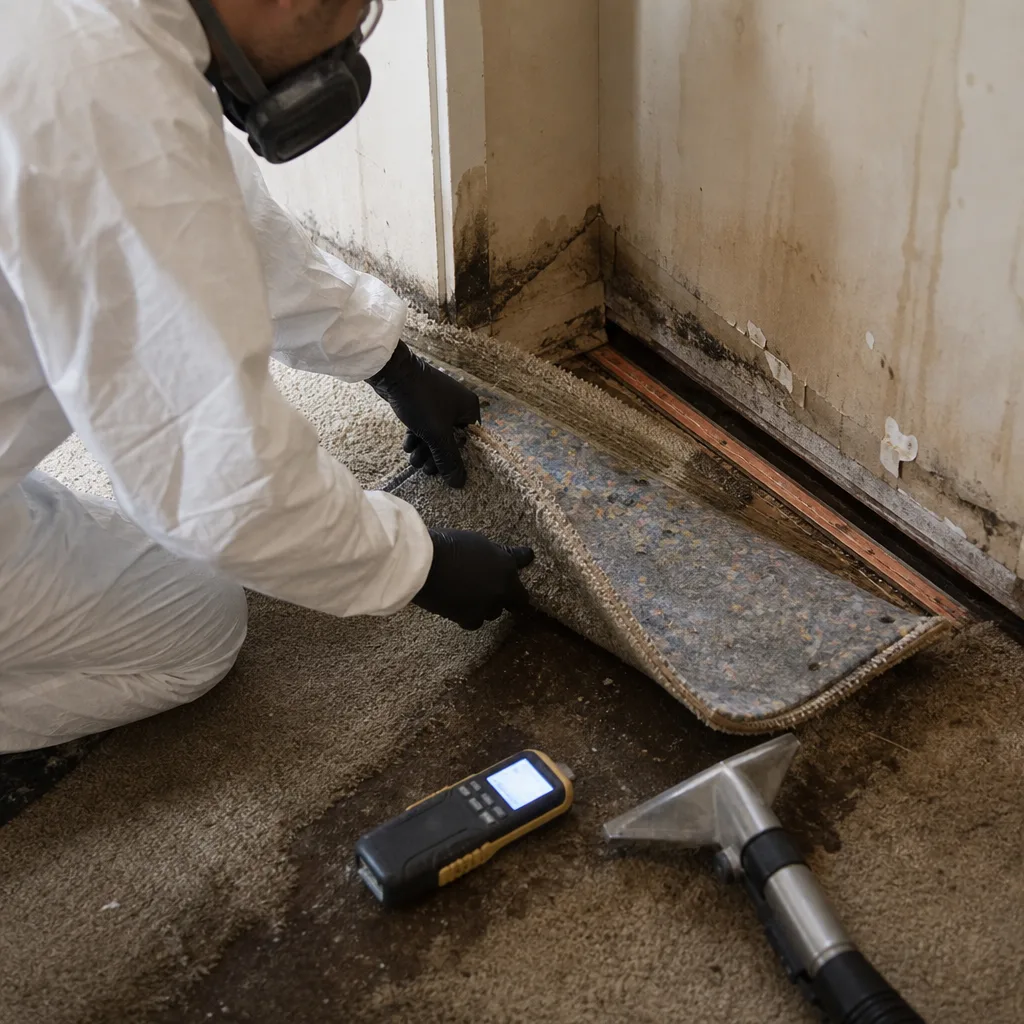
In East Flatbush, flood damage usually means sewer backup in a below-grade space, and that’s Category 3 water every time. We contain the affected area, extract the contamination, remove saturated materials, and dry the structure with Dri-Eaz dehumidifiers and XPOWER air movers. The contaminated materials get bagged, sealed, and removed per IICRC S500 standards. We also check DOB legalization status on any basement living space, because that one detail changes the entire restoration pathway and your insurance timeline. If the space isn’t legal, we’ll stage the mitigation properly and tell you exactly what the permit path looks like before rebuild can proceed.
Storm Damage Cleanup
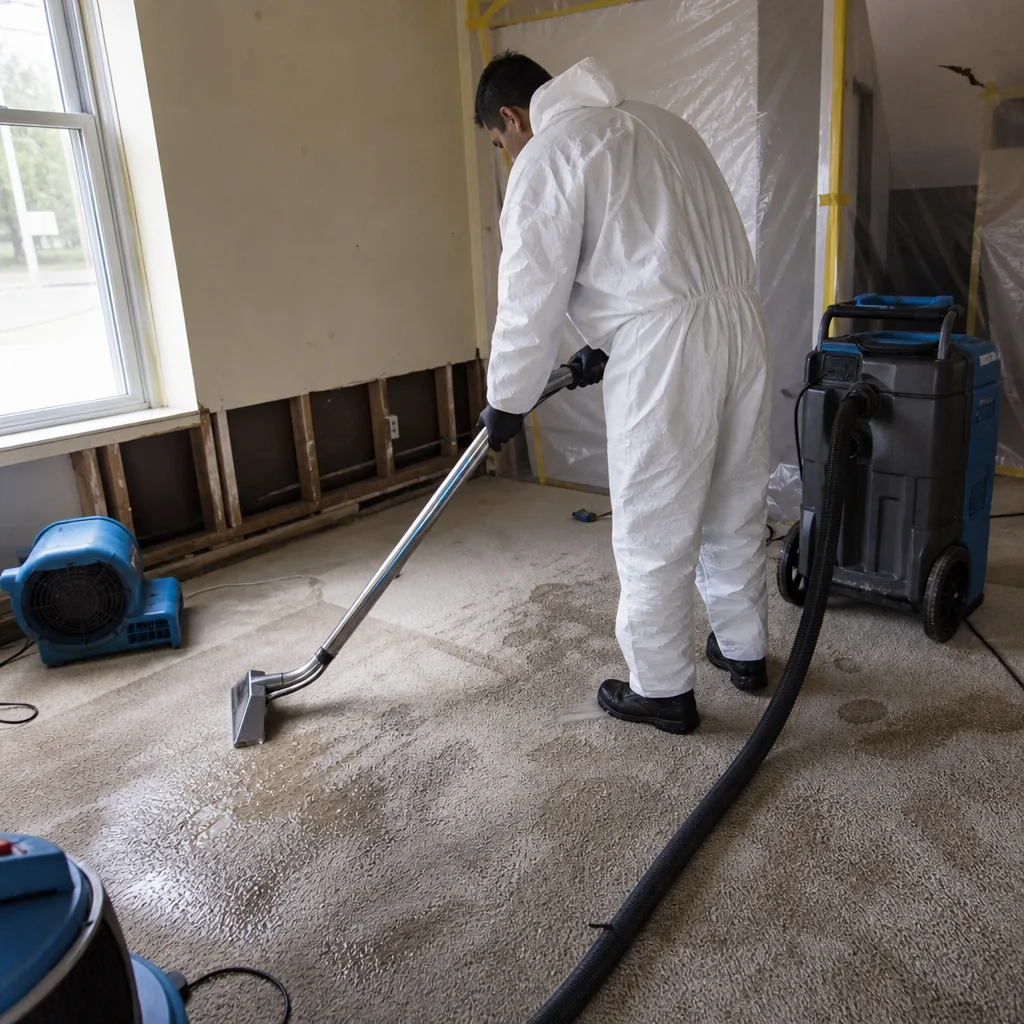
Wind-driven rain, falling branches, and blown-in debris create mess that’s more than cosmetic. We remove fallen trees and limbs that penetrated walls or roofs, clear storm debris safely, and document every point of entry into the structure. That documentation matters for your claim: an insurer needs to see exactly where wind-driven rain got in, not just that your living room ceiling is wet. We also inspect hidden areas, above plaster ceilings and behind parapet walls, where water from a wind-driven leak migrates before it shows up as a stain.
Emergency Board-Up
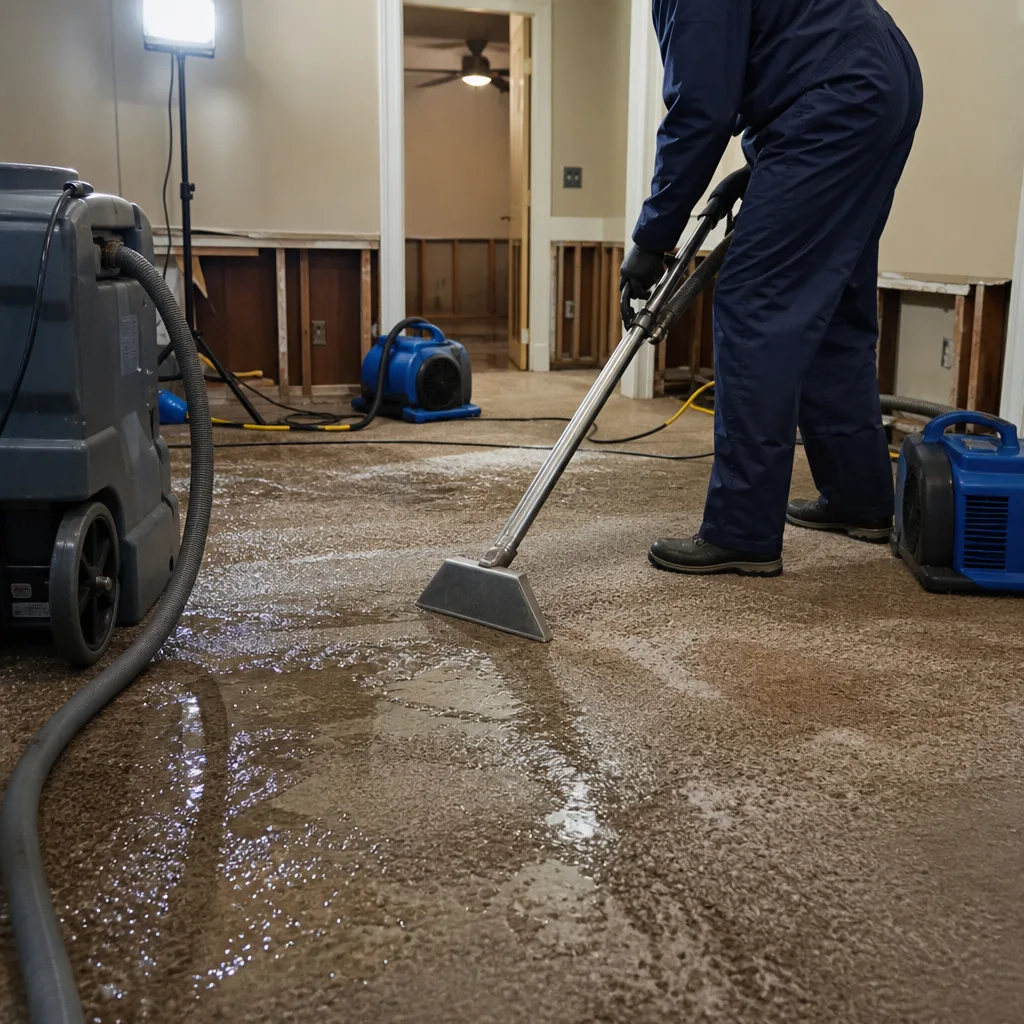
When wind tears a window out or a branch punctures a wall on a Utica Avenue two-family, the opening has to be secured immediately. We board up with plywood cut to fit the opening, sealed against further water intrusion, and secured properly. This isn’t just about security, although that matters in East Flatbush as much as anywhere. It’s about stopping additional storm damage while you wait for permanent repairs. We get it done the same day we get your call.
Roof Tarping
Flat and low-pitch roofs with masonry parapets are the dominant roofing type in East Flatbush, and they fail differently than pitched shingle roofs in the suburbs. The most common failure isn’t the membrane at all; it’s a clogged interior roof drain behind the parapet wall that backs up and sends water over the flashing into the house. Before we tarp, we check the drains. If the membrane is sound and the drain is clogged, tarping won’t fix the problem. We’ll tell you what’s actually wrong, and we’ll tarp to stop immediate water entry while you decide on the permanent fix. No wrong-scope roof replacement pushed on you.
Debris Removal
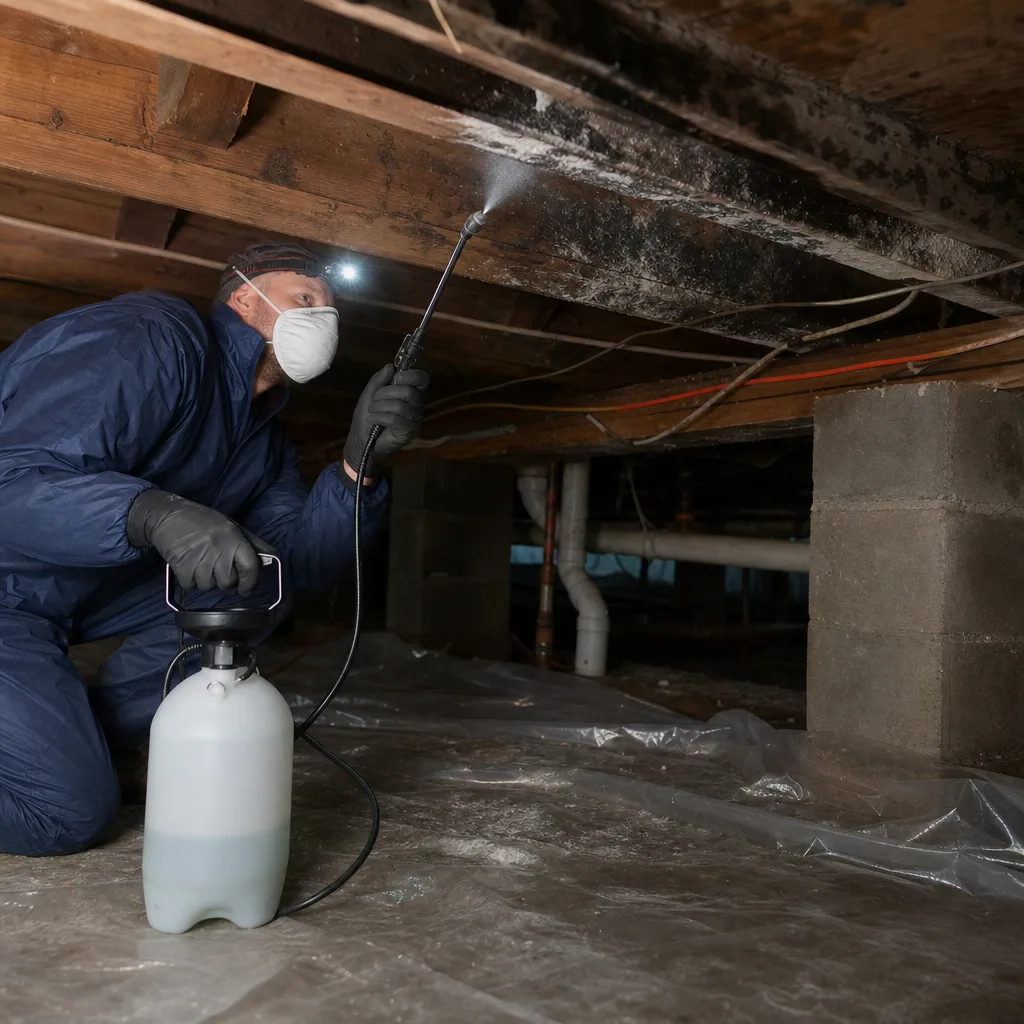
Storm debris in East Flatbush isn’t always tree limbs. It’s roof membrane sections torn free, broken masonry from parapet walls, and in the worst cases, furniture and belongings from flooded basements that have to be removed and disposed of as contaminated waste. We do the heavy lifting, sort what’s salvageable from what’s contaminated, and haul it away. You don’t need to touch any of it, and for Category 3 materials, you shouldn’t.
What happens when you call
- 1
A real person answersNo phone trees - you reach a local pro.
- 2
You get an upfront price rangeHonest numbers before anyone is dispatched.
- 3
A background-checked tech heads outLicensed & insured, dispatched right away.
- 4
You approve before work beginsNothing starts until you say go.
Storm & Disaster Restoration Costs in East Flatbush, NY
Straight numbers, because you deserve to know what you’re looking at. Flood damage restoration with sewage backup in an East Flatbush finished basement typically runs $4,500 to $18,000 depending on the size of the space, how much drywall and flooring has to come out, and whether antimicrobial treatment and containment are required. Emergency board-up for a standard window opening runs $250 to $600. Roof tarping on a flat or low-pitch attached rowhouse runs $450 to $1,200, depending on access and how much plywood and anchor material we need. Debris removal is priced by volume: a full truck of storm debris runs $350 to $800, and Category 3 contaminated materials cost more to dispose of legally.
What moves the price most in East Flatbush is whether the basement unit is DOB-legalized. If it is, remediation proceeds normally and insurance typically covers the loss subject to your policy. If it’s not, we have to stage the work differently, and your claim may be delayed or denied depending on your carrier. We’ll tell you which situation you’re in before we start, not after. The free visual inspection gives you a firm scope and a written estimate before any work begins.
We Also Serve Cities Near East Flatbush
Our crews cover the surrounding neighborhoods too. We handle storm and disaster restoration in East Flatbush and regularly work in East New York, Jamaica, Canarsie, and Glendale. If you’re anywhere in central or eastern Brooklyn and the storm just hit, call. If we can’t get a crew to you fast enough, we’ll tell you straight and point you to someone who can.
Serving East Flatbush, NY - Our Local Coverage Area
We’re based in the East Flatbush area and know this community well. Use the map below to see our service coverage - if you’re nearby, we can almost certainly help.
East Flatbush Storm & Disaster Restoration Questions, Answered
What makes East Flatbush basement flood damage more dangerous than in newer neighborhoods?
East Flatbush basements flood with Category 3 black water because the neighborhood runs on a combined sewer system, and when nor’easters or summer downpours overwhelm it, raw sewage backs up through floor drains. Newer subdivisions have separate storm and sanitary sewers, so their basement floods are typically Category 1 or 2 clean water. Category 3 water carries pathogens, and every porous material it touches, drywall, carpet, wood framing, insulation, has to be removed or professionally sanitized. Call (363) 300-2771 if you have standing water in your basement. We’ll tell you over the phone if it’s likely black water and what to do in the next 30 minutes.
My attached brick two-family got ceiling water stains after a storm, but my roofer says the membrane is fine. What else could it be?
You probably have a clogged interior roof drain behind the parapet wall. East Flatbush’s flat-roofed attached brick homes are built with internal drains that carry rainwater off the roof, and when leaves, debris, or blown-in trash block them, water ponds and seeps over the flashing into the house. The membrane is often perfectly sound, and replacing the roof won’t fix the drainage problem. We check the drains first, clear them if we can, and document what caused the intrusion for your insurer. A drainage maintenance issue and a roof failure are two completely different claims.
How fast does mold grow in East Flatbush plaster walls after a storm leak?
Mold can start colonizing in 48 to 72 hours on wet organic material, but the real danger in East Flatbush plaster walls is that the moisture hides deep behind the plaster surface, and mold grows in the wall cavity for weeks before you ever see a spot. The brick envelope releases moisture slowly, which means a wall can look dry on the outside and be saturated inside. We check multiple moisture depths, not just the surface, and if we find hidden saturation, we open the wall properly and treat it. Waiting and hoping usually turns a $2,000 drying job into a $12,000 mold remediation. Call (363) 300-2771 for a free inspection while it’s still wet.
Can you restore my finished basement after a sewer backup if it’s not a legal apartment?
We can do the mitigation work, yes. The water extraction, contamination cleanup, and drying all proceed regardless of occupancy status. What changes is the rebuild: if the basement unit lacks DOB legalization, we can’t do the reconstruction until the legalization pathway is sorted out, and your insurance claim for the rebuild will likely stall or be denied. We’ll tell you upfront what your status is, and we’ll document pre-loss condition carefully with photos and moisture logs so your adjuster has a clear picture. We won’t start a rebuild that gets red-tagged mid-project and leaves you worse off.
How do you handle plaster walls that got soaked in an East Flatbush storm?
Plaster-and-lath responds differently to water than drywall. Drywall wicks moisture and falls apart; plaster often stays intact on the surface while the wooden lath behind it stays wet, and that wet lath rots and molds inside the wall cavity. We use injection drying to get air into wall cavities, and we take moisture readings at the surface, the mid-depth, and against the brick behind the lath. In some cases the plaster can be saved; in others, it has to come out to get the cavity dry. The decision is based on readings and IICRC standards, not guesswork.
How fast can you actually get to East Flatbush?
Our crews stage from the NYC office, and East Flatbush is within a 45-minute response window. Wade answers the phone himself, and if it’s an active flood or a breached roof, he’s on the road immediately. Call (363) 300-2771 right now. If it’s after midnight and a nor’easter just put a branch through your window, you’ll still get a live voice, not a recording.
Will my insurance cover the storm damage restoration?
Most standard homeowners policies cover wind-driven rain, roof damage, and falling debris. Sewer backup is trickier: you usually need a specific endorsement for it, and many East Flatbush homeowners don’t have it. City sewer surcharge claims can also involve the city’s liability, which complicates things. Wade coordinates with your adjuster directly and provides the documentation every carrier needs: photos, moisture logs, line-item scopes, and daily drying records. If coverage is questionable, he’ll tell you that on the first call, not after you’ve spent money.
What should I do in the first 30 minutes after storm damage?
Shut off electricity to the affected area if water is present and it’s safe to reach the panel. Don’t enter standing water without knowing whether it’s contaminated. Move valuables and furniture out of the water if you can do so safely. Take photos of everything as it stands right now, before anything gets moved. Then call (363) 300-2771. Wade will talk you through the next steps on the phone and get a crew moving toward your block immediately.
Storm damage in East Flatbush compounds by the hour. Combined-sewer backups get worse, plaster walls absorb more water, mold starts its 48-hour clock, and the insurance documentation gets harder the longer you wait. Call Wade at (363) 300-2771. A real person answers, the trip is free inside the county, and the visual inspection costs you nothing. If it’s storm damage, flood, wind, debris, or a basement full of sewage, he’ll be on the road before you hang up.
Written by Wade Ferris, Owner at Wade’s Restoration, serving New York City since 2007.