
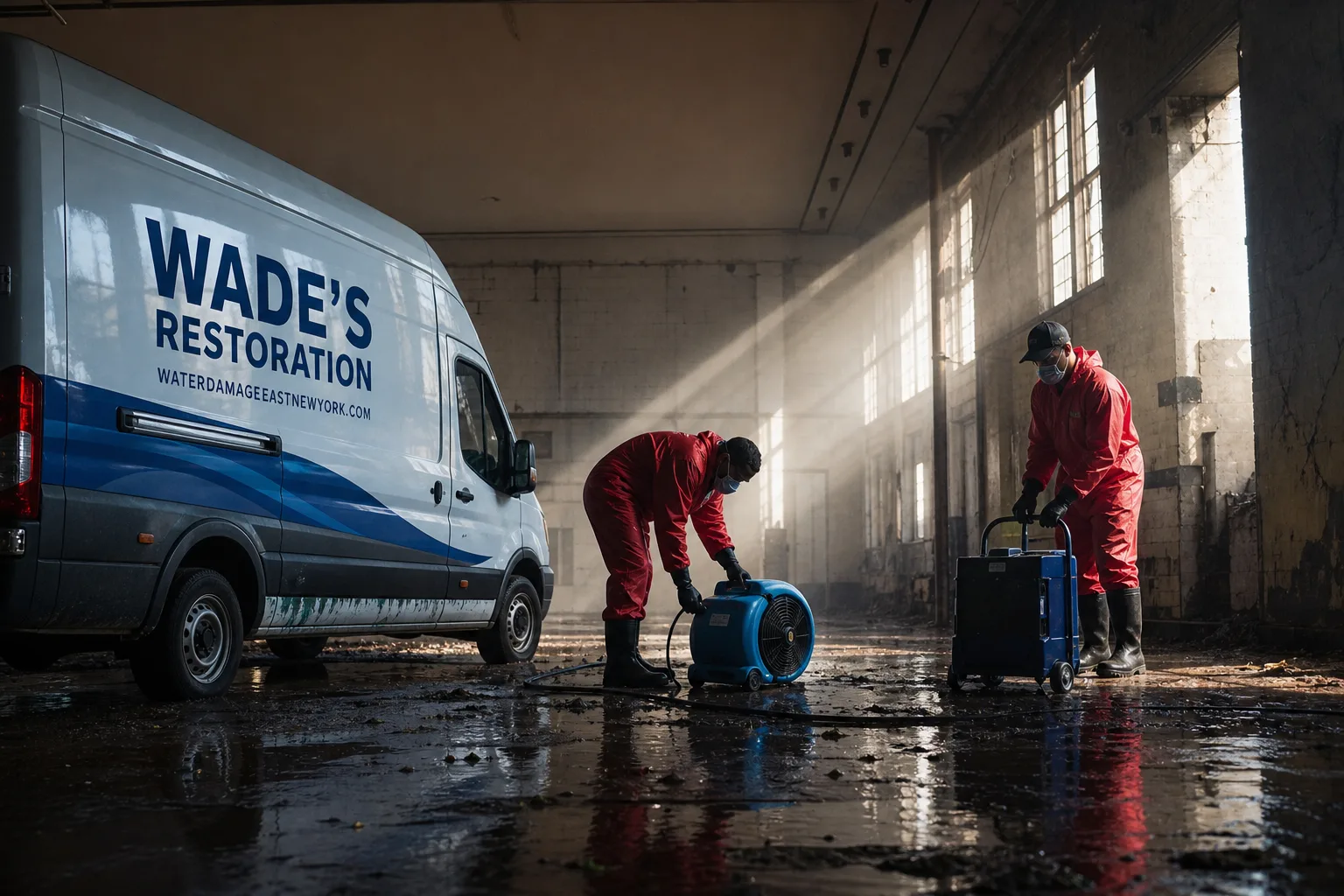
Free visual inspection and a written scope of work before any mitigation begins - photos, moisture readings, and drying logs go in your claim file
The scope we write is the scope we bill. Anything new gets shown to you, in writing, before we touch it.
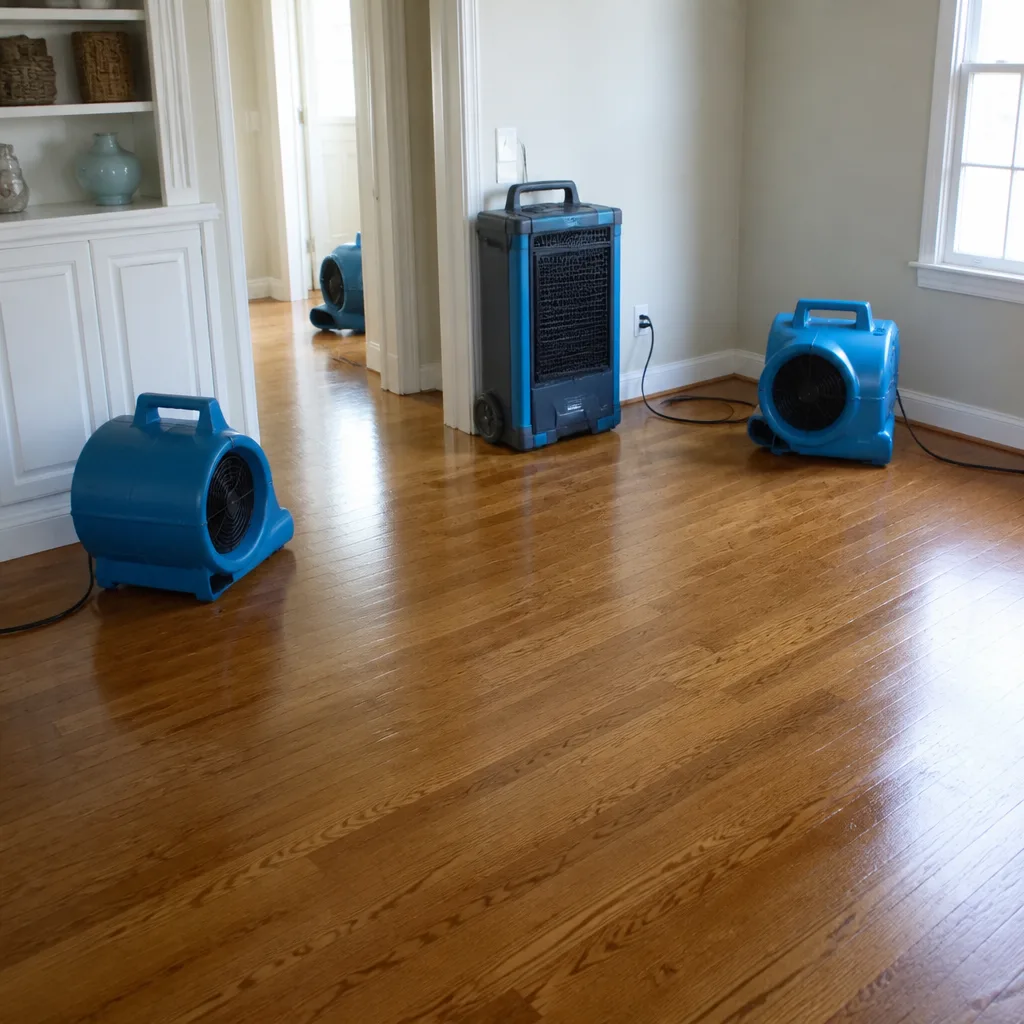
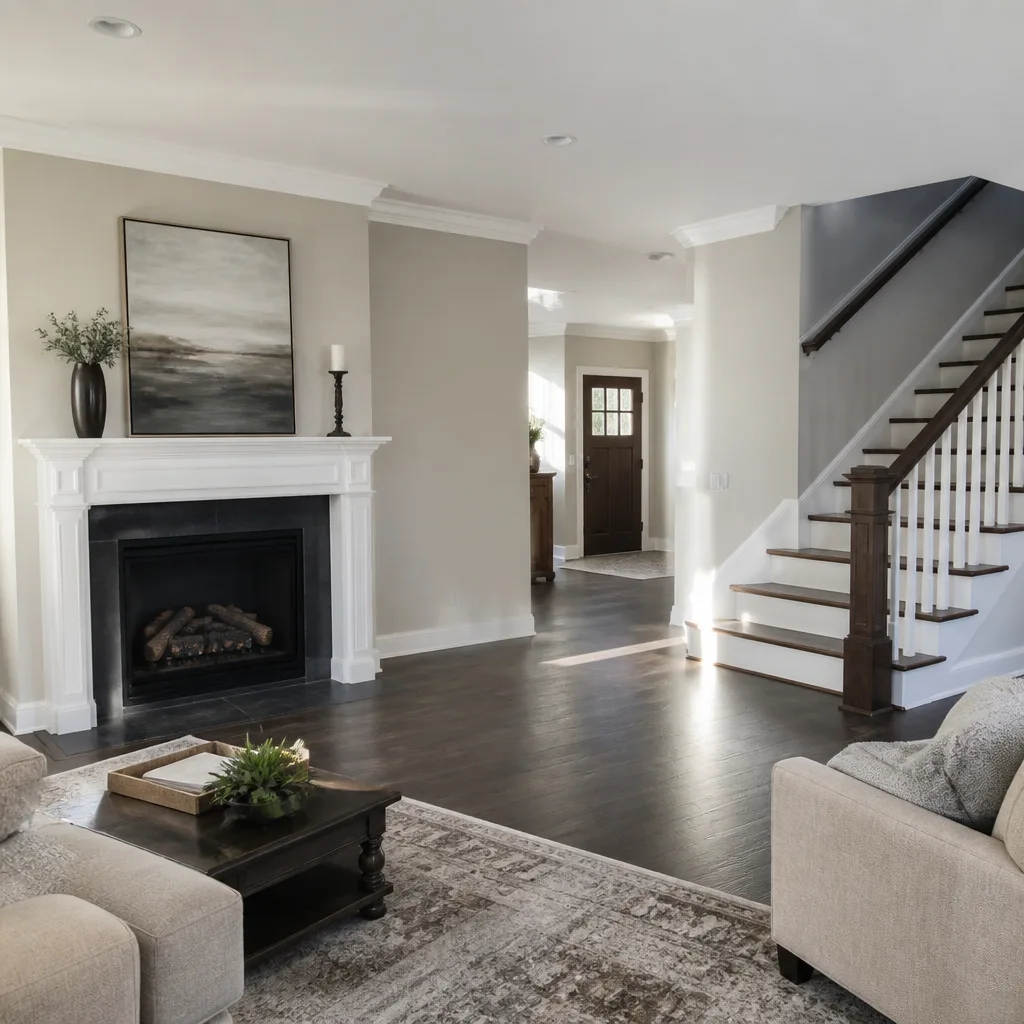

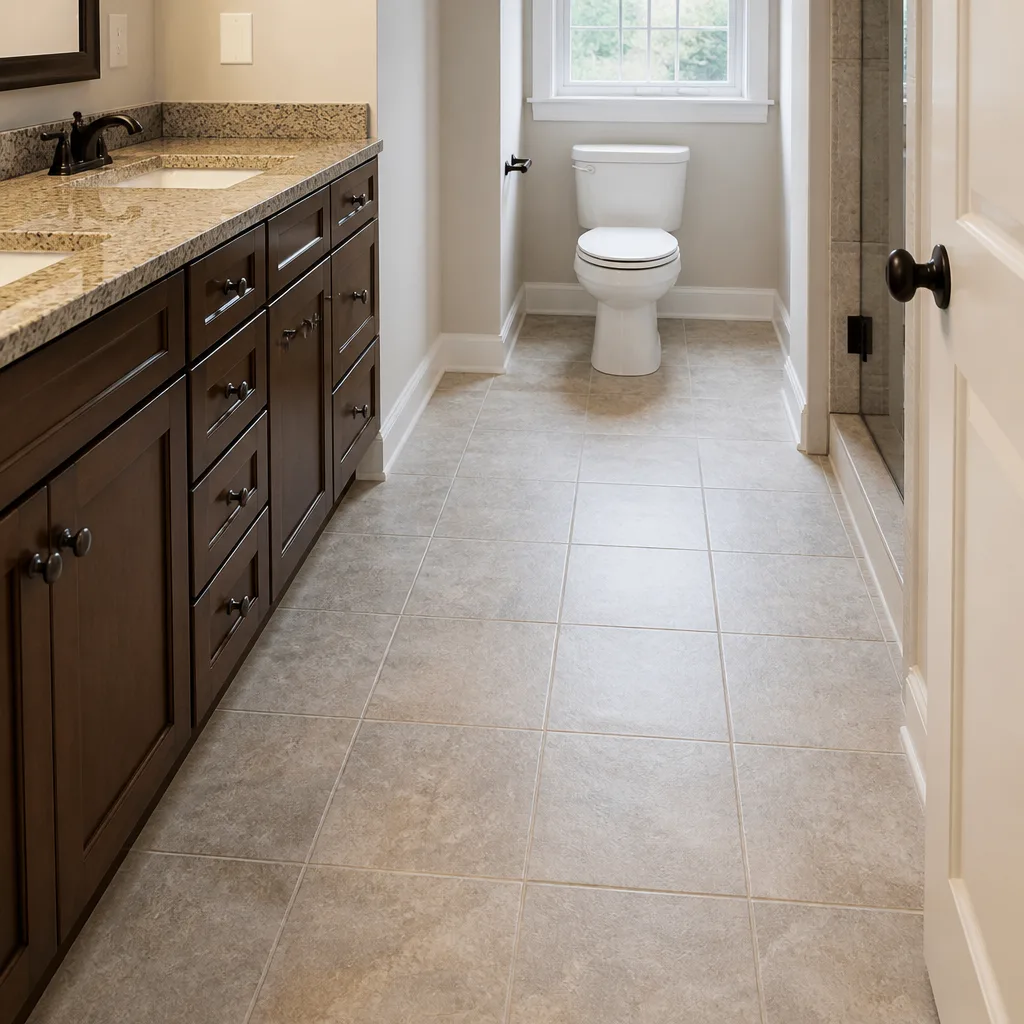
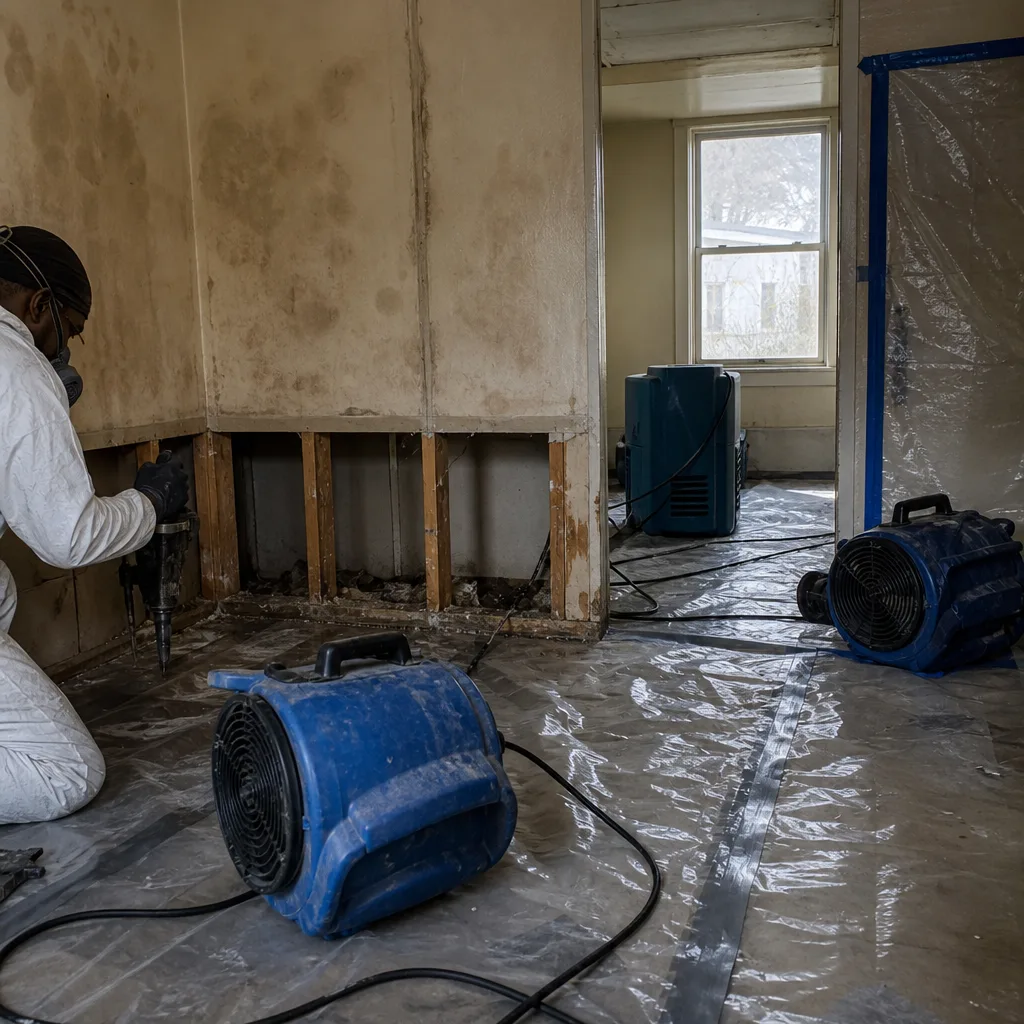 Before
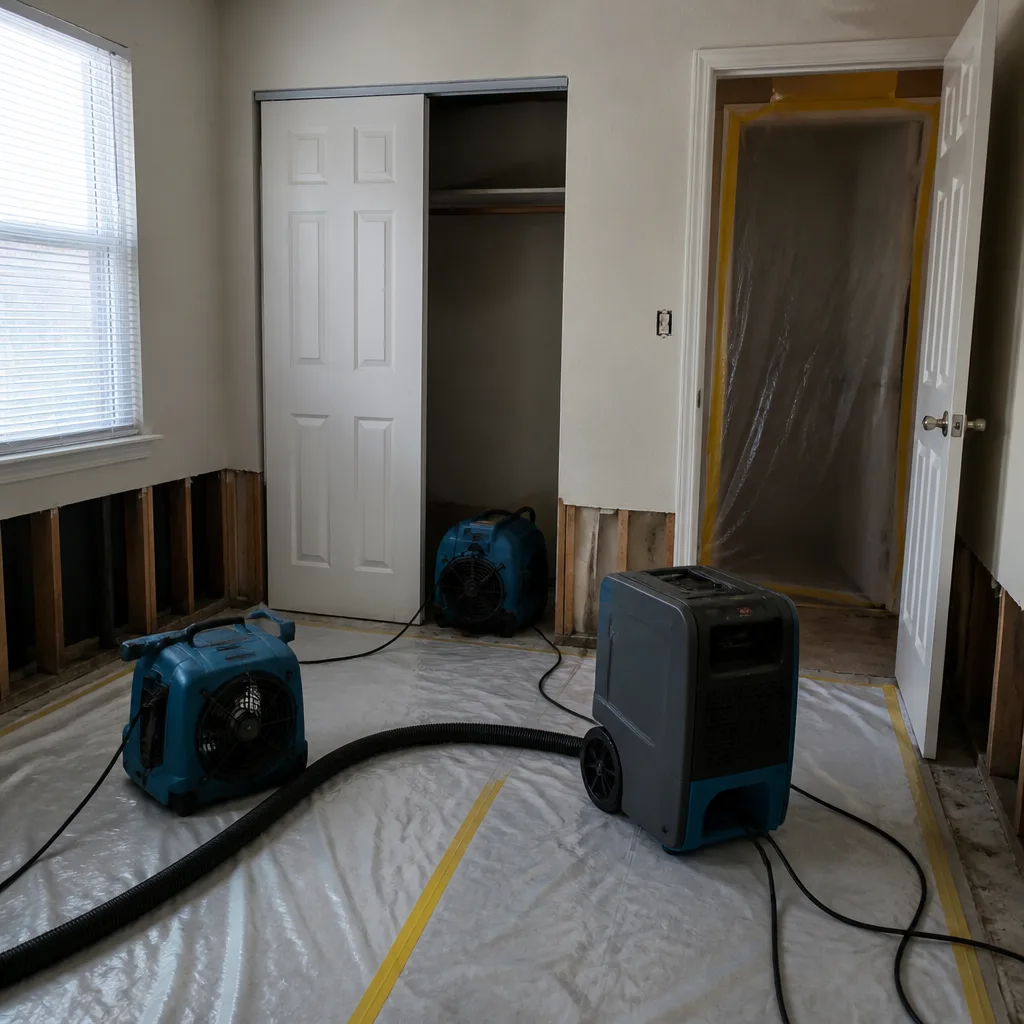 After
After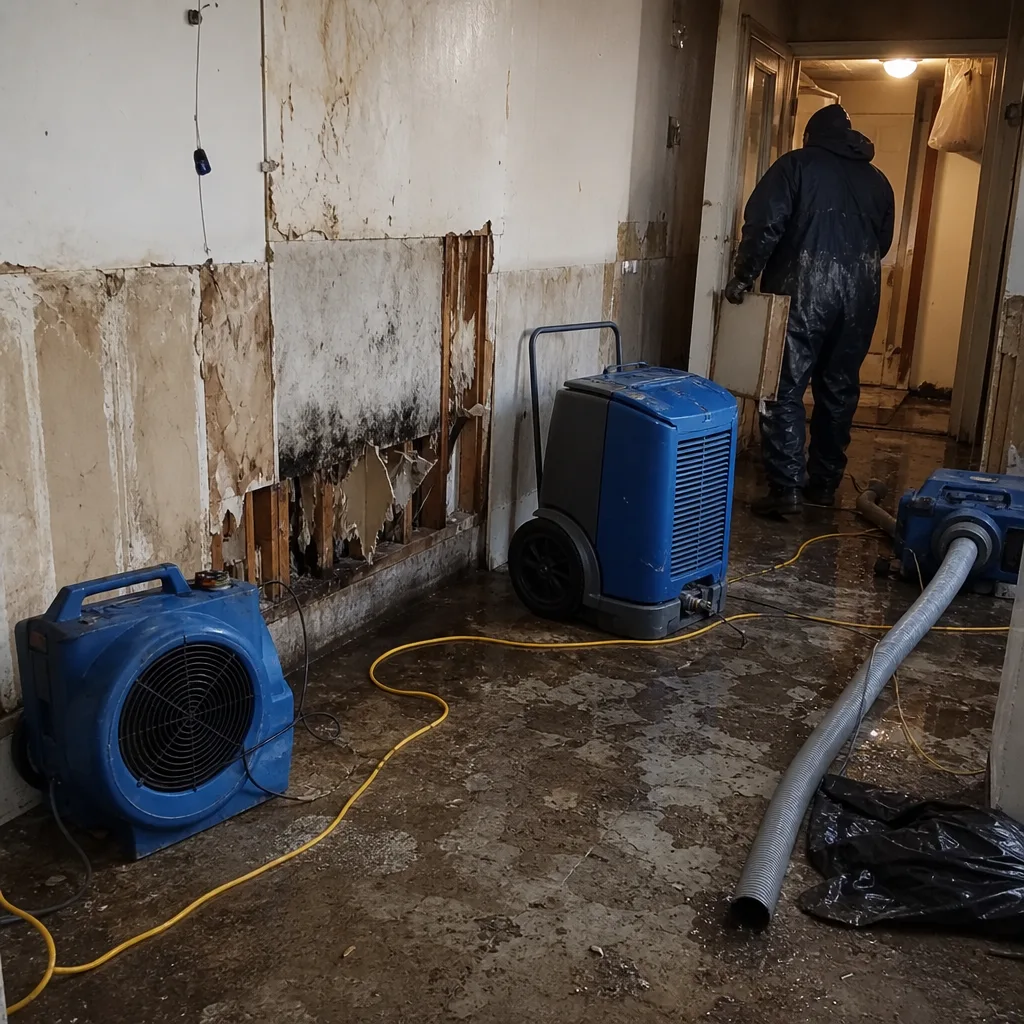 Before
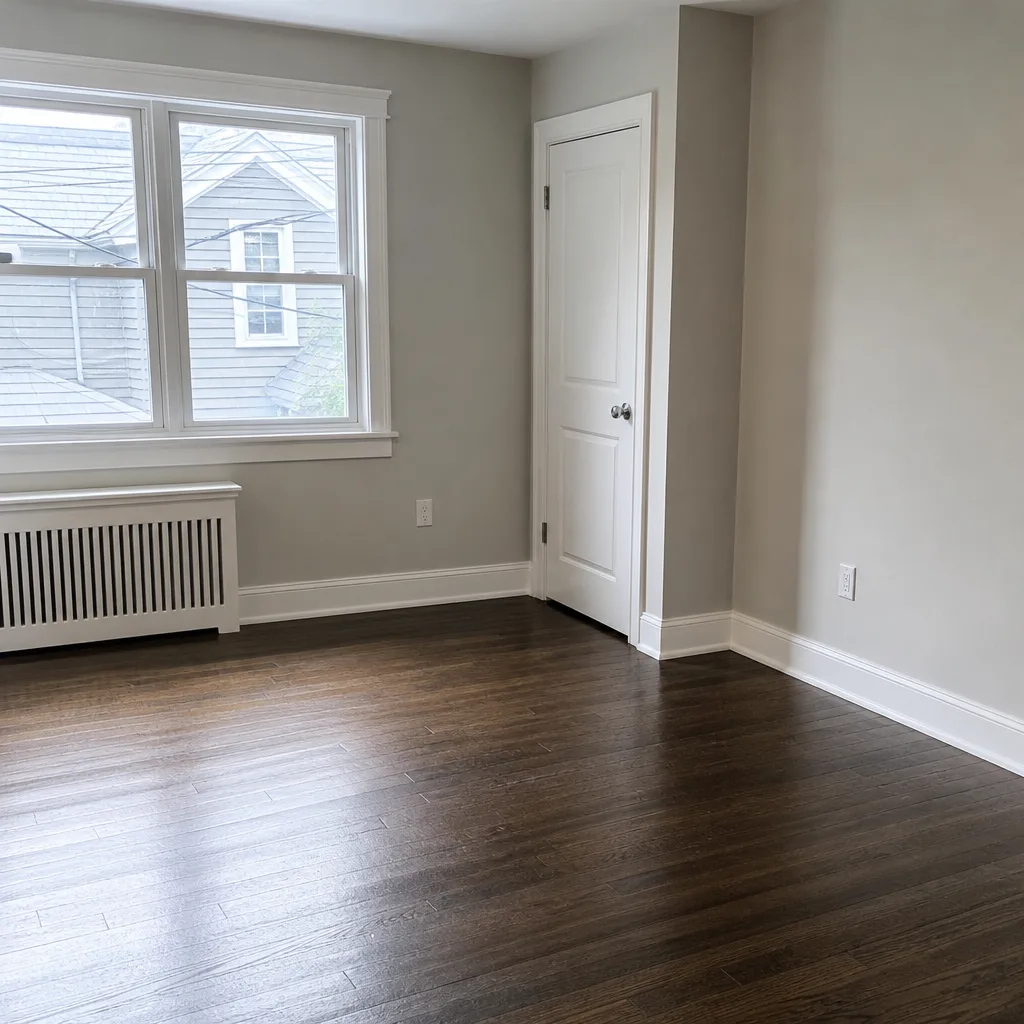 After
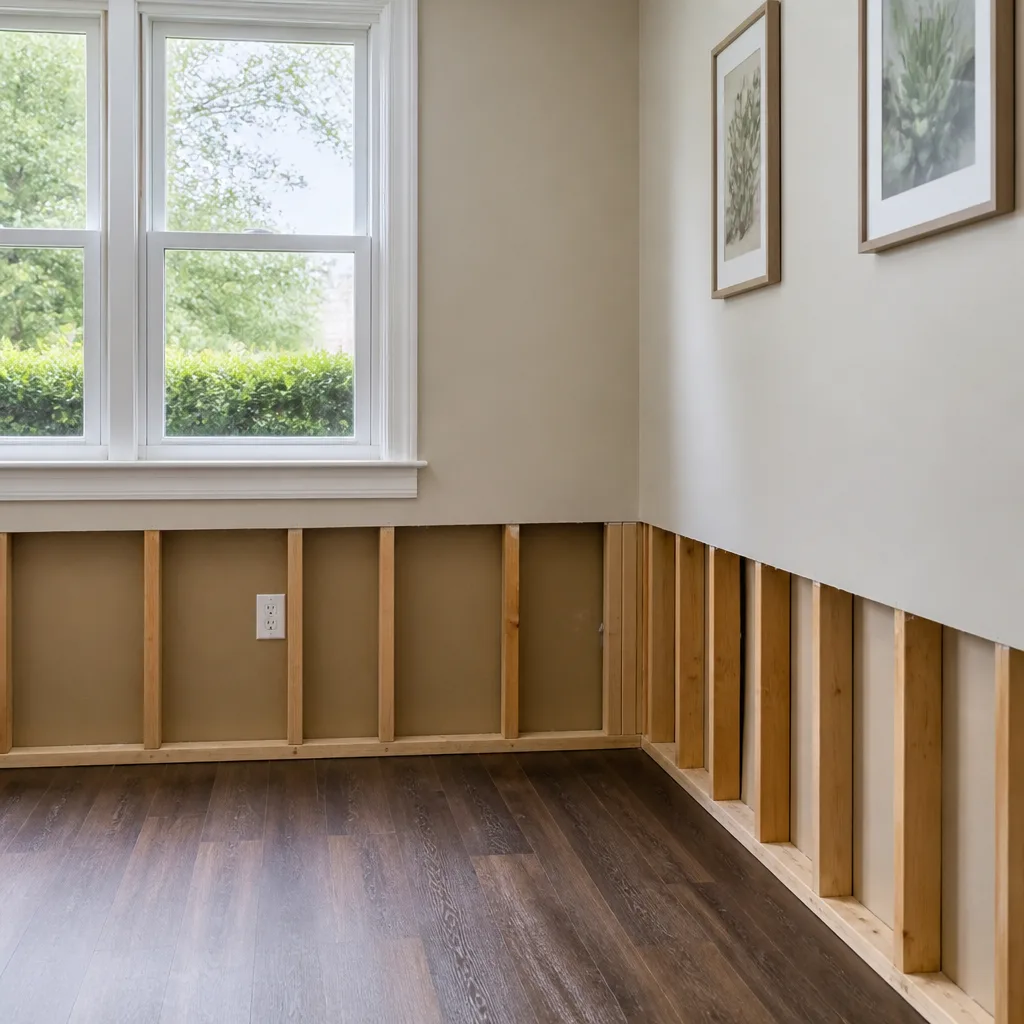
After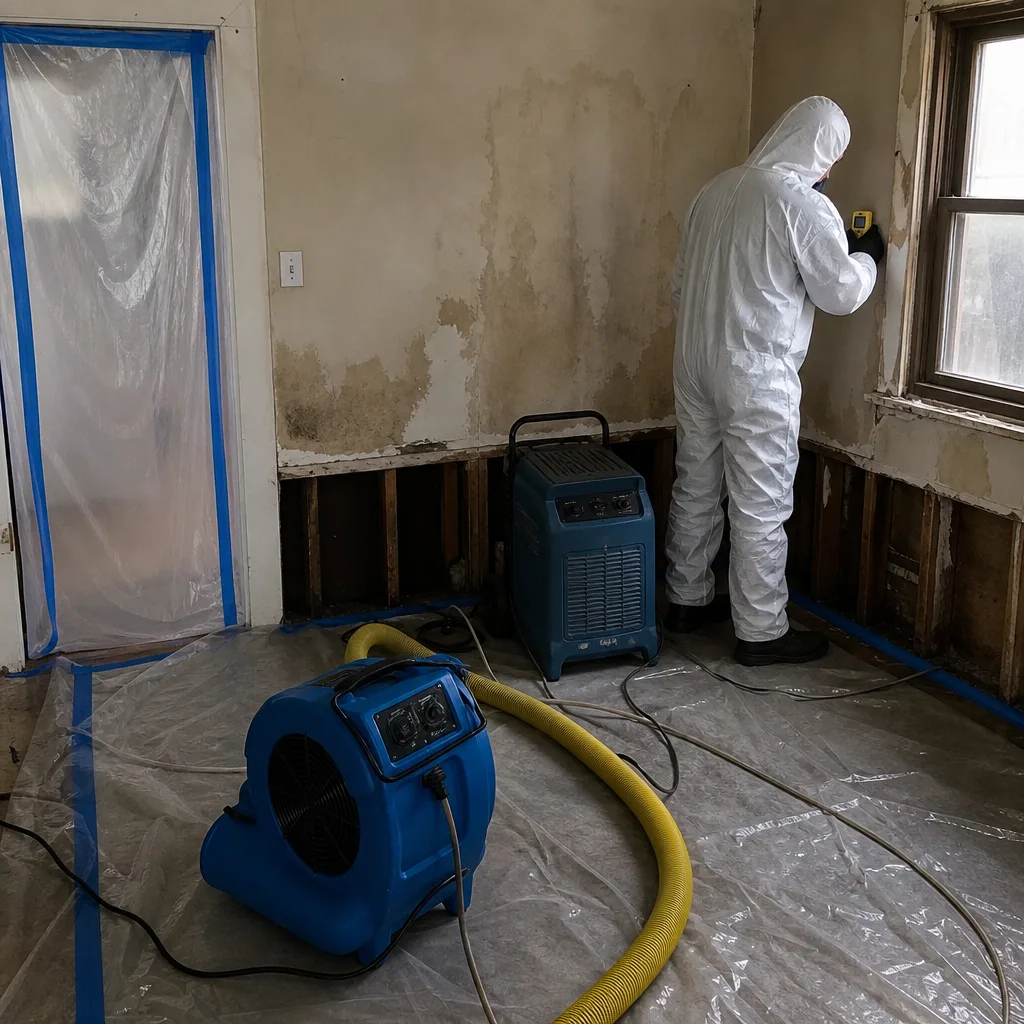 Before
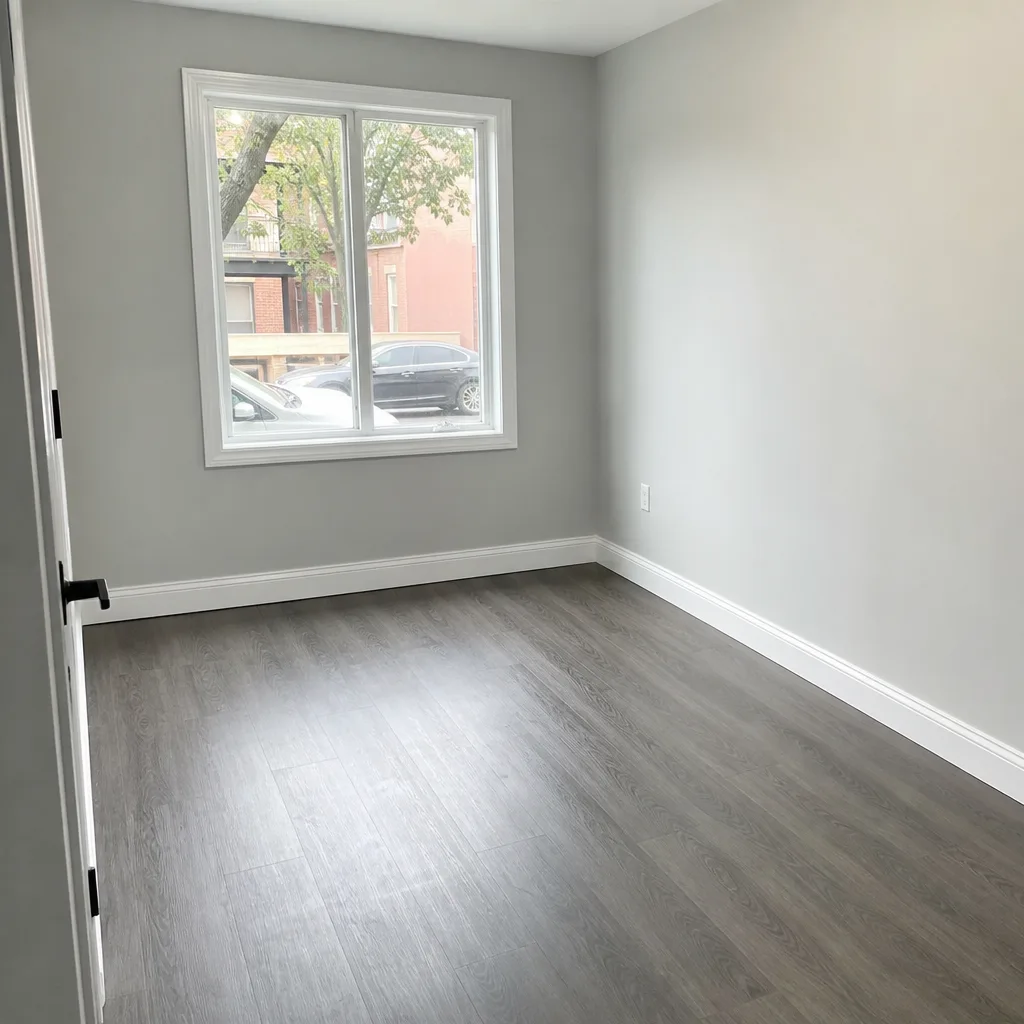 After
After24/7 Emergency Water Damage Restoration in Woodhaven
A burst supply line at 2 a.m. on a 1920s row house doesn’t wait for business hours, and neither does our Fire & Smoke Damage Restoration - Woodhaven team. Water damage restoration in Woodhaven starts with a live person answering the phone at (363) 300-2771, any hour, any day. Within 45 minutes, Wade’s team is on the road toward your block, with extraction equipment running inside the hour in most cases. The first 60 minutes after a pipe lets go decides whether you’re drying hardwood floors or replacing them. Woodhaven’s row houses share walls, so that clock moves faster here than anywhere else in Queens. Every minute water sits against horsehair plaster, oak flooring, and century-old framing, the damage compounds and the claim gets more complicated. Call before you grab the mop. The visual inspection is free, and the faster we start, the less this costs you.
For 18 years, Water Damage Restoration from Wade’s Restoration has meant one owner, one published address, and one number that rings in Wade’s own pocket. That’s the whole model: no call center, no national franchise playbook, no crew you’ve never met showing up at a house they’ve never seen. Wade answers his own phone. If he’s not on another job, he’s the one pulling up.
Understanding Water Damage Restoration Severity in Woodhaven Properties
Not all water is the same, and in Woodhaven the difference matters more than in newer neighborhoods. The trade classifies water damage into three categories. Category 1 is clean water from a supply line or faucet. Category 2 carries some contamination; think washing machine overflow or sump pump discharge. Category 3 is black water, which includes sewage backups, groundwater from outside, and anything coming up through the combined sewer. Here’s the Woodhaven wrinkle: when Jamaica Bay storm drainage pushes back through aging combined sewers into your full basement, that’s Category 3, every time. It doesn’t matter that it looks like clear water on the first pass. It isn’t clean.
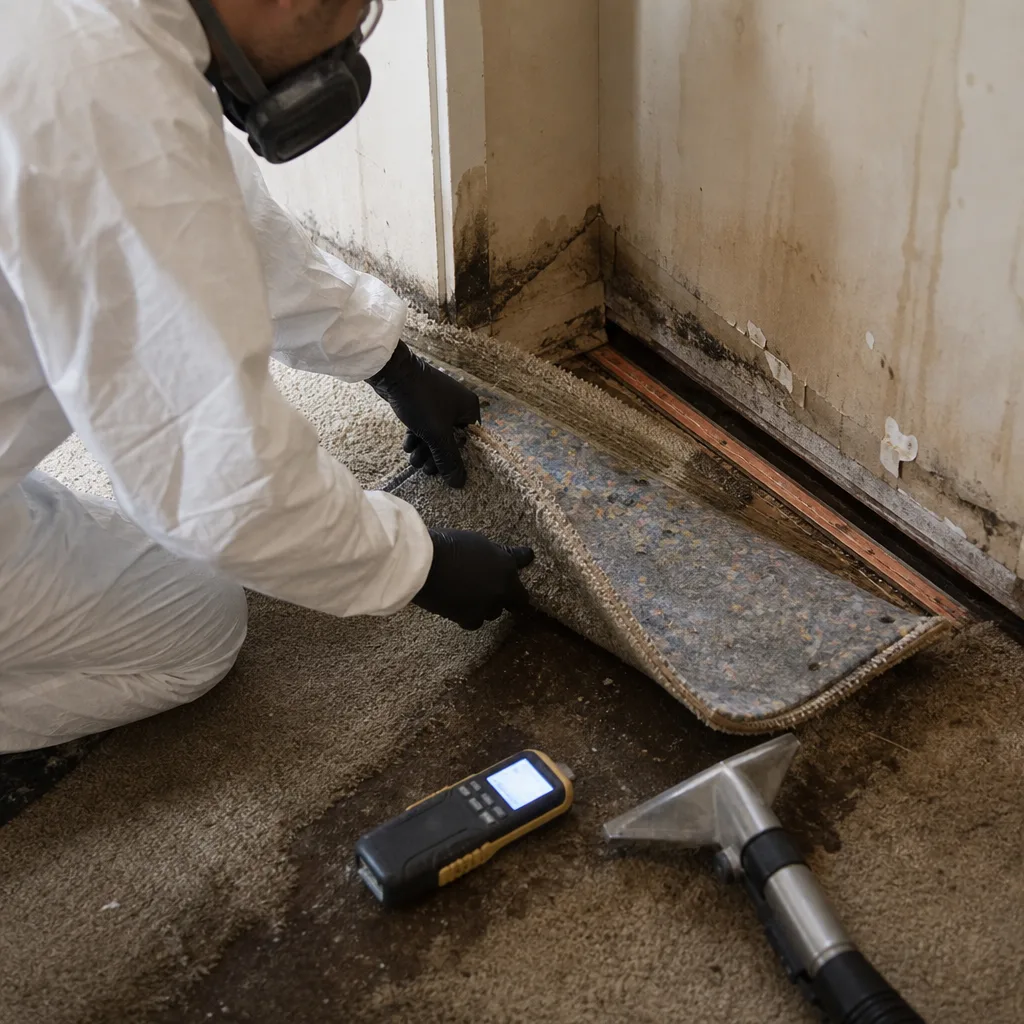
Our crews use moisture mapping, thermal imaging, and daily hygrometer readings to track what’s actually wet behind plaster and under subfloor, not just what looks wet on the surface. In Woodhaven’s 1910-1935 housing stock, that means checking lath-and-plaster assemblies, balloon framing, and shared party walls for moisture migration that a quick visual inspection would miss. The Woodhaven properties we work in almost never have modern vapor barriers or drywall cavity insulation. That changes drying strategy, equipment sizing, and whether a section of wall gets cut out entirely or saved with injection drying behind the plaster.
Why Woodhaven Property Owners Choose Wade’s Restoration
- 45-minute response commitment: When you call with standing water, Wade heads out immediately. Most Woodhaven blocks are within 45 minutes of our crews, and we commit to that in writing, not as a sales line.
- 24/7 live answer, real person: The number (363) 300-2771 rings to a human phone. At midnight, that human is often Wade himself. No automated tree, no answering service, no callback in the morning.
- IICRC-certified crews: Every technician Wade sends holds current certification in Water Damage Restoration (WRT) and Applied Structural Drying (ASD) where applicable. The letters mean trained in the standards, not just trained on the job.
- Free visual inspection: Walk through the damage with us before you sign anything. No charge for that. We’ll tell you what’s wet, what’s salvageable, and what the honest scope looks like.
- Direct insurance billing: We document from the first hour, write estimates in the carrier’s format, and coordinate directly with your adjuster so you’re not the person relaying moisture readings between two sides.
- One team, start to finish: Extraction, drying, tear-out, and the rebuild that follows are all Wade’s crew. You don’t get handed off to a string of subcontractors after the water’s gone.
Our Water Damage Restoration Process
Inspection & Assessment
We walk every affected room with a thermal camera and moisture meter, then map the true water path through walls and under floors. In Woodhaven row houses, that includes checking the shared party wall on both sides before we even set up equipment.
Extraction & Stabilization
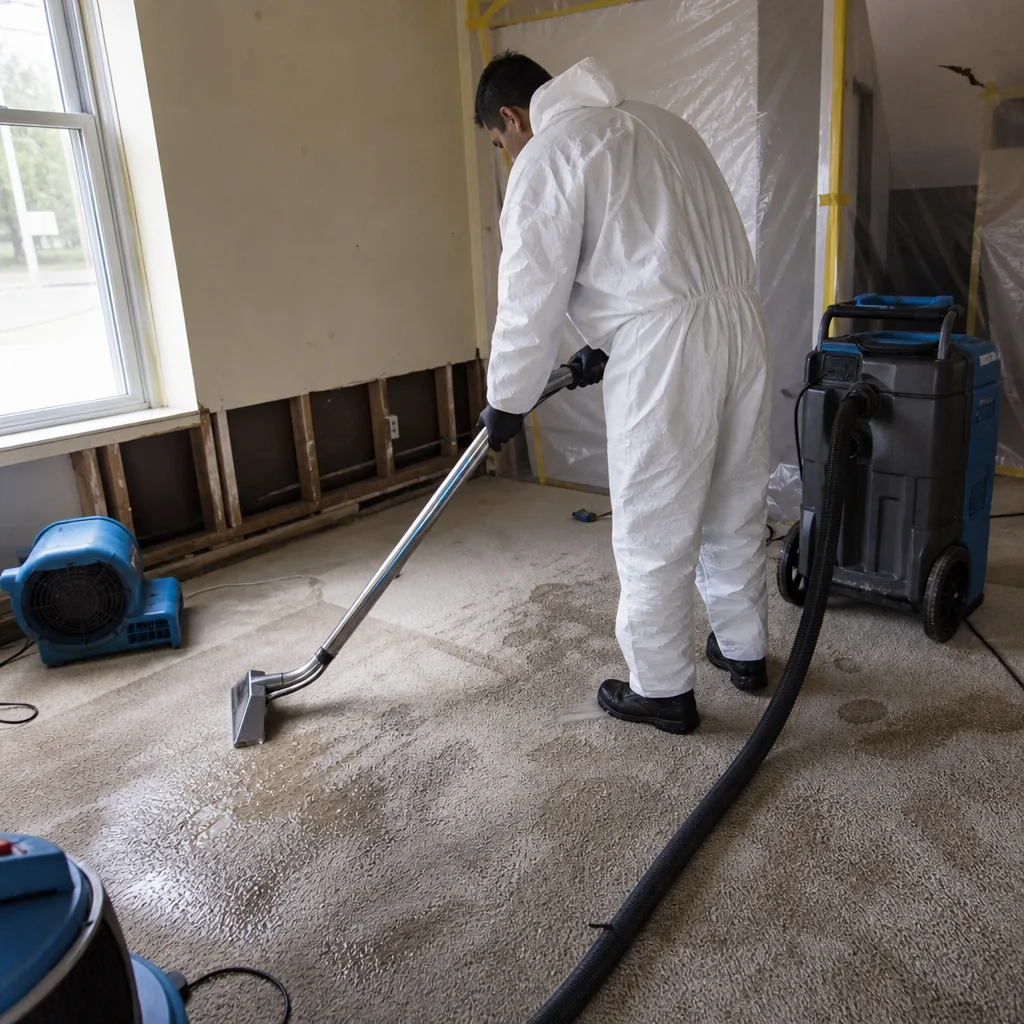
Standing water gets pulled with truck-mounted and portable extraction units, usually within the first hour of arrival. In a full Woodhaven basement, that can mean removing several hundred gallons before drying even begins.
Drying & Dehumidification
Industrial air movers and commercial dehumidifiers from Dri-Eaz and Phoenix run continuously, with daily moisture readings on every affected material. You get the full drying log at the end, not a summary.
Cleaning & Sanitization
Category 2 and 3 situations get antimicrobial treatment and HEPA air scrubbing. On sewer backups, that means full containment, removal of porous materials, and air sampling before anyone re-enters the space without a respirator.
Specialty Treatment for Woodhaven Houses
Plaster walls weren’t built to be flooded. Injection drying systems from Injectidry push air behind lath and plaster without tearing everything out, which matters when you’re trying to preserve 1920s plasterwork that can’t be matched today.
Repairs & Restoration
Once the structure is dry and the moisture log proves it, Wade’s crew handles the rebuild. That means framing repairs, plaster patching, flooring replacement, and paint. The same people who extracted the water put your house back together.
Need Emergency Water Damage Restoration in Woodhaven Now?
Crews minutes away, answering live 24 hours a day. The sooner we start, the less it costs.
Working With Your Insurance Company
Insurance is in the room from the first phone call, whether you’ve filed yet or not. We document the loss starting in hour one: photos of every affected room, moisture readings in writing, daily drying logs, and a line-item scope of work in industry format the carriers accept without a fight. When the adjuster calls, we talk to them directly. You don’t translate terms like “Category 3” and “drying chamber” back and forth. If there’s a discrepancy between what your adjuster believes the damage is and what we’re seeing with meters and cameras, we advocate for you with documentation, not argument. It’s the difference between a claim that pays for full restoration and one that leaves you covering hidden damage out of pocket a year from now. And the 90-Day Done Right Promise applies to every water damage restoration job we take in Woodhaven: if it’s not done right, we make it right, in writing.
What We Provide Your Insurer
- Thorough documentation of the loss
- Photos of all damage, room by room
- Moisture readings and drying logs
- A detailed, line-item scope of work
- Direct coordination with your carrier
Built for Woodhaven’s Loss Calendar
Woodhaven’s water damage calendar is predictable, which means you can prepare, and we can respond faster when the inevitable happens. January and February bring deep freezes that crack century-old galvanized supply lines and send water through walls that have been frozen-thawed-frozen for a hundred winters. The mortar joints in the brick row houses along Jamaica and Atlantic Avenues are the first casualty; a small gap opens, freeze-thaw widens it, and spring rain turns it into an interior leak that’s been quietly saturating plaster for weeks before you see the stain. March and April bring thaw and groundwater pushing into full basements through foundation cracks and floor-wall joints. July and August thunderstorms overwhelm the combined sewer system; basements on the low blocks of Woodhaven that drain toward Jamaica Bay take on Category 3 water within minutes, which is why our Storm & Disaster Restoration in Woodhaven crews stay on standby. September through November is nor’easter season, with wind-driven rain finding every flashing failure and parapet gap on those flat-roofed row houses. Then the freeze cycle starts again. We know the calendar because we’ve worked it for years, and we stage equipment and crew availability around what’s coming.
Water Damage Restoration Across Woodhaven’s Neighborhoods
Woodhaven isn’t one monolithic housing stock. The blocks running north of Jamaica Avenue toward Cypress Hills Cemetery are heavily attached brick two-family row houses, tight against each other, which means a kitchen supply line break in one house is a wall-drying job in the one next door. Around Forest Parkway and the streets near St. Thomas the Apostle, the houses are slightly larger semi-detached frame structures, where faster air movement in the wall cavities actually helps drying go quicker. The blocks flanking the J/Z train along Jamaica Avenue itself are a different case entirely: decades of constant train vibration have cracked plaster and loosened mortar to the point where a water stain is often a structural story underneath. Down near the Queens-Brooklyn line where Woodhaven meets Ozone Park, drainage flows harder toward Jamaica Bay and basements flood faster in heavy rain. Each area has its own response route, its own typical loss pattern, and its own drying approach. We know the difference between a Woodhaven Boulevard commercial storefront with a roof-leak waterfall and a 1920s two-family on 85th Street with a slow waste-stack leak that’s been rotting joists for two months. That local specificity isn’t something a national call center has on a screen.
Specialized Water Damage Restoration Services We Offer in Woodhaven
Emergency Water Extraction
The first hour after a pipe bursts or a sewer line backs up is when damage goes from manageable to replacement-level. Our extraction crew arrives with commercial pumps and XPOWER extraction units sized for full basement volumes. On a typical Woodhaven two-family with 700 square feet of finished basement, we can have standing water down to damp concrete within two hours. That speed means hardwood floors upstairs are less likely to cup, and baseboards throughout the house often survive.
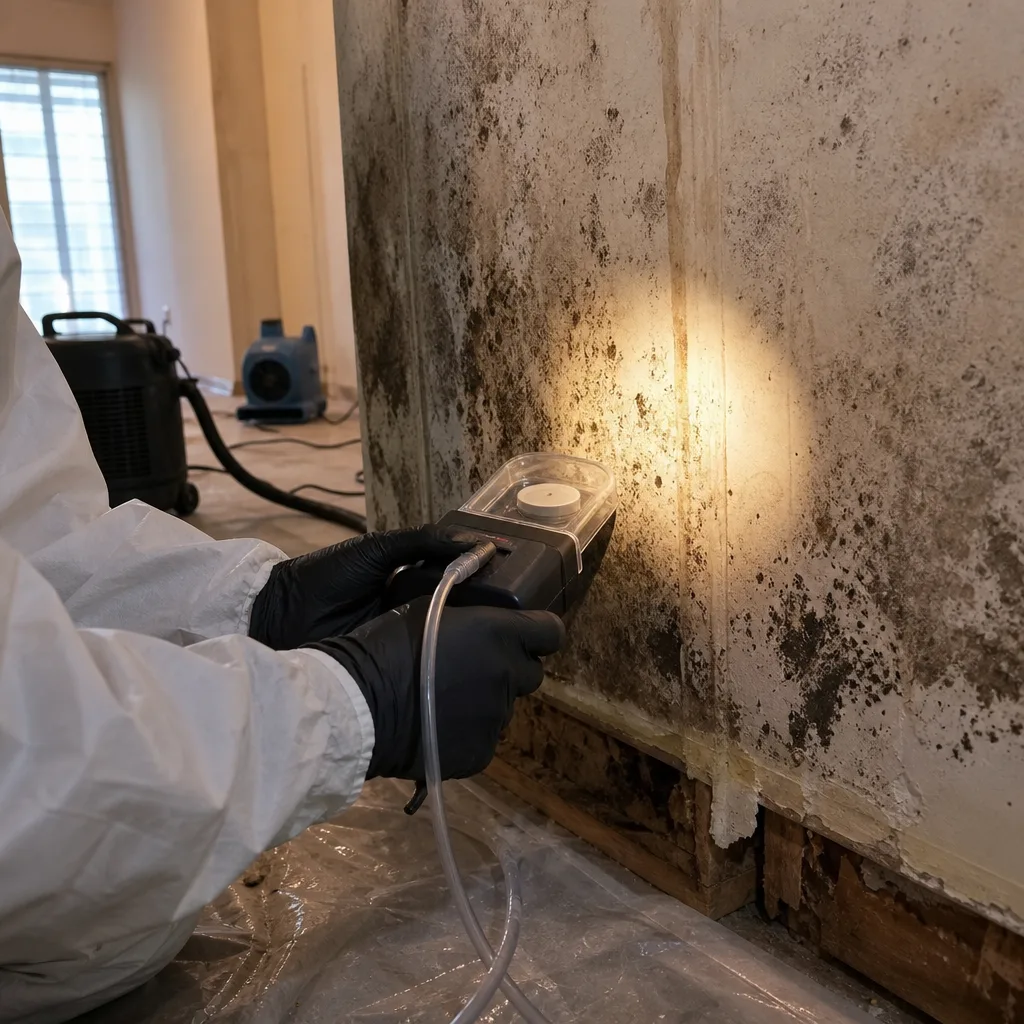
Structural Drying & Dehumidification
Pulling visible water out is step one; drying what you can’t see is the actual job. Woodhaven’s plaster walls, solid wood doors, and oak strip flooring hold moisture differently than modern drywall and engineered flooring. We size drying chambers room by room, using Dri-Eaz and Phoenix dehumidifiers and enough air movement to hit evaporation targets without over-drying and cracking old-growth wood. You receive daily moisture readings, not weekly updates.
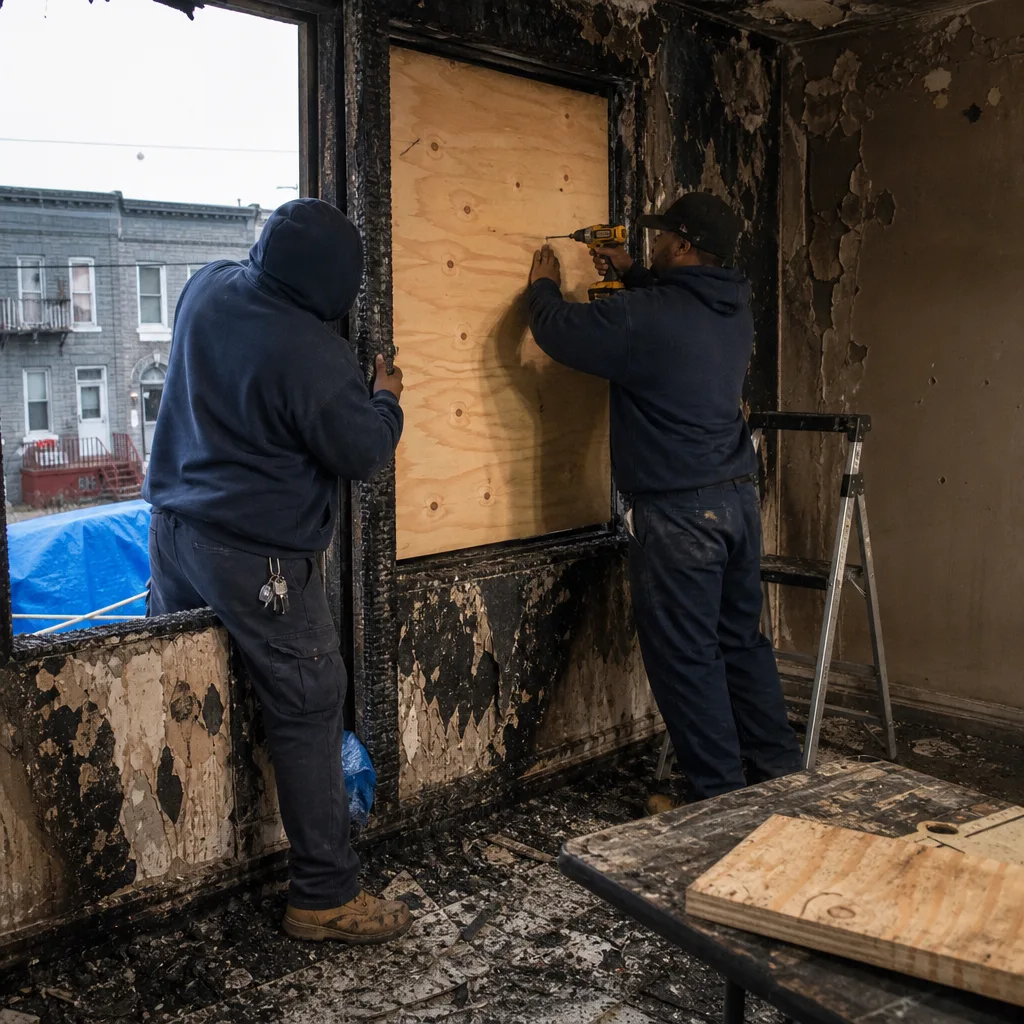
Flood Cleanup
When Woodhaven’s combined sewer backs up during a heavy summer storm, the water coming into your basement isn’t rain. It’s mixed storm and sanitary flow, and it requires full Category 3 protocols: containment, removal of porous materials, antimicrobial application, and clearance testing. We don’t just pump it out and set up fans. The health risk from sewage-contaminated floodwater is real, and the Sewage Cleanup - Woodhaven standard has to match. Woodhaven’s nearly universal full basements make this the most common severe loss category we handle in the neighborhood.
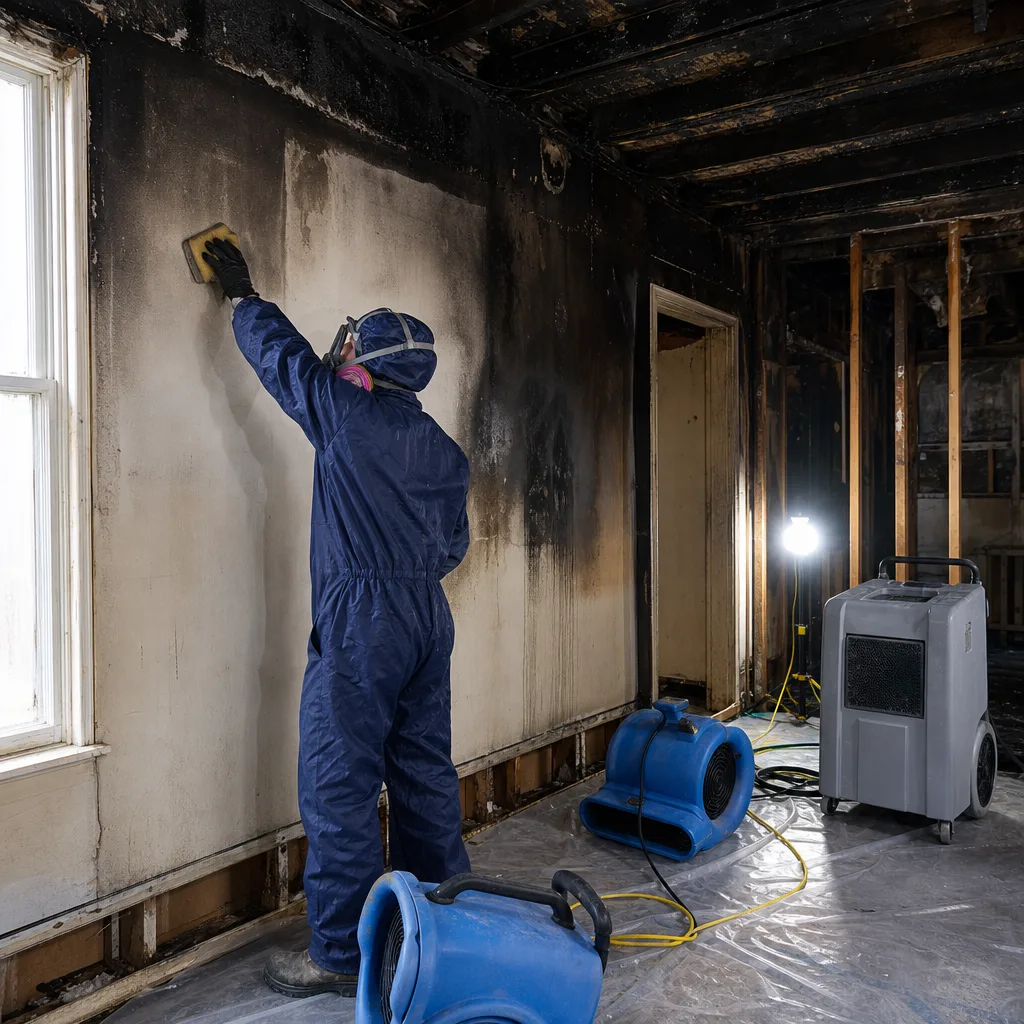
Burst Pipe Restoration
A frozen galvanized supply line in a 1920s Woodhaven row house doesn’t just leak. It floods the wall cavity, runs down through the floor assembly, and often travels along old piping chases into the basement and through the shared party wall. We trace the actual water path with thermal imaging, not assumptions. Restoration includes cutting out saturated plaster, drying framing to target moisture content, treating for mold prevention, and rebuilding to match where possible. The cast-iron drain lines and original supply pipes in these houses are well past their service life; when we find the burst section, we’ll tell you honestly whether a targeted patch makes sense or whether you’re better off replacing the failing run while the wall is already open.
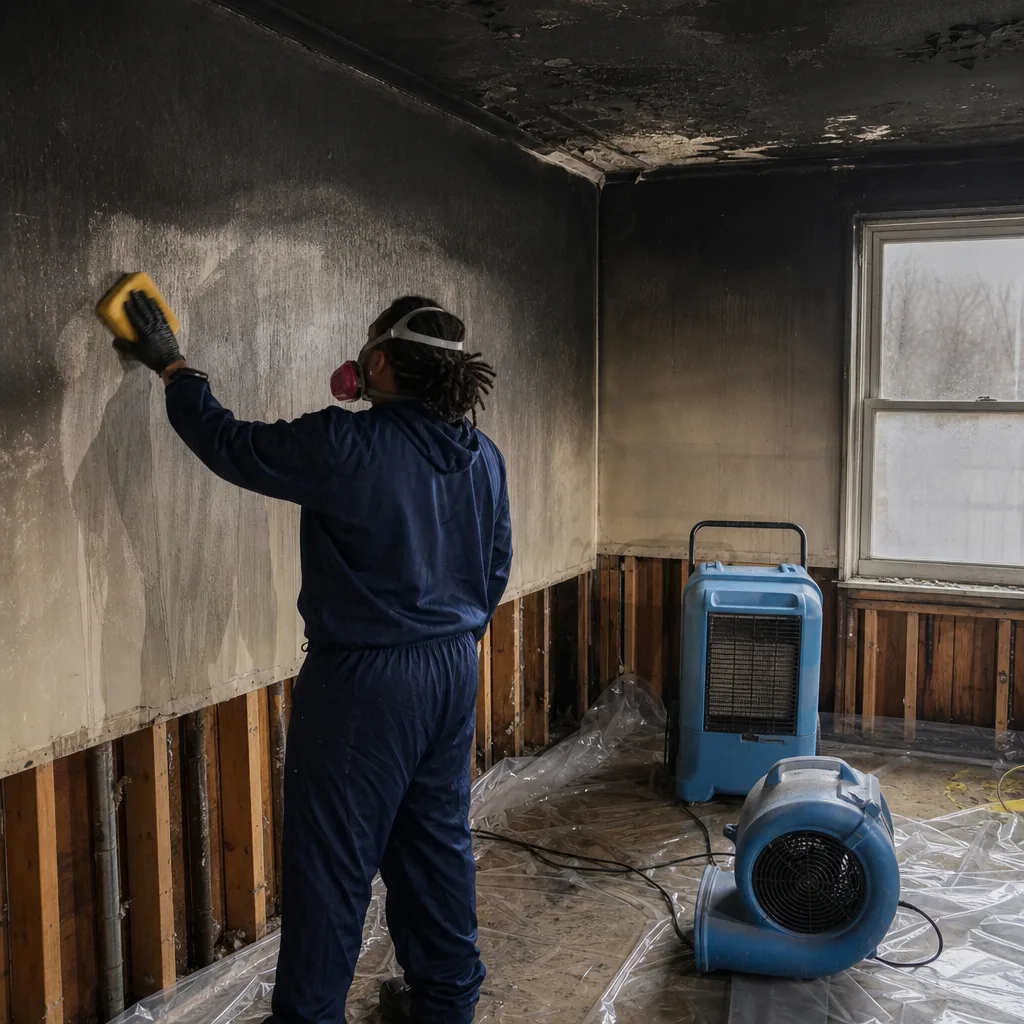
Basement Water Removal
Nearly every house in Woodhaven has a full basement, and in the older housing stock, that basement is where the building’s original utilities, lintels, and framing sit directly against the foundation. Groundwater intrusion through hundred-year-old foundation walls is chronic, not occasional. We handle the full cycle: sump pump failures, French drain backups, sewer ejector overflows, and storm-related flooding. The removal is the quick part. The drying of cold concrete, the dehumidification of damp framing, and the mold prevention that follows is where experience matters.
Ceiling & Roof Leak Water Damage
Flat-roofed brick row houses and parapet walls are Woodhaven trademarks, and they leak in predictable ways: failed flashing at the parapet cap, clogged roof drains, and deteriorated mortar joints that let wind-driven rain behind the parapet and down into ceiling cavities. By the time the stain shows on your parlor ceiling, the water has usually been traveling for weeks. We locate the actual entry point, dry the ceiling and wall assembly, and document everything for your claim.
What happens when you call
- 1
A real person answersNo phone trees - you reach a local pro.
- 2
You get an upfront price rangeHonest numbers before anyone is dispatched.
- 3
A background-checked tech heads outLicensed & insured, dispatched right away.
- 4
You approve before work beginsNothing starts until you say go.
Water Damage Restoration Costs in Woodhaven, NY
You should know the honest numbers before you ever sign a contract, and we’ll give them to you straight. In Woodhaven, emergency water extraction for a single room typically runs $1,200-$2,500. A full basement flood cleanup from a sewer backup, with Category 3 containment and antimicrobial treatment, lands between $3,500 and $8,000 depending on square footage and how much porous material has to go. Burst pipe restoration in a 1920s row house, which usually involves cutting out wet plaster, drying framing, treating the cavity, and rebuilding to match, generally falls in the $4,000-$12,000 range depending on how far the water traveled and whether the shared party wall is involved. Structural drying alone, with equipment running 3-5 days and daily monitoring, is typically $800-$2,000. The variables are how much got wet, what category the water is, and how fast we got there. Insurance covers most sudden and accidental losses; sewer backups without an endorsement often don’t get covered, which is a conversation worth having with your agent before storm season. The free visual inspection gives you a firm scope and a written line-item estimate before any work starts, and if you’ve already got another written estimate, Wade will give you a free second opinion on it.
The J/Z Train Factor: Why Woodhaven Restoration Is Different
Every neighborhood has its quirks, but Woodhaven has something few other Queens blocks do: a century-old elevated train line running directly above its main commercial corridor. The J/Z train along Jamaica Avenue has been vibrating the ground and the buildings flanking it since the early 1900s. Over decades, that constant low-frequency vibration cracks plaster, loosens brick mortar, and slowly shifts foundations. What that means for water damage restoration is specific and practical. When we respond to what looks like a routine ceiling stain or a basement wall leak in a building near the el, we don’t just dry the visible damage and patch the crack. A crack that reopens two months later because the building is still moving is a repeat claim and a denied follow-up. We document any evidence of vibration-induced structural movement separately from the insured water loss, photograph it, note it in the scope, and flag it for NYC filing requirements before we finalize the restoration plan. On a 1920s two-family brick row house two blocks off Jamaica Avenue, our crew traced a parlor-floor ceiling stain to a cracked cast-iron waste stack inside a shared party wall. Because the train’s constant vibration had loosened the old mortar around that stack, we had to install containment and run antimicrobial treatment before cutting out the lath-and-plaster ceiling, documenting the structural shift separately for the insurance claim and the city filing. A national franchise crew, working off a generic playbook, would have missed that entirely. The water damage would’ve been dried, the ceiling patched, and the whole thing would’ve failed again inside a year.
This is why Water Damage Restoration in this neighborhood requires more than equipment and a checklist. It requires knowing that a water stain on a Jamaica Avenue property might have a structural story underneath it, and that the two issues have to be handled, documented, and billed through different channels. That’s not something you learn from a training manual. It’s something you learn by working block after block of Woodhaven for years, pulling up the same lath, reading the same plaster cracks, and knowing what the J/Z train does to a building over decades.
We Also Serve Cities Near Woodhaven
Wade’s Restoration covers the surrounding Queens communities with the same live-answer urgency and owner-accountability model. If you’re in Water Damage Restoration in Woodhaven‘s neighboring areas, crews respond to Ozone Park, Richmond Hill, Ridgewood, and Howard Beach on the same 45-minute commitment. The housing stock changes block by block, but the standard doesn’t: owner’s name on the truck, moisture log in your hand, and a 90-day written promise on every job.
Serving Woodhaven, NY - Our Local Coverage Area
We’re based in the Woodhaven area and know this community well. Use the map below to see our service coverage - if you’re nearby, we can almost certainly help.
Woodhaven Water Damage Restoration Questions, Answered
How does the J/Z train vibration affect water damage restoration on Jamaica Avenue properties?
The elevated train’s decades of vibration cracks mortar, loosens plaster keys, and shifts foundations, which means a water stain on a Jamaica Avenue building may have a structural cause underneath the visible damage. We document any vibration-related structural movement separately from the insured water loss, because NYC filing rules require disclosure, and because a crack that gets patched without addressing the movement will reopen. Call (363) 300-2771 and we’ll assess both issues in one visit, free.
Do I need special containment when a leak comes through a shared party wall in Woodhaven?
Yes, in most cases. Row-house party walls mean water, mold spores, and odors move between properties through common framing and gaps in the masonry. Woodhaven’s attached brick two-family homes were built before modern fire stopping and air barriers, so a leak in one unit’s wall cavity often affects the neighbor’s side too. We install containment on both sides of the party wall before cutting anything open, and we coordinate with the adjacent owner and their insurer when both units are affected. Call for a free inspection and we’ll tell you if your party wall is involved.
Why is basement water removal in Woodhaven often more complicated than just pumping out water?
Because Woodhaven’s full basements sit at the low point of a neighborhood that drains toward Jamaica Bay, and the combined sewer system backs up during heavy rain. When that happens, the water coming in isn’t clean groundwater: it’s Category 3 sewage-contaminated flow. Pumping it out is the easy part. Proper remediation means removing porous materials, treating with antimicrobials, drying with commercial equipment, and running clearance testing before the space is safe again. A standard sump pump or shop vac doesn’t finish the job. Call (363) 300-2771 for the full extraction-and-sanitization scope, with a free visual inspection first.
What is the typical process for dealing with a burst pipe in a 1920s Woodhaven row house?
First, we shut off the supply, extract standing water, and open the wall enough to find the full extent of the pipe failure. In a 1920s row house, that usually means removing waterlogged plaster, drying framing and party wall cavities, and treating the wall cavity for mold prevention. Then we tell you honestly whether the failed section can be patched or whether the original galvanized or cast-iron run is past its service life and should be replaced while the wall is open. The rebuilding follows. Total drying time is typically 3 to 5 days; full restoration depends on the extent of the interior damage. Estimates are free, in writing, before work starts.
Can you repair water damage without triggering lead-paint or asbestos rules in older Woodhaven homes?
If the property was built before 1978 and you’re cutting into painted surfaces, EPA Renovation, Repair, and Painting (RRP) rules apply, which means certified crews, containment, and specific clean-up procedures. Woodhaven’s 1910-1935 housing stock almost always falls under this. We’re certified for RRP work and handle the testing, containment, and documentation required. The answer isn’t to skip the rules or pretend they don’t apply; it’s to do the work correctly so your claim is valid and your family isn’t exposed. Call us with the age of your home and we’ll walk you through what applies to your situation.
How fast can someone actually get to my Woodhaven house?
We commit to 45 minutes for emergency water damage calls in Woodhaven, and in most cases extraction is running within the hour. The call at (363) 300-2771 is answered by a live person, not an automated system, and Wade himself dispatches. The faster water gets extracted and drying equipment gets placed, the less replacement work you’ll be looking at. Time is the single biggest factor in the final cost.
Will insurance cover water damage restoration in Woodhaven?
Sudden and accidental water damage, like a burst supply line or an appliance failure, is typically covered under a standard homeowners policy. Sewer backups and groundwater intrusion usually require a separate endorsement, and many Woodhaven homeowners don’t have one, which is a hard conversation we’ll help you have with your agent. We document everything from the first hour, write estimates in carrier format, and coordinate directly with your adjuster. We also provide photo documentation and daily moisture logs, which makes the difference between a claim that pays fully and one that gets contested. Call (363) 300-2771 after you’ve shut the water off and we’ll guide you through what to document right now.
What should I do in the first 30 minutes after discovering water damage?
Shut off the main water valve if the source is a plumbing failure. Don’t use electrical outlets or switches in the affected area. Move anything valuable off the floor if you can do it safely. Don’t attempt to access damage inside walls or under floors, especially in a Woodhaven row house where the shared party wall may be involved and the water may be Category 3. Take photos of the visible damage. Then call (363) 300-2771. The first 30 minutes are about stopping the source and calling in help, not about starting a DIY demolition that could make the damage worse or complicate your claim.
Written by Wade Ferris, Owner at Wade’s Restoration, serving Woodhaven and surrounding Queens neighborhoods since 2007.