
Quick Summary
Water damage in Bushwick row houses and multi-unit properties spreads rapidly through historic subfloors and shared brick party walls, creating immediate structural hazards and mold risks within 24 to 48 hours. Wade's Restoration provides 24/7 emergency water extraction, thermal imaging, and specialized non-destructive drying systems that salvage original architectural materials while managing insurance documentation under one roof. Readers facing an active leak can call Wade's Restoration 24/7 for 45-minute dispatch, a free on-site visual inspection, and complete restoration services to stabilize their property immediately.
Water Damage Restoration in Bushwick – Fast 24/7 Repair
When an old radiator valve fails or an upstairs supply line splits in a Bushwick brownstone, water moves fast. In attached Brooklyn row houses and converted loft spaces, moisture does not just pool on the floor; it seeps through vintage heart-pine subfloors, soaks pre-war plaster, and migrates across shared brick party walls into neighboring units. Wade’s Restoration – East New York provides 24/7 emergency dispatch across Bushwick, arriving on-site within 45 minutes to pump out standing water, track down hidden moisture, and stop structural damage before mold takes hold.
Most residential cleanup jobs in the neighborhood run between $1,500 and $5,000, depending on the water source and how deeply materials are saturated. Instead of tearing out historic building materials right away, our IICRC-certified technicians use specialized floor mat systems, cavity air injection, and thermal imaging to dry original plaster, lath, and hardwood in place. Through our Claim Clarity Program, we provide line-item digital moisture logs and direct coordination with your insurance adjuster so your claim stays on schedule without unexpected bills. Call our local team anytime for immediate dispatch and a free on-site visual inspection. See also Water Damage Restoration in East New York | Call Now-10% Off | Same-Day Service | Free Estimate.
Fast Water Extraction and Drying for Bushwick Properties
Bushwick properties present distinct structural challenges during a flood. Multi-unit brick buildings, classic row houses, and commercial storefronts along corridors like Pitkin and Atlantic Avenue feature dense wood framing and original plaster assemblies that hold water like a sponge. When water sits behind walls or under parquet flooring, typical demolition crews often cause thousands of dollars in avoidable reconstruction costs by tearing everything out.
Wade’s Restoration brings commercial truck-mounted extraction units, industrial Low-Grain Refrigerant (LGR) dehumidifiers, and targeted injection drying equipment directly to your property. By starting structural drying within the first 24 to 48 hours, we stabilize framing, preserve historic architecture, and prevent mold growth. From midnight water removal to complete rebuilds, our local team handles your entire project under one roof.
What Does Water Damage Restoration Cost in Bushwick?
Need water damage restoration in Bushwick?
We’re available now - call for a fast, free estimate.
Standard water damage restoration in Bushwick typically costs between $1,500 and $5,000 for standard residential cleanup. If you are dealing with a severe Category 3 sewage backup or deep water migration requiring multi-day drying across multiple floors, costs can exceed $8,000. Your final invoice depends on the water source, the square footage affected, and whether building materials can be saved through controlled drying.
Pricing Factors for Brooklyn Multi-Unit and Historic Properties
Restoration industry standards categorize water based on contamination levels, which dictates the safety measures and equipment required. As specialists at Wade’s Restoration – East New York note, clean water from a broken supply pipe (Category 1) is relatively simple to address, while gray water from dishwashers (Category 2) or sewage backups (Category 3) requires full sanitation, antimicrobial treatments, and biohazard protocols.
In Bushwick brownstones, building construction also shapes total costs. Pre-war plaster and thick tongue-and-groove subfloors trap moisture quickly. While standard contractors often resort to aggressive demolition, Wade’s Restoration sets up directional drying systems to rescue original materials, keeping your rebuilding costs significantly lower.
| Feature | Clean Water (Category 1) | Gray Water (Category 2) | Blackwater / Sewage (Category 3) |
|---|---|---|---|
| Common Origin | Supply pipe, sink overflow | Washing machine, dishwasher | Sewer backup, street flooding |
| Health Hazard | Low risk | Moderate chemical or microbial | Severe biological hazard |
| Plaster/Lath Salvage | High (via injection drying) | Moderate (with sanitizers) | Controlled removal required |
| Estimated Mitigation Cost | $1,500 – $3,500 | $2,500 – $5,200 | $4,500 – $9,000+ |
Estimated Service Cost Ranges
Clear communication is critical during an emergency. Through our Claim Clarity Program, Wade’s Restoration provides itemized daily drying logs, thermal photos, and direct billing to your insurance carrier. Because every building layout in Bushwick has its own structural quirks, contact our team 24/7 for a free, exact visual inspection on-site.
How Do You Restore Water-Damaged Hardwood Floors, Plaster, and Subfloors in Bushwick Row Houses?
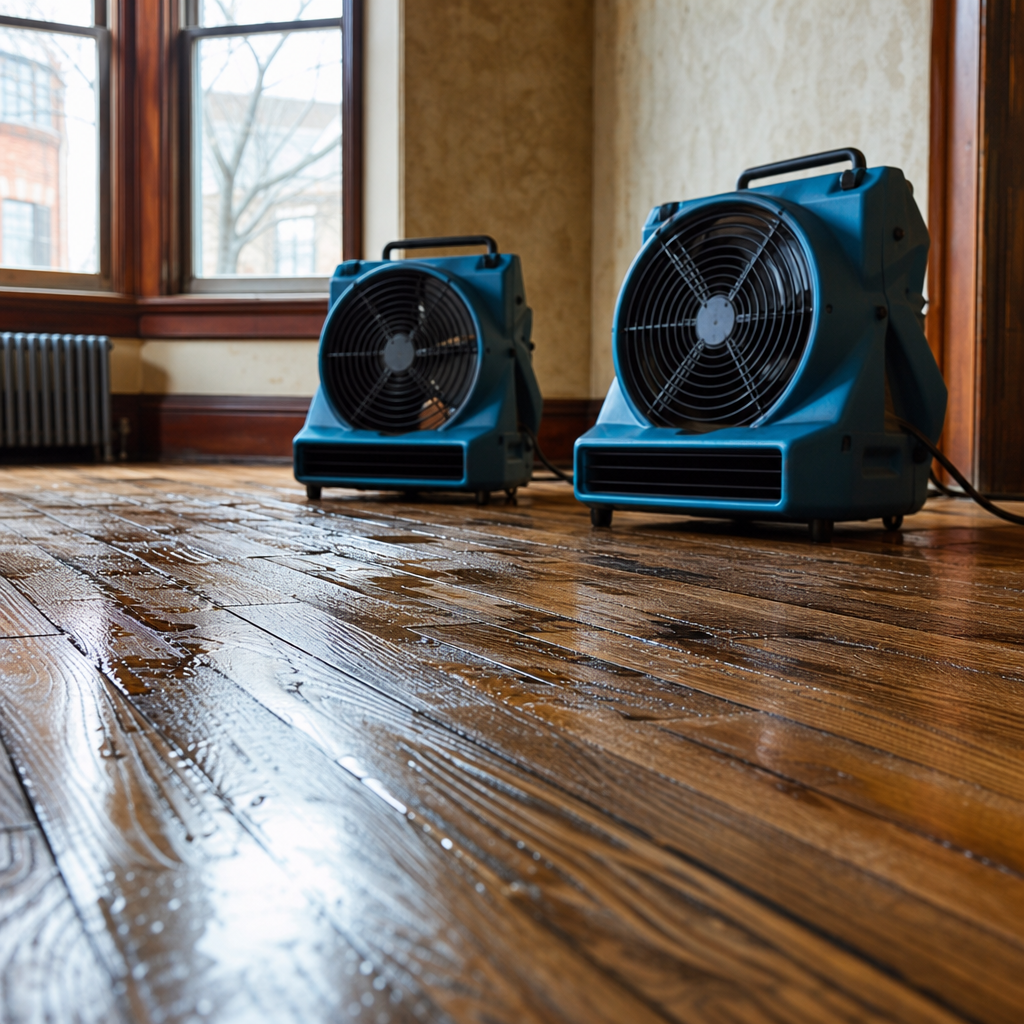
Restoring historic materials in Brooklyn row houses requires specialized, non-destructive drying systems. Our technicians use high-suction floor mats and wall cavity dryers that pull moisture out of deep wood grain and wall cavities without requiring full structural teardowns. We monitor daily moisture readings until every layer returns to standard dry standards.
Saving Historic Plaster and Wood Lath vs. Destructive Demolition
Pre-war lime plaster over wood lath holds up well to moisture if you begin drying within 48 hours, before water degrades the original lime binder. Once an outside contractor knocks down plaster with a sledgehammer, matching the original moldings and trim during reconstruction becomes expensive and time-consuming. Technicians from Wade’s Restoration – East New York apply targeted dehumidification and controlled airflow to dry walls from the inside out, preserving original architectural details whenever the structural base remains sound.
Targeted Subfloor and Hardwood Floor Injection Drying
When water sits on original parquet or pine subfloors, the wood absorbs moisture and begins to cup. Our three-step recovery process salvages historic floors:
- Deep Extraction: High-powered extraction units remove pooled surface water and liquid from between floor seams.
- Sealed Mat Systems: Negative-pressure floor mats pull trapped moisture up through the boards and subfloor assembly.
- Subfloor Cavity Airflow: Warm, dry air is directed under baseboards or from the ceiling space below to dry joists without pulling up finished flooring.
Cupped floorboards typically settle flat again once internal wood moisture drops below 12 percent, avoiding the need for a full floor replacement.
Containing Water Migration Across Shared Party Walls
Bushwick brownstones share uninsulated brick party walls that absorb water and pull it sideways. Unchecked moisture can easily soak through to an adjoining property, creating liability issues with neighbors. Wade’s Restoration runs infrared thermal cameras along shared masonry lines to pinpoint hidden moisture paths and place drying equipment before damage spreads next door.
What Should You Do in the First 24 Hours to Prevent Toxic Mold and Structural Loss?
Need water damage restoration in Bushwick?
We’re available now - call for a fast, free estimate.
The first 24 hours determine whether water damage stays a straightforward cleanup or turns into an extensive mold problem. Mold spores can begin colonizing wet drywall, plaster, and subfloors within 24 to 48 hours. Taking fast action protects your property framing and prevents expensive structural repairs.
Immediate Safety and Water Shutoff Protocol
If you discover flooding or a burst pipe, follow these steps while waiting for our crew to arrive:
- Shut off the main water valve, usually found near the street-side basement wall or water meter.
- Turn off circuit breakers for any rooms with standing water to prevent electrical shock.
- Lift furniture, curtains, and rugs off wet surfaces, placing foil or plastic beneath wooden furniture legs.
- Call an owner-operated restoration team directly to avoid call-center delays.
Why Extraction Differs From True Structural Dehumidification
Pumping out visible water is only the first step. Deep moisture remains trapped inside dense subfloors, brick walls, and old plaster. According to Wade’s Restoration – East New York, industrial Low-Grain Refrigerant (LGR) dehumidifiers draw this bound water into the air and drain it away, keeping indoor relative humidity below 50 percent to prevent hidden wood rot and mold growth.
Protecting Indoor Air Quality with HEPA Air Scrubbers
Water restoration work in older buildings can disturb dust, old insulation fibers, and dormant mold spores. To protect residents with asthma or respiratory sensitivities, Wade’s Restoration installs sealed plastic barriers and operates commercial HEPA air scrubbers under negative pressure. These units capture 99.97% of airborne particles down to 0.3 microns, keeping indoor air clean while structural drying is underway.
Frequently Asked Questions About Bushwick Water Damage Restoration
How quickly can an emergency water restoration team arrive in Bushwick?
Wade’s Restoration – East New York offers 24/7 live dispatch with an average arrival time of 45 minutes in Bushwick. Rapid arrival prevents water from traveling through shared brick party walls and soaking structural joists.
How much does water damage restoration typically cost in Brooklyn?
Standard mitigation for clean-water leaks generally costs between $1,500 and $5,000. Larger commercial projects, Category 3 sewage backups, or situations requiring extensive structural drying can exceed $8,000. Drying original plaster and hardwood in place helps keep these overall costs down.
Does homeowner or renter insurance cover emergency water damage repair?
Standard homeowner and commercial property policies generally cover sudden and accidental water losses, such as burst pipes or water heater failures. Rising street water from storms requires separate flood insurance. Wade’s Restoration works directly with your insurance adjuster, providing daily moisture logs, thermal images, and itemized scopes to simplify the claims process.
What should I do immediately after discovering a flood or burst pipe?
Turn off your main water shutoff valve immediately and shut down power to any wet rooms at the breaker box. Remove valuable items and porous materials from the floor, then call our 24/7 emergency dispatch team so professional extraction can begin right away.
How do you prevent mold growth after water damage in Brooklyn brownstones?
Preventing mold requires reducing indoor relative humidity below 50 percent within 24 to 48 hours using industrial LGR dehumidifiers and high-velocity air movers. We treat affected materials with EPA-registered antimicrobials and run commercial HEPA air scrubbers to trap airborne spores.
What is the difference between water extraction and full structural drying?
Water extraction simply pumps away standing water from floor surfaces. Structural drying uses specialized dehumidification, cavity injection systems, and precise moisture monitoring to remove water trapped inside subfloors, wall studs, and plaster.
Need water damage restoration in Bushwick?
We’re available now - call for a fast, free estimate.
Frequently Asked Questions
How long does the structural drying process typically take in a Bushwick row house?
Complete structural drying generally takes 3 to 5 days, depending on material saturation and humidity levels. Wade's Restoration continuously tracks moisture metrics and thermal imaging daily to ensure framing and subfloors reach safe dry standards before removing equipment.
Does Wade's Restoration handle full reconstruction if historic materials cannot be salvaged?
Yes, Wade's Restoration provides end-to-end restoration from initial emergency extraction to complete architectural rebuilds. When pre-war plaster, lath, or subfloors cannot be safely dried in place, our team manages repairs seamlessly under one roof.
What happens if water migrates into an adjoining property through a shared brick party wall?
Moisture traveling through shared masonry can cause hidden mold growth and liability concerns with neighboring owners. Wade's Restoration deploys infrared cameras to pinpoint lateral water paths and supplies line-item documentation through our Claim Clarity Program to coordinate with adjusters across multi-unit claims.
About the author
 |
Marcus Bradley Marcus Bradley is a certified water damage restoration technician with over a decade of experience handling residential and commercial property emergencies. He holds a degree in Construction Management from the New York Institute of Technology and specializes in rapid moisture mitigation and structural drying techniques. Marcus provides actionable advice to help property owners minimize loss and navigate the complexities of restoration and insurance claims. |
Water damage, flood, or mold emergency?
We’re available now - call for a fast, free estimate.
Call Now - Free Estimate