
Quick Summary
Due to high basement flood risks and rising water tables in South Queens, professional water damage restoration in South Ozone Park is essential to prevent rapid mold growth, sewage contamination, and foundation compromise. Wade's Restoration provides 24/7 rapid-response emergency extraction, moisture mapping, and structural drying designed to preserve original building materials like plaster and hardwood rather than resorting to premature demolition. Readers will understand local restoration costs, insurance claim procedures, and structural drying protocols, enabling property owners to call Wade's Restoration for immediate water extraction and a free on-site property evaluation.
Water Damage Restoration in South Ozone Park: Fast Local Recovery
When heavy rain hits South Queens or a sewer line backs up, professional water damage restoration in South Ozone Park helps keep a wet basement from turning into a structural loss. While South Ozone Park has varied mapped flood hazard, South Queens, including South Ozone Park, is highlighted for high basement flood risk. Saturated ground creates hydrostatic pressure, pushing water up through foundation slabs and mortar joints. Restoration costs in the area typically run from $1,384 to $6,384, or roughly $3 to $7.50 per square foot depending on water contamination and structural materials. Across Queens-wide datasets, records show 167 major flood events between 1996 and 2024 resulting in $64.1 million in property damage. According to specialists at Wade’s Restoration – East New York, when water enters a structure, prompt extraction helps stop moisture from wicking up wall framing and contributing to mold growth.[1]
Wade’s Restoration provides local water mitigation services. Technicians are available to assist with emergency situations to assess damage and extract water. Crews focus on drying techniques aimed at preserving salvageable plaster, trim, and subfloors when feasible rather than immediately gutting your home. Our team can also provide your insurance adjuster with moisture logs and documentation to support your claim. Contact our team today for water extraction and an on-site property evaluation.[4] See also Water Damage Restoration in East New York | Call Now-10% Off | Same-Day Service | Free Estimate.
How Emergency Water Damage Restoration Works
Emergency restoration in South Ozone Park generally involves water extraction, moisture mapping, antimicrobial application, and structural dehumidification. Restoration teams set up commercial air movers and dehumidifiers to help stabilize framing, masonry, and subflooring, which often helps mitigate mold growth before structural repairs begin.
Immediate Water Extraction and Mitigation Timeline
According to the Federal Reserve Bank of New York, the highest concentration of basement flood risk across the city falls directly in South Queens. Addressing this risk typically involves several steps:
- Initial assessment: Crews mobilize to evaluate the source, categorize the water type (clean, grey, or blackwater), and help stop active spreading.
- Water extraction: Commercial extractors and submersible pumps remove standing floodwater and subterranean seepage from basements and ground floors.
- Structural drying: Air movers and dehumidifiers draw trapped moisture out of plaster, framing, and concrete slabs, a process that often takes several days depending on conditions.
Saving Original Materials Over Premature Demolition
Using thermal imaging and moisture meters, technicians from Wade’s Restoration – East New York track hidden moisture pockets behind finished walls to dry original plaster, wood framing, and hardwood flooring in place when conditions and safety allow. In many cases, this helps avoid unnecessary demolition costs.
Why South Ozone Park Properties Face Severe Basement Flooding
Need water damage restoration in South Ozone Park?
We’re available now - call for a fast, free estimate.
While South Ozone Park features varied mapped flood hazards across different zones, South Queens overall is highlighted for elevated basement flood risk due to low ground elevation and municipal drainage constraints. During heavy rainstorms, elevated water tables can create subterranean hydrostatic pressure, driving water through foundation cracks, basement floor seams, and cold joints.[5]
Rising Water Tables and Hydrostatic Pressure
Unlike an isolated upstairs pipe leak, groundwater intrusion pushes against foundation walls from the outside. When soil in the area becomes saturated, rising groundwater can take the path of least resistance through basement masonry.
The 2026 NYC Hazard Mitigation Plan highlights that Queens holds the city’s highest share of properties within the 1 percent annual chance floodplain, roughly 15,120 buildings (about 25 percent of the citywide total). As noted by Wade’s Restoration – East New York, extracting subterranean seepage and applying structural drying techniques helps protect concrete slabs and foundation walls from moisture damage.[2]
Aging Sewer Mains and Row House Vulnerabilities
The area’s dense layout of attached and semi-detached brick row houses creates additional risk. When storm runoff overwhelms city storm mains, sewer lines can back up into connected homes. In one municipal main failure, raw sewage backed up into more than 120 South Ozone Park basements, an event documented by the New York City Bar Association in 2021.
Following Hurricane Ida, FEMA initial property damage in NYC was estimated at $38 million, while broader infrastructure and public health impacts increase the total. When contaminated Category 3 blackwater enters a basement, thorough sanitation is necessary to eliminate pathogens and protect indoor air quality.
What Does Water Damage Restoration Cost in South Ozone Park?
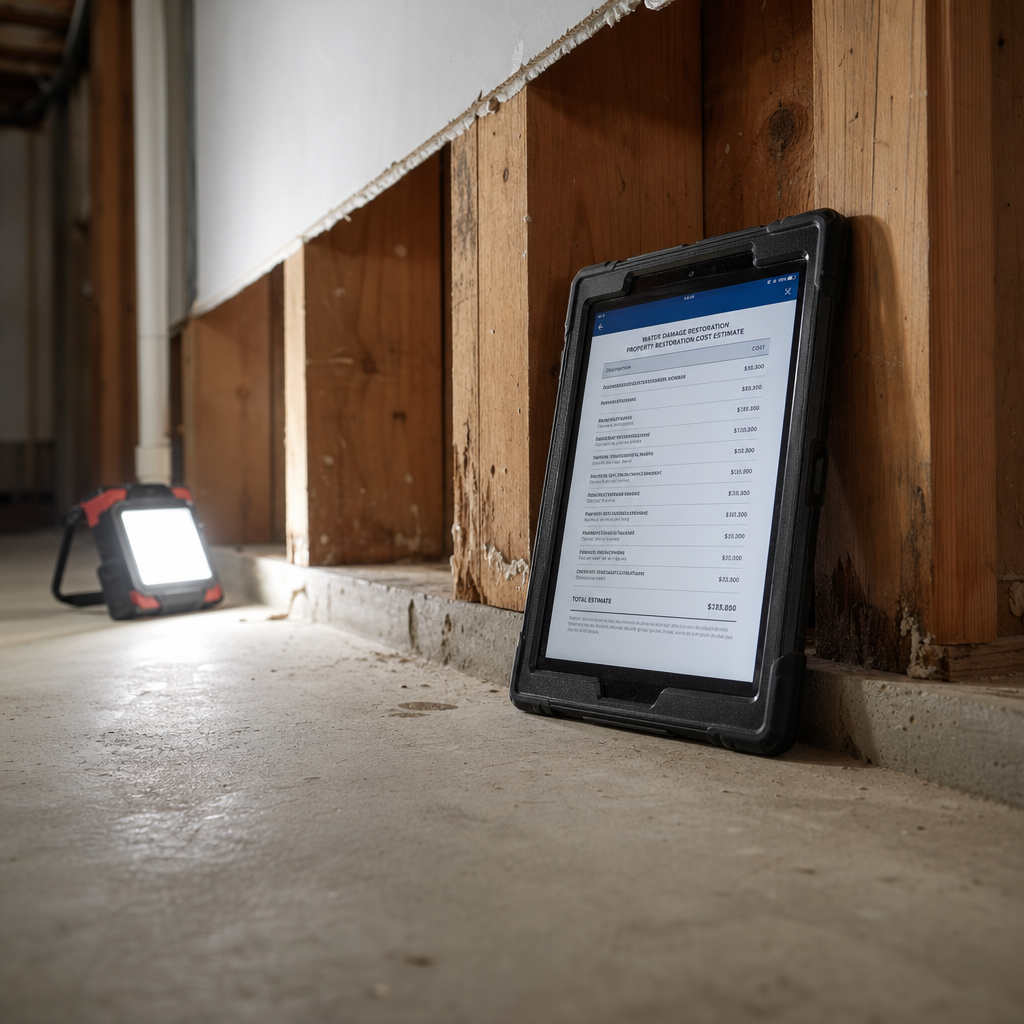
Total restoration costs typically range from $1,384 to $6,384, with per-square-foot rates averaging between $3 and $7.50. Pricing depends on the water category, exposure time, and which structural assemblies require mitigation.
Cost Breakdown by Water Contamination Level
Restoration scope changes depending on whether the source is clean supply lines, ground seepage, or municipal sewer backups:
| Cost Factor | Category 1 (Clean Water) | Category 2 (Grey Water) | Category 3 (Blackwater / Sewage) |
|---|---|---|---|
| Mitigation Cost (per sq ft) | Approx. $3.00 – $4.50 | Approx. $4.50 – $6.00 | Approx. $6.00 – $7.50+ |
| Estimated Drying Window | Typically 2 – 3 Days | Typically 3 – 4 Days | Typically 4 – 7 Days |
| Material Removal | Minimal | Damaged padding, trim if unsalvageable | Contaminated porous materials and drywall cuts |
| Sanitation Protocol | Standard cleaning application | Targeted antimicrobial wash | Multi-stage biological remediation |
Navigating Insurance Claims and Carrier Approvals
In general, sudden accidental water damage is covered by standard property insurance, while flood or outside surface water usually is not. The NYC Hazard Mitigation Plan notes that roughly 60 percent of buildings in the city’s 1 percent flood zone are at risk of structural damage during major flood events.[3]
Wade’s Restoration helps homeowners navigate the restoration process by providing itemized estimates, moisture logs, and photo documentation for insurance adjusters to assist with claim reviews. Call our team today for a property evaluation.
Structural Components: Repair vs. Replacement
Need water damage restoration in South Ozone Park?
We’re available now - call for a fast, free estimate.
Determining whether a building material can be dried in place depends on its porosity, the water category, and total exposure time. While porous materials soaked with Category 3 sewage often require removal, dense masonry, wood joists, and historic plaster can often be preserved if drying starts promptly.
Drywall, Plaster, and Wall Cavities
Sheetrock that remains wet for extended periods loses structural integrity and may support mold growth. In these situations, technicians often perform a flood cut 12 to 24 inches above the moisture line. In contrast, dense lath-and-plaster walls can often be dried in place by introducing airflow into wall cavities. Wet fiberglass insulation, however, in many cases must be removed.
Hardwood Floors, Subflooring, and Joists
Cupped wood floors do not in all cases need to be removed. Specialized drying systems can draw moisture through floorboards from the subfloor and joists underneath. Controlled drying often allows wood fibers to stabilize, which may save original flooring.
Basement Slabs and Shared Party Walls
According to Wade’s Restoration – East New York, unsealed concrete slabs and shared brick party walls can absorb ground moisture through capillary action. When dampness enters a shared wall, moisture can migrate toward adjacent structures. Dehumidification equipment helps pull deep moisture out of dense masonry, reducing the risk of material deterioration and mold development along foundation lines.
| Building Material | Exposure Conditions | Restoration Method |
|---|---|---|
| Standard Drywall | Prolonged moisture or contaminated water | Flood cut and replacement |
| Plaster | Structurally intact with clean or grey water | In-place cavity drying where appropriate |
| Hardwood & Joists | Surface cupping with intact fasteners | Specialized drying mat extraction |
| Brick Party Walls | Capillary moisture wicking | Dehumidification and masonry stabilization |
Frequently Asked Questions
How quickly can an emergency restoration crew arrive in South Ozone Park?
Wade’s Restoration provides emergency dispatch services throughout South Ozone Park and surrounding Queens neighborhoods. Local crews aim to respond as quickly as possible to evaluate the property, extract water, and begin stabilization.
How long after water damage does mold begin to grow?
As technicians at Wade’s Restoration – East New York explain, mold spores can germinate across damp building materials often within 24 to 48 hours under favorable conditions. Porous materials provide organic food sources, which is why prompt water extraction and drying are recommended.
Does homeowners insurance cover water extraction and drying?
Sudden accidental water damage is generally covered by standard insurance policies, while flood or outside surface water usually is not. Coverage depends on the specific policy terms, and additional endorsements or separate flood insurance may be required for rising groundwater or sewer backups.
Are 24/7 flood cleanup and sewage extraction services available locally?
Yes. Wade’s Restoration offers 24/7 emergency response for flood and sewage cleanups in South Ozone Park. Services include water containment, sanitization, structural moisture assessment, and drying.
Need water damage restoration in South Ozone Park?
We’re available now - call for a fast, free estimate.
Sources
- Severe Weather Events and Resiliency in New York State – osc.ny.gov (2024)
- [PDF] NYC CDBG-DR Draft Action Plan Post-Tropical Cyclone Ida – nyc.gov
- COASTAL CLIMATE RESILIENCY – nyc.gov
- [PDF] Section 5. Risk Assessment – NJ.gov – nj.gov
- Flood Hazard Mapper – NYC.gov – nyc.gov
Related reading: Water Damage Restoration in Ridgewood | 10% Off & Free Estimate | Same-Day Service
Related reading: Water Damage Restoration in Canarsie | Call Now-10% Off | Same-Day Service | Free Estimate
Related reading: Water Damage Restoration in Corona | Call Now-10% Off | Same-Day Service | Free Estimate
Water Damage Restoration in Nearby Cities
We also serve the communities around South Ozone Park:
- Water Damage Restoration in Bushwick
- Water Damage Restoration in East Flatbush
- Water Damage Restoration in Elmhurst
- Water Damage Restoration in Glendale
- Water Damage Restoration in Greenpoint
- Water Damage Restoration in Howard Beach
- Water Damage Restoration in Jamaica
- Water Damage Restoration in Ozone Park
Frequently Asked Questions
How does Wade's Restoration remediate Category 3 sewage backups in South Ozone Park basements?
For hazardous Category 3 blackwater, Wade's Restoration extracts standing sewage, removes unsalvageable porous materials, and applies multi-stage hospital-grade antimicrobial sanitizers. Technicians then deploy commercial air scrubbers and industrial dehumidifiers to neutralize pathogens and restore safe indoor air quality.
How do technicians dry saturated brick party walls in South Ozone Park row houses?
Wade's Restoration uses non-invasive thermal imaging and moisture meters to map subterranean water wicking across shared masonry. High-capacity dehumidifiers and precision airflow systems draw deep moisture out of brick and mortar joints without requiring invasive structural demolition.
Can water-damaged hardwood floors and plaster walls be restored without demolition?
When non-sewage water damage is addressed within 24 to 48 hours, Wade's Restoration utilizes specialized floor-drying mat systems and cavity air injection to dry hardwood and lath-and-plaster in place. Materials are only removed if severe structural breakdown occurs or if hazardous blackwater saturation makes preservation unsafe.
About the author
 |
Marcus Bradley Marcus Bradley is a certified water damage restoration technician with over a decade of experience handling residential and commercial property emergencies. He holds a degree in Construction Management from the New York Institute of Technology and specializes in rapid moisture mitigation and structural drying techniques. Marcus provides actionable advice to help property owners minimize loss and navigate the complexities of restoration and insurance claims. |
Water damage, flood, or mold emergency?
We’re available now - call for a fast, free estimate.
Call Now - Free Estimate