
Quick Summary
Severe storms and sudden plumbing failures in Corona require immediate water mitigation within 24 to 48 hours to prevent structural rot and hazardous mold growth. Wade's Restoration provides rapid 24/7 emergency dispatch across Queens, deploying advanced moisture mapping, industrial water extraction, and specialized cavity drying for shared brick and plaster walls. Property owners will learn how to stabilize active flooding safely and can contact Wade's Restoration 24/7 for immediate emergency water extraction and a free on-site inspection.
Emergency Water Damage Restoration in Corona – Fast Extraction and Structural Drying
When heavy weather or plumbing failures hit Corona, water moves fast. Whether dealing with a sudden main pipe burst on 104th Street or street runoff backing up near Corona Golf Playground and Park of the Americas, getting water out quickly is the difference between a simple dry-out and widespread structural loss. Local response teams, such as Wade’s Restoration – East New York, focus on immediate water extraction, moisture mapping across shared walls, and thorough structural drying designed specifically for Queens properties.
According to the EPA, wet building materials should be dried within 24 to 48 hours to stop mold spores from germinating. In multi-family homes and attached brick structures, hidden moisture can quietly seep behind historic plaster and between subfloors if not addressed with industrial extraction and dehumidification right away. See also Water Damage Restoration in East New York | Call Now-10% Off | Same-Day Service | Free Estimate.
Quick Answer: How Does Emergency Water Damage Restoration Work in Corona?
Emergency water damage restoration in Corona involves immediate bulk extraction, thermal moisture mapping, continuous dehumidification, sanitization, and full structural repair. Because many Queens homes share party walls, mitigation specialists track water traveling across brick and plaster assemblies to stop damage from spreading to neighboring units. Crews typically arrive within 45 to 90 minutes depending on traffic and building access.
Restoring a flooded property in Corona follows a clear, disciplined protocol practiced by teams like Wade’s Restoration – East New York: remove bulk water immediately, stabilize the indoor environment, dry hidden cavities, and sanitize the building.
Immediate Stabilization and Water Removal
The New York City Department of Environmental Protection has modeled that a cloudburst storm dropping roughly 2.13 inches of rain per hour causes severe street pooling and basement flooding around 111th Street, 104th Street, and surrounding corridors. When storm runoff or drain backups hit your property, emergency response follows two initial priorities:[1]
- Thermal and moisture inspection: Technicians inspect baseboards, crawlspaces, and adjacent walls with non-invasive moisture meters and infrared cameras to locate every pocket of hidden saturation.
- Bulk water extraction: Heavy-duty truck-mounted pumps and commercial wet vacuums pull standing water from floors and carpets before liquid can soak deeper into structural subflooring.
Targeted Structural Drying and Sanitization
Once surface water is gone, industrial low-grain refrigerant (LGR) dehumidifiers and high-velocity air movers establish balanced evaporation. Technicians set up containment barriers and run HEPA air scrubbers to trap airborne dust and prevent mold spores from spreading into unaffected living spaces or commercial retail floors.
How Quickly Can an Emergency Water Damage Crew Arrive at Your Corona Property?
Need emergency water damage restoration in Corona?
We’re available now - call for a fast, free estimate.
Most local emergency crews reach Corona locations within an hour. Actual arrival times depend on immediate traffic on the Grand Central Parkway or Long Island Expressway, building access details, and the overall volume of calls during severe borough-wide storms.[4]
Initial Steps: Stopping Active Water Migration
While technicians are en route, taking safe, immediate precautions helps protect your property and personal safety:
- Shut off the main water supply: Turn your main shut-off valve clockwise immediately if the problem stems from a burst pipe or interior plumbing line.
- Eliminate electrical risks: Never step into standing water if electrical outlets or appliances are submerged. Shut off the circuit breaker for affected areas only if the panel is located in a completely dry area.
- Elevate porous belongings: Move area rugs, upholstery, drapes, and paper records off wet floors to prevent secondary wicking and permanent staining.
- Avoid standard vacuum cleaners: Regular home vacuums are not built for standing water and present an immediate shock hazard.
Addressing High-Risk Flood Zones and Cloudburst Events in Corona
The National Weather Service notes that New York City regularly experiences intense flooding events, such as the September 29, 2023 storm that swamped Queens and shut down regional transit lines. Low-lying basements across Corona are particularly susceptible to street-level stormwater surges.[5]
To help manage these recurring flood risks, the NYC Department of Environmental Protection has introduced neighborhood cloudburst management infrastructure in Corona. This includes 2.9 acres of porous concrete parking lanes and subsurface detention facilities designed to capture excess runoff during heavy downpours, reducing peak storm inundation across local blocks.[2]
How Do Technicians Restore Water-Damaged Structures, Subfloors, and Basements?
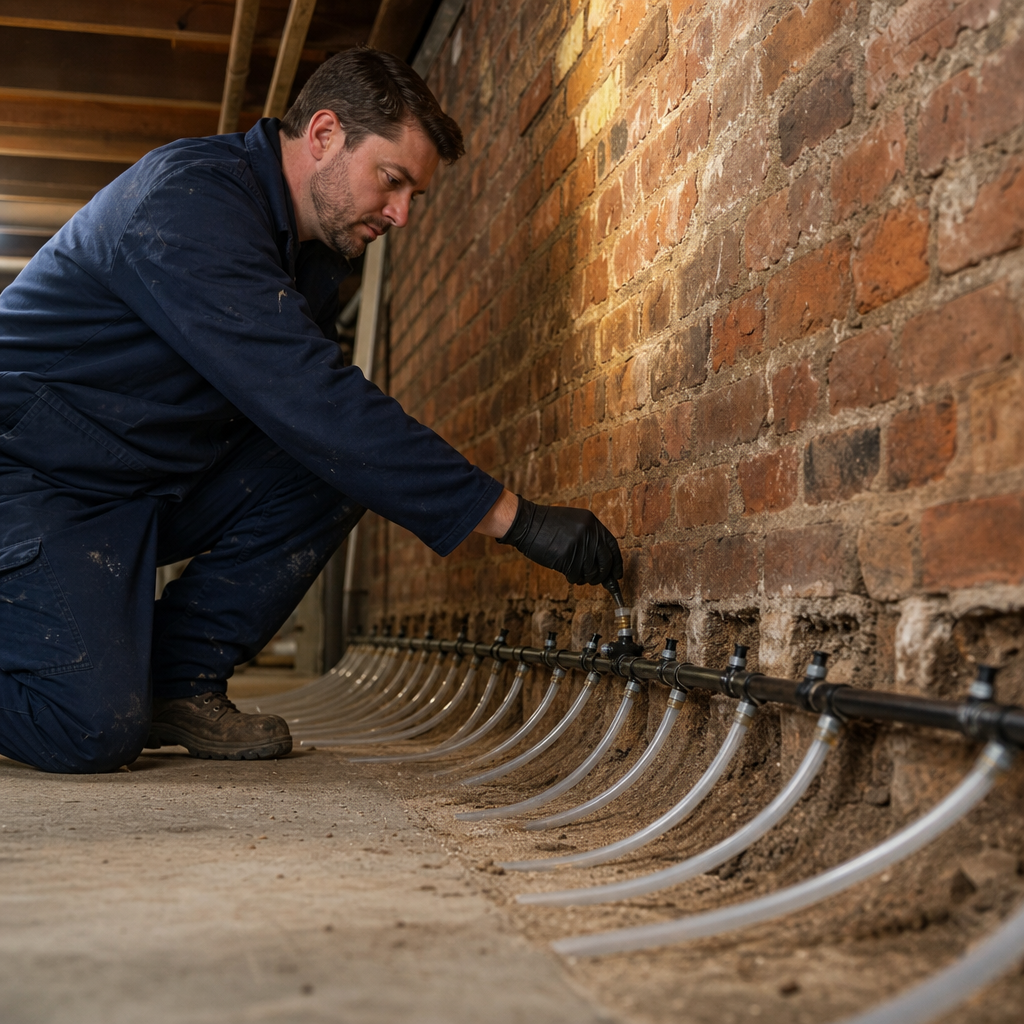
Properties in Corona range from pre-war brick row houses to modern commercial storefronts. Because these buildings use different structural materials, drying methods must be tailored to the exact construction type.
Plaster, Lath, and Masonry Assemblies
In older Corona row houses, moisture readily wicks into thick masonry party walls and traditional plaster-on-wood-lath assemblies. Trapped moisture inside these dense wall cavities cannot escape on its own. Rather than tearing down historic walls right away, technicians from Wade’s Restoration – East New York use specialized wall-cavity drying systems. By injecting warm, dry air into small, discrete access points, crews evaporate moisture deep inside the wall while keeping the structural plaster intact.
Hardwood, Subfloor, and Joist Structural Drying
When water sits on hardwood flooring, it quickly penetrates down into the underlying subfloor and structural joists, causing planks to cup, warp, or crown. Restoration teams address this through a targeted process:
- Moisture mapping: Technicians establish baseline moisture readings across the floor to separate dry sections from saturated areas.
- Negative pressure floor drying: Floor mat systems pull trapped water straight up through the wood pores and subflooring without requiring immediate floor demolition.
- Continuous dehumidification: Dehumidifiers draw moisture out of the air while fans sweep moisture off joists accessible from the basement below.
Basement Flood Cleanup and Contamination Assessment
Basement floods in Queens often carry street runoff, municipal drain backups, or sewer water. Technicians treat these incidents as Category 3 black water hazards. Restoration specialists, including the team at Wade’s Restoration – East New York, remove non-salvageable porous items, apply EPA-registered antimicrobial agents to all exposed concrete and framing, and run HEPA air scrubbers until the entire space tests completely clean and dry.
What Does Emergency Water Damage Restoration Cost in Corona?
Need emergency water damage restoration in Corona?
We’re available now - call for a fast, free estimate.
The total cost of emergency water mitigation in Corona depends on the category of water (clean supply lines versus contaminated drain water), the square footage affected, and how long materials stayed wet before extraction began. A small clean-water kitchen leak caught within hours costs significantly less than a finished basement flooded with stormwater runoff.
Cost Factors for Mitigation and Cleanup
Key items affecting final billing include:
- The volume of standing water requiring pump extraction.
- The category of water contamination (Category 1 clean water, Category 2 grey water, or Category 3 black water).
- The number of commercial dehumidifiers, air movers, and HEPA air scrubbers deployed.
- Necessary demolition of non-restorable materials, such as wet drywall or soaked carpet padding.
- Antimicrobial treatments and structural sanitization protocols.
Navigating Commercial and Homeowners Insurance Claims
Standard homeowners and commercial property policies generally cover sudden, accidental internal water losses, such as a ruptured copper pipe or an appliance hose break. In contrast, street-level storm flooding and municipal sewer backups usually require specific flood insurance (NFIP) or dedicated sewer backup endorsements. Certified restoration providers supply detailed line-item estimates, moisture logs, and thermal imagery directly to adjusters to keep your claim moving without delays.
Frequently Asked Questions About Water Damage Restoration in Corona
How much does water damage restoration cost in Corona?
Costs depend on the total square footage affected, the clean versus contaminated status of the water, and whether structural repairs are needed. Minor water extractions start at lower price points, while severe black-water basement floods involving extensive drying and sanitization require larger budgets.
Does property insurance cover burst pipes and flood damage?
Sudden interior plumbing failures are typically covered under standard property insurance policies. Outdoor storm flooding, surface runoff, and sewer line backflows generally require dedicated flood insurance policies or specific rider endorsements. During the record-breaking September 29, 2023 storm, when JFK Airport logged 8.05 inches of rain, many affected property owners relied on flood-specific policies for structural remediation.[3]
How do technicians prevent mold growth after severe flooding?
According to Wade’s Restoration – East New York, technicians stop mold growth by starting deep water extraction immediately, applying EPA-registered antimicrobials to structural framing, and running industrial dehumidifiers to bring relative humidity below 50 percent within the critical 24- to 48-hour window.
How long does the complete drying and reconstruction process take?
Structural drying typically takes between three and five days, depending on whether dense materials like plaster and hardwood subfloors are involved. Once materials reach their targeted dry standards, any required cosmetic or structural rebuilds can begin immediately.
Need emergency water damage restoration in Corona?
We’re available now - call for a fast, free estimate.
Sources
- [PDF] CORONA CLOUDBURST HUB – NYC.gov – nyc.gov (2050)
- [PDF] Corona Cloudburst Introduction – NYC.gov – nyc.gov (2028)
- Is New York City Ready for Rain? – comptroller.nyc.gov (2024)
- [PDF] Corona Cloudburst Hub – NYC.gov – nyc.gov (2023)
- Mayor Adams Updates New Yorkers on Ongoing Flooding … – nyc.gov (2011)
Related reading: Emergency Water Damage Restoration in Canarsie – Call Now-10% Off – On-Site in 60 Minutes – Free Estimate
Related reading: Water Damage Restoration in Williamsburg – Call Now-10% Off – Same-Day Service – Free Estimate
Related reading: Water Damage Restoration in Canarsie | Call Now-10% Off | Same-Day Service | Free Estimate
Frequently Asked Questions
Will technicians have to tear down my plaster walls and hardwood floors during restoration?
Not necessarily. Wade's Restoration utilizes non-invasive negative-pressure floor mats and wall-cavity injection systems to dry historic plaster, masonry, and subflooring without requiring complete structural demolition.
Does Wade's Restoration help coordinate the property insurance claim process?
Yes, Wade's Restoration works directly with insurance adjusters by providing detailed moisture logs, thermal imaging documentation, and standardized line-item estimates. This thorough evidence helps expedite claim approvals for covered plumbing bursts and structural water damage.
Is it safe to stay in my Corona property while water damage drying is underway?
Safety depends on the contamination level of the water and the extent of the damage. While minor clean-water dry-outs allow occupants to remain on-site, Category 3 black water or severe storm backups require containment, which Wade's Restoration assesses during your free on-site inspection.
About the author
 |
Marcus Bradley Marcus Bradley is a certified water damage restoration technician with over a decade of experience handling residential and commercial property emergencies. He holds a degree in Construction Management from the New York Institute of Technology and specializes in rapid moisture mitigation and structural drying techniques. Marcus provides actionable advice to help property owners minimize loss and navigate the complexities of restoration and insurance claims. |
Water damage, flood, or mold emergency?
We’re available now - call for a fast, free estimate.
Call Now - Free Estimate