
Quick Summary
Low-lying coastal topography and porous shared party walls make basement flood cleanup in Canarsie urgent for preventing foundation damage and hazardous microbial growth. Wade's Restoration provides 24/7 rapid-response water extraction, deep structural drying, antimicrobial sanitization, and insurance claim documentation tailored to Brooklyn properties. Homeowners will understand the phases and costs of professional mitigation and can call Wade's Restoration 24/7 for immediate emergency extraction and a free on-site visual inspection.
Basement Flood Cleanup in Canarsie – Fast Extraction
When standing water enters a finished basement or cellar in Canarsie, rapid extraction and deep structural drying are the only reliable ways to stop mold growth and preserve your foundation. Low-lying areas in South Brooklyn have faced severe drainage bottlenecks during heavy coastal downpours and Nor’easters for decades. Field assessments by the NYC Department of City Planning showed that nearly 30% of inspected properties in Canarsie had complete basement submersion during Hurricane Sandy, and about 98% of damage-reporting residents experienced at least some flooding.[1]
Because many local homes are attached brick row houses built between the 1920s and 1940s, basement flooding is rarely isolated to a single floor slab. Water pushes through porous foundation walls and wicks horizontally into shared party walls, putting neighboring units at risk. Professional flood restoration services, such as Wade’s Restoration – East New York, provide emergency water extraction, thermal moisture mapping, and insurance documentation across Canarsie and surrounding Brooklyn communities.[2] See also Water Damage Restoration in East New York | Call Now-10% Off | Same-Day Service | Free Estimate.
How Emergency Basement Flood Cleanup Works in Canarsie
Emergency flood mitigation focuses on stopping water migration, pulling out standing water with truck-mounted or submersible pumps, and drying out structural framing before microbial growth sets in. In attached Brooklyn row homes, restoration crews typically treat the entire perimeter, paying special attention to masonry contact points where moisture travels undetected behind baseboards and plaster.
Immediate Emergency Response Protocols
In standard restoration practices, emergency response teams aim to be on-site promptly. Getting equipment running inside the first 24 to 48 hours is essential to save finished drywall, sill plates, and framing. Industry practices include setting up containment barriers right away to prevent musty, contaminated air from circulating through upper living spaces or heating systems.
Key Phases of Structural Water Extraction
- Thermal and Moisture Mapping: Standard industry practice involves inspecting baseboards, behind plaster walls, and beneath flooring using infrared cameras and non-invasive moisture meters to map moisture migration boundaries.
- Bulk Extraction and Pumping: Commercial submersible pumps and heavy-duty extraction units remove standing water, whether from heavy rain runoff or sewer backup.
- Antimicrobial Sanitization: Technicians treat exposed slabs, joists, and structural masonry with EPA-registered disinfectants to neutralize bacteria and inhibit fungal spores.
- Psychrometric Structural Drying: Typical industry workflows position low-grain refrigerant (LGR) dehumidifiers and high-velocity air movers to pull moisture out of structural timbers, subfloors, and brick.
What Causes Severe Basement Flooding in Canarsie Properties?
Need basement flood cleanup in Canarsie?
We’re available now - call for a fast, free estimate.
Canarsie sits at a low coastal elevation where poor storm runoff capacity, high groundwater, and interconnected masonry architecture combine to create persistent water vulnerabilities.
Subterranean Hydrostatic Pressure and the Rising Water Table
A rising water table has contributed to basement flooding and structural foundation pressure in East New York since 1975. During prolonged rainstorms, saturated soil creates hydrostatic pressure against below-grade concrete slabs and foundation walls. Water finds every micro-fissure, cold joint, and utility penetration, forcing its way upward through floor cracks even when sump pumps are functioning.[5]
Lateral Capillary Wicking Across Shared Brick Party Walls
Canarsie contains a high concentration of occupied basement and cellar apartments, making structural flood protection an urgent priority. In traditional multi-unit row houses, unsealed common brick party walls act like sponges. Water drawn into the masonry wicks laterally across property lines through capillary action. Treating only the middle of your basement floor leaves wet masonry hidden inside the shared wall, which can rot structural wood joists and feed mold inside adjoining homes.
What Does Basement Flood Cleanup Cost in Canarsie?
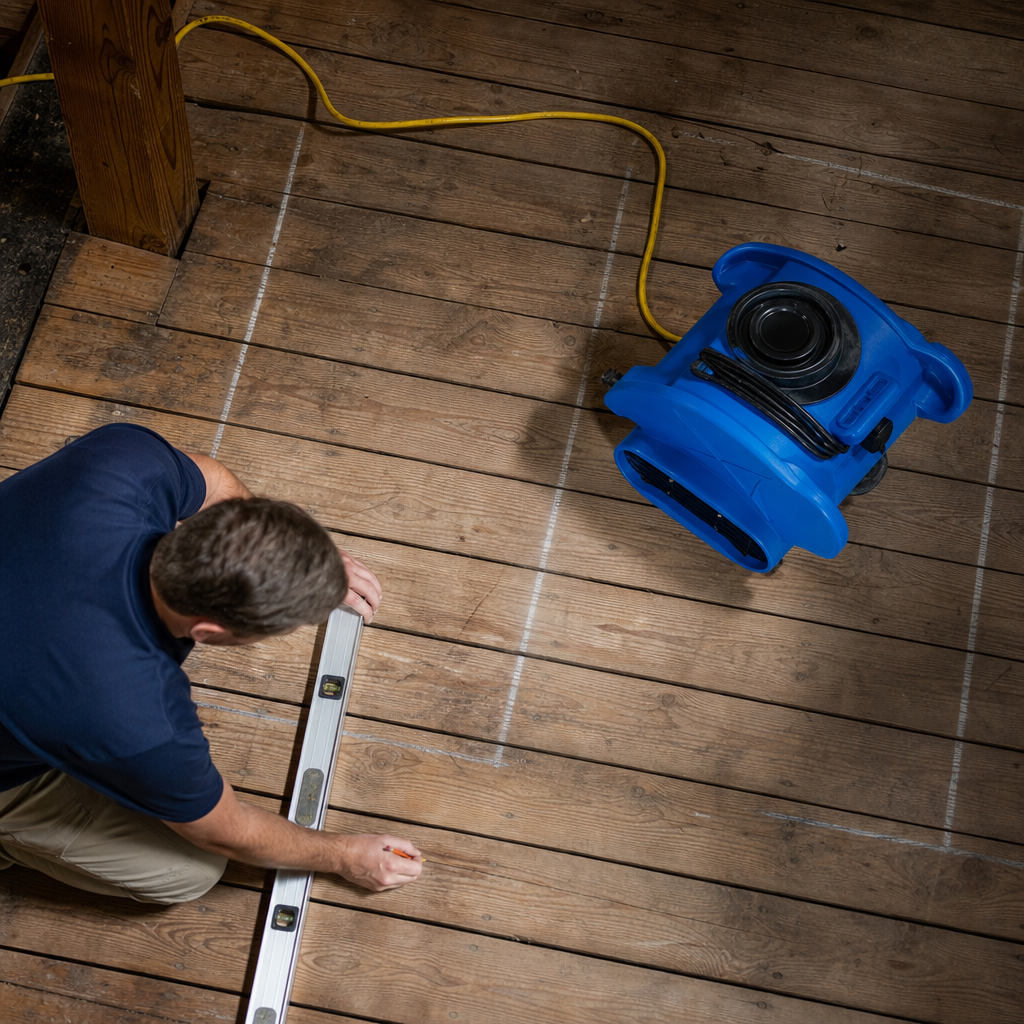
The cost of cleaning up a flooded basement depends on the water source (clean supply line, gray groundwater, or blackwater sewage), the height of the water, and how deeply framing materials are saturated. Clean water extractions generally cost less, while raw sewage overflows require specialized protective gear, deep sanitization, and controlled demolition of porous surfaces.
Note: The following cost ranges are illustrative estimates only:
| Restoration Scope (Illustrative) | Water Category and Source | Illustrative Estimated Cost Range |
|---|---|---|
| Emergency Water Extraction and Surface Drying | Category 1 (Clean supply pipe leak, water heater) | $1,500 – $3,000 |
| Structural Masonry Drying and Dehumidification | Category 2 (Groundwater seepage, surface runoff) | $2,500 – $5,500 |
| Hazardous Sewage Extraction and Decontamination | Category 3 (Municipal sewer backup, storm drain overflow) | $4,500 – $9,500+ |
Navigating Insurance Claims and Coverage
Standard homeowners insurance policies usually do not cover outside flooding, and National Flood Insurance Program (NFIP) coverage for basements is limited. Internal plumbing failures may be covered under standard policies, but outside groundwater or surface flooding generally requires separate flood coverage or specific endorsements. To assist with claims, restoration professionals such as Wade’s Restoration – East New York typically record psychrometric drying logs, maintain photo documentation, and generate line-item scopes using industry-standard pricing formats.[3]
How Structural Materials Are Dried in Basements
Need basement flood cleanup in Canarsie?
We’re available now - call for a fast, free estimate.
Rather than tearing out everything right away, standard restorative drying techniques focus on saving structural materials whenever it is safe to do so.
Targeted Structural Drying
Industry protocols, followed by teams like Wade’s Restoration – East New York, utilize directional airflow systems, industrial desiccant or LGR dehumidifiers, and HEPA air scrubbers to dry saturated wood subfloors, ceiling joists, and studs in place. Removing baseboards and introducing warm, low-humidity air into wall cavities allows technicians to dry hidden framing without unnecessarily stripping drywall or plaster.
Moisture Tracking in Framing and Sill Plates
Wood sill plates resting directly on concrete foundations absorb water during a flood. Industry standard monitoring typically includes:
- Establishing Dry Baselines: Testing unaffected structural wood in dry areas of the building to determine target moisture content (typically between 10% and 14%).
- Continuous Moisture Tracking: Using deep penetration pin probes to verify that moisture content in structural timbers is decreasing steadily.
- Final Verification: Operating drying equipment until structural members reach established dry standards to prevent dry rot and mold growth.
Handling Hazardous Sewage Backups and Flood Sanitation
When severe storms overwhelm municipal combined sewers in Brooklyn, backflow can send Category 3 blackwater surging through basement floor drains, utility sinks, and toilets. This water carries biological pathogens and requires containment protocols under standard industry practices.
Standard Containment and Sanitation Steps
- Isolate the Basement: Sealing off stairwells and HVAC returns using plastic sheeting to help keep airborne contaminants from entering upper residential areas.
- HEPA Negative Air Filtration: Utilizing air scrubbers to exhaust air outside while filtering particulates and odor compounds.
- Biohazard Extraction and Removal: Removing contaminated waste, disposing of non-salvageable porous items like carpet padding, and sanitizing concrete slabs with EPA-registered disinfectants.
Frequently Asked Questions About Canarsie Flood Cleanup
How fast can emergency flood cleanup crews arrive in Canarsie?
Response times depend on weather conditions, local traffic, and technician availability during widespread storm events. Professional restoration companies typically seek to dispatch crews promptly to mitigate structural damage and begin water extraction as soon as conditions allow.
What steps should I take immediately after my basement floods?
First, protect your safety: do not enter standing water if electrical outlets or wiring are submerged, and turn off your main electrical breaker from a dry location if possible. Shut off the main water valve if the flood stems from a plumbing break. Avoid contact with contaminated water, open windows for cross-ventilation if weather permits, and contact a certified restoration professional like Wade’s Restoration – East New York.
Does homeowners insurance cover flooded basement cleanup in Canarsie?
Standard homeowners insurance usually does not cover outside flooding, and National Flood Insurance Program (NFIP) basement coverage is limited. Sudden internal plumbing breaks are typically covered under standard policies, whereas groundwater, surface flooding, or sewer backups generally require specific flood policies or sewer endorsements.
How do professionals prevent mold growth after basement flooding?
Mold spores can begin germinating within 24 to 48 hours in damp environments. Standard industry methods prevent outbreaks by rapidly extracting standing water, applying EPA-registered antimicrobial treatments to structural components, maintaining indoor relative humidity below 50% with dehumidifiers, and filtering indoor air with HEPA filtration.
Why do Canarsie homes experience frequent basement flooding?
Canarsie has a naturally shallow water table, low-lying topography near Jamaica Bay, and aging combined storm-sewage infrastructure that can fill beyond capacity during cloudburst events. In addition, the shared brick party walls in local row houses allow moisture from one flooded cellar to travel into neighboring homes.[4]
Need basement flood cleanup in Canarsie?
We’re available now - call for a fast, free estimate.
Sources
- Resilient Neighborhoods – Canarsie – Department of City Planning – nyc.gov (2013)
- Building Performance: Egress from Floodprone Basements – fema.gov (2022)
- Building Performance: – fema.gov (2022)
- Canarsie Summary Report – nyc.gov
- Bringing Basement Apartments Into the Light – Office of the New … – comptroller.nyc.gov
Related reading: Drywall Water Damage Repair in Bushwick – Call Now-10% Off – On-Site in 60 Minutes – Free Estimate
Related reading: Water Damage Restoration in Williamsburg – Call Now-10% Off – Same-Day Service – Free Estimate
Related reading: Water Damage Restoration in Canarsie | Call Now-10% Off | Same-Day Service | Free Estimate
Frequently Asked Questions
How does Wade's Restoration address water spreading through shared brick party walls in Canarsie?
Wade's Restoration uses thermal imaging cameras and deep-penetration moisture meters to detect moisture traveling across porous masonry party walls. Technicians then deploy targeted directional airflow and commercial dehumidifiers to dry the brick thoroughly, stopping lateral moisture migration and mold from affecting neighboring homes.
What protocols are used for hazardous sewage backups in Canarsie basements?
For Category 3 municipal sewer backups, Wade's Restoration isolates the basement with containment barriers and sets up HEPA negative air filtration to safeguard upper living quarters. Crews extract contaminated blackwater, safely discard unsalvageable porous materials, and sanitize all structural framing and masonry with EPA-registered disinfectants.
How does Wade's Restoration assist homeowners with basement flood insurance claims?
Wade's Restoration supports your claim by maintaining detailed psychrometric drying logs, compiling photographic evidence, and providing line-item estimates using standard industry pricing platforms. This clear documentation simplifies communication with insurance providers and flood adjusters to help maximize your potential coverage.
About the author
 |
Sarah Miller Sarah Miller is a certified environmental hygienist with over 8 years of experience specializing in mold remediation and moisture control. She holds a degree in Environmental Science from Rutgers University and frequently consults on complex structural damage cases in the New York metropolitan area. Her expertise ensures that properties are safely restored and protected against future indoor air quality issues. |
Water damage, flood, or mold emergency?
We’re available now - call for a fast, free estimate.
Call Now - Free Estimate