
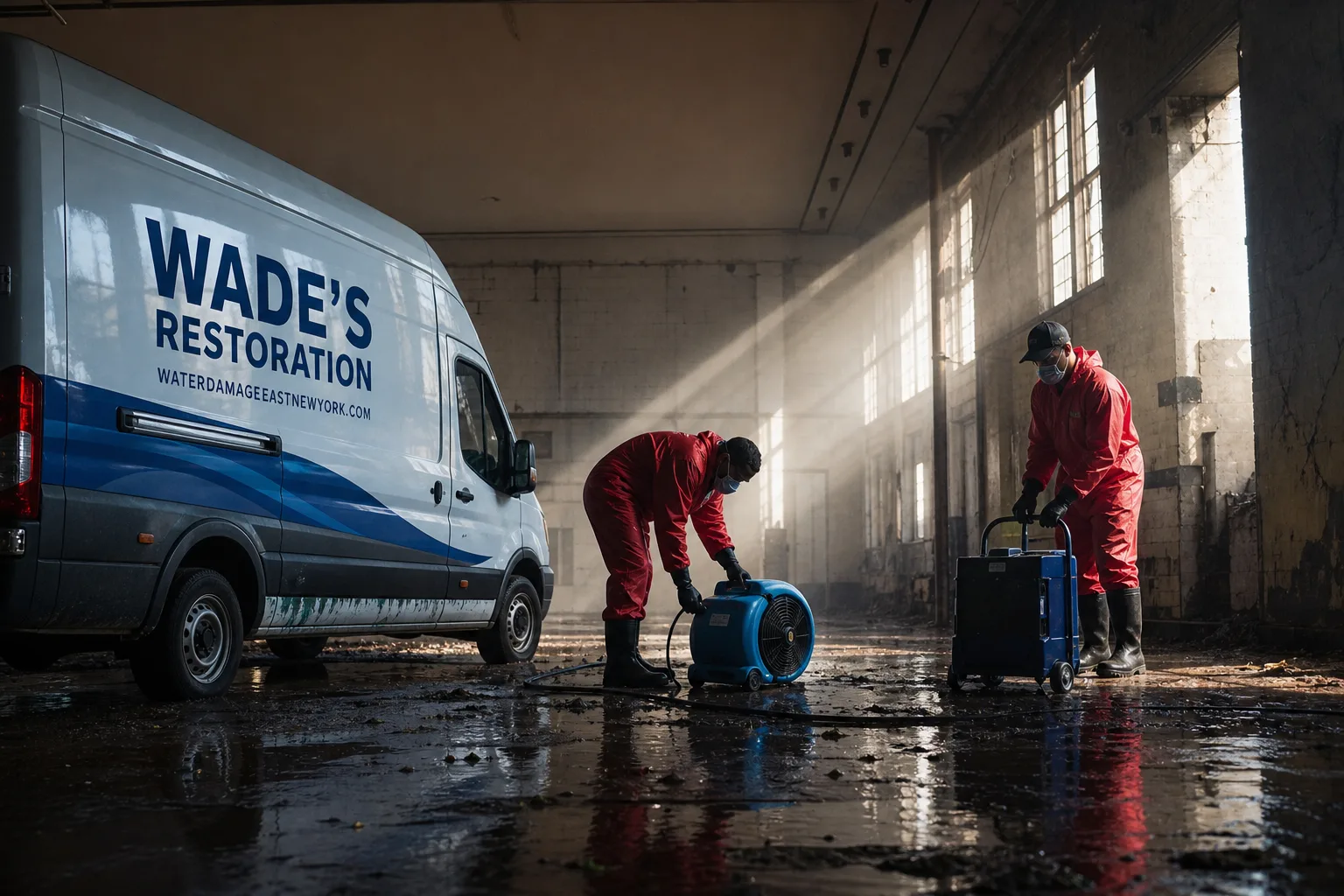
Free visual inspection and a written scope of work before any mitigation begins - photos, moisture readings, and drying logs go in your claim file
The scope we write is the scope we bill. Anything new gets shown to you, in writing, before we touch it.
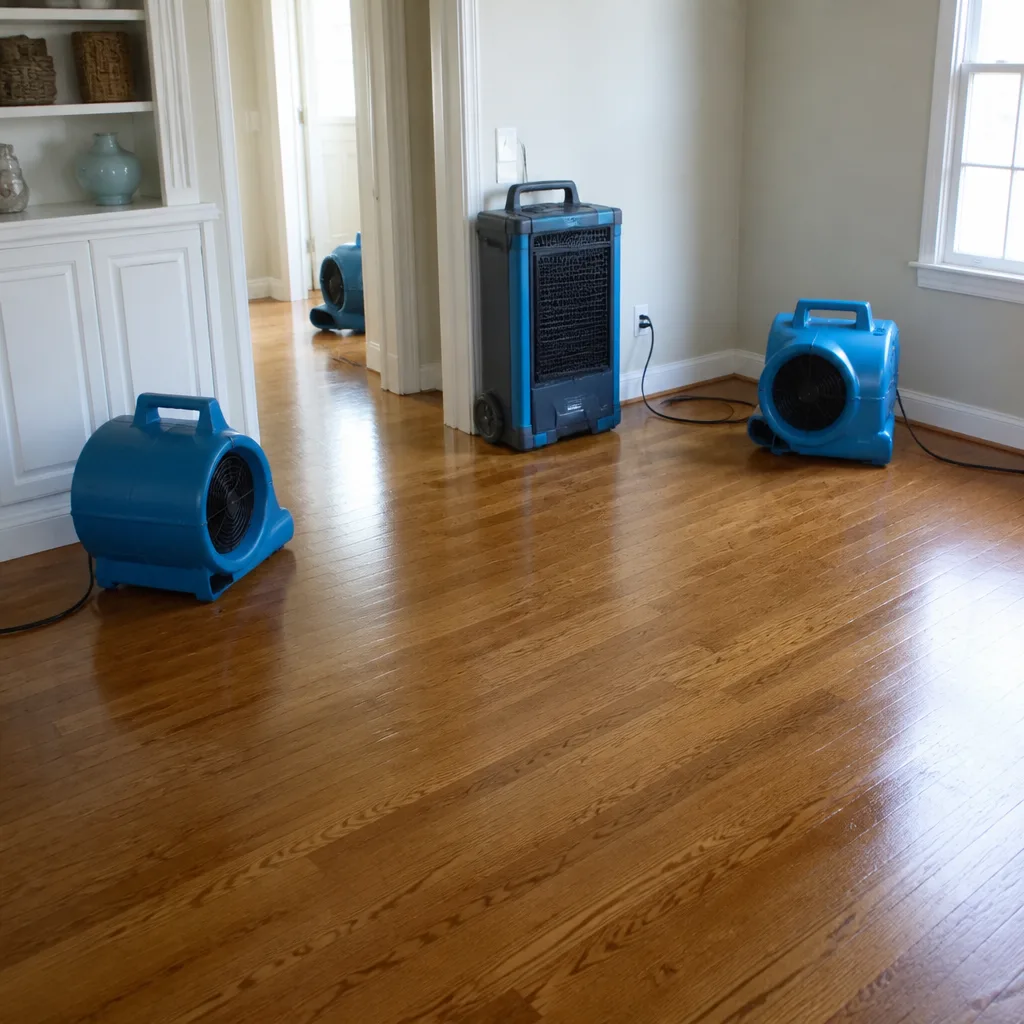
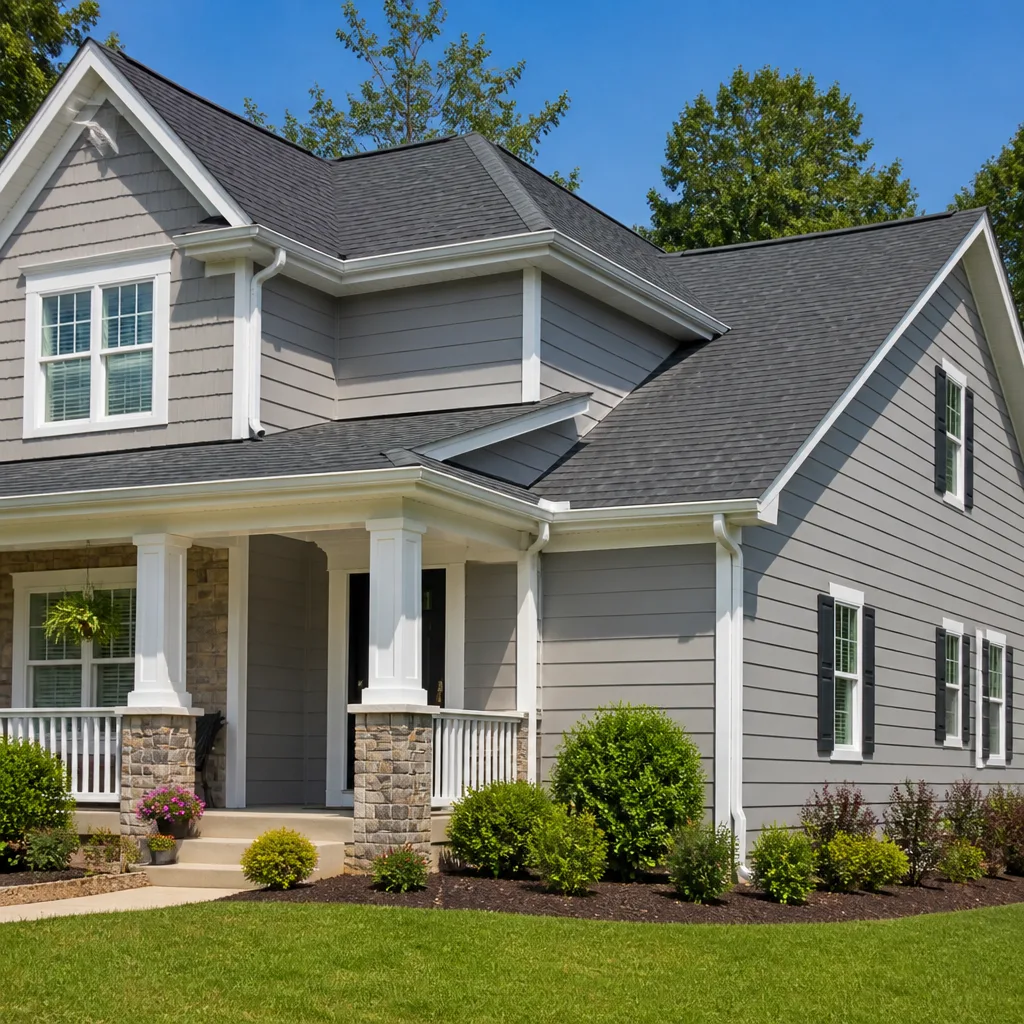
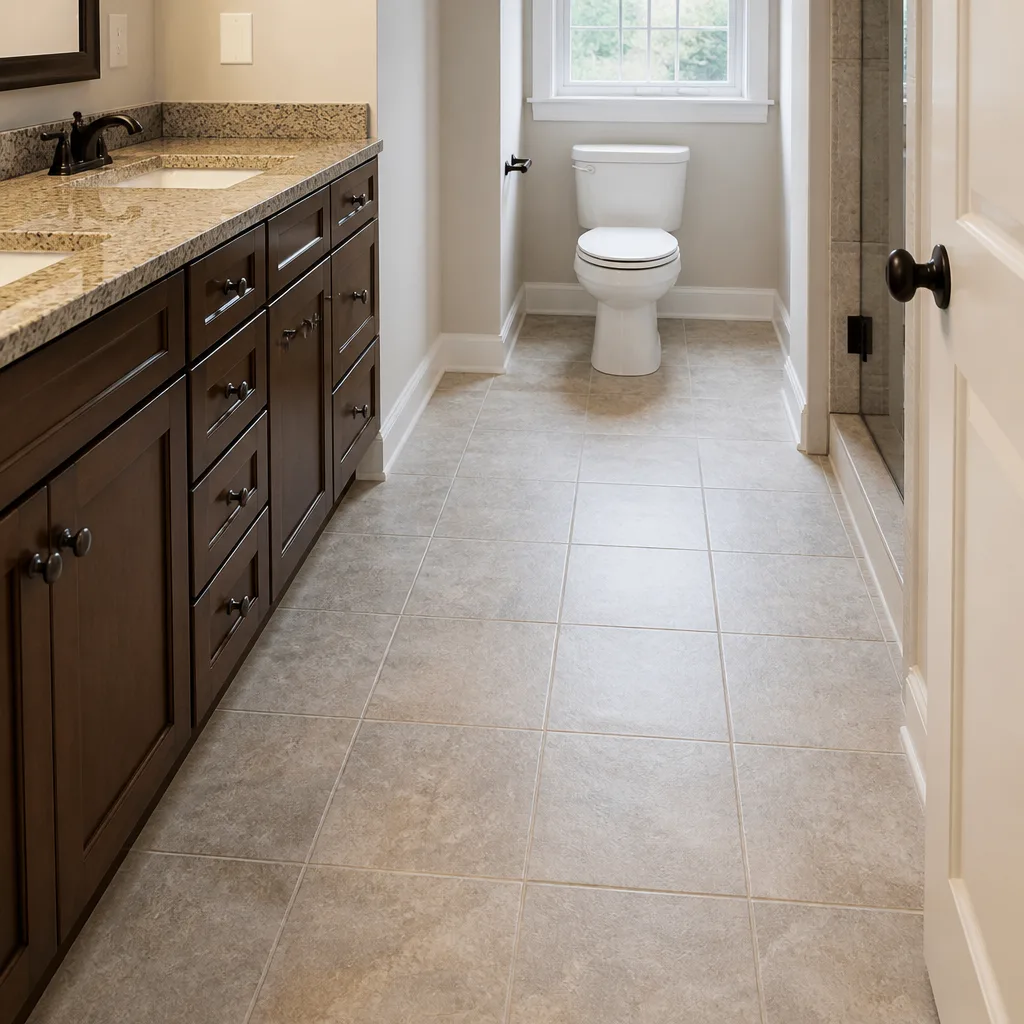
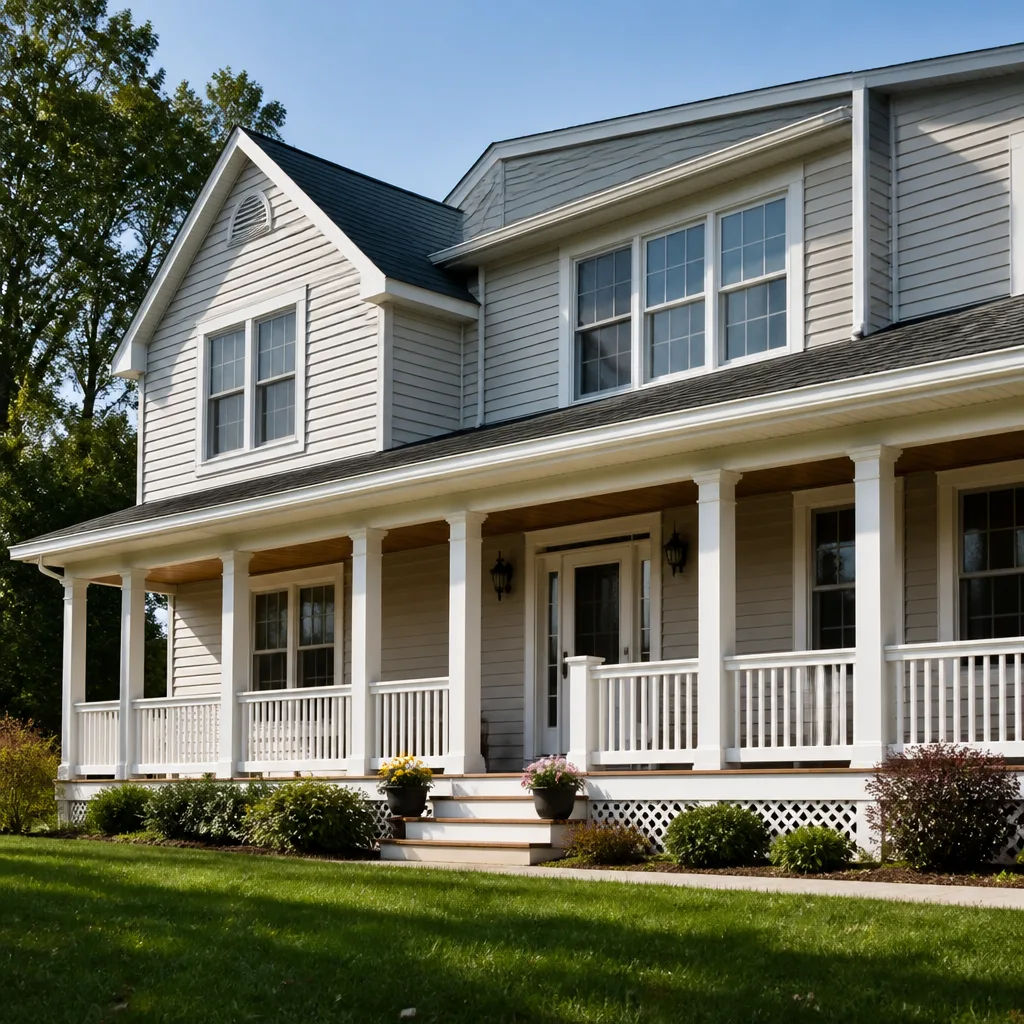
 Before
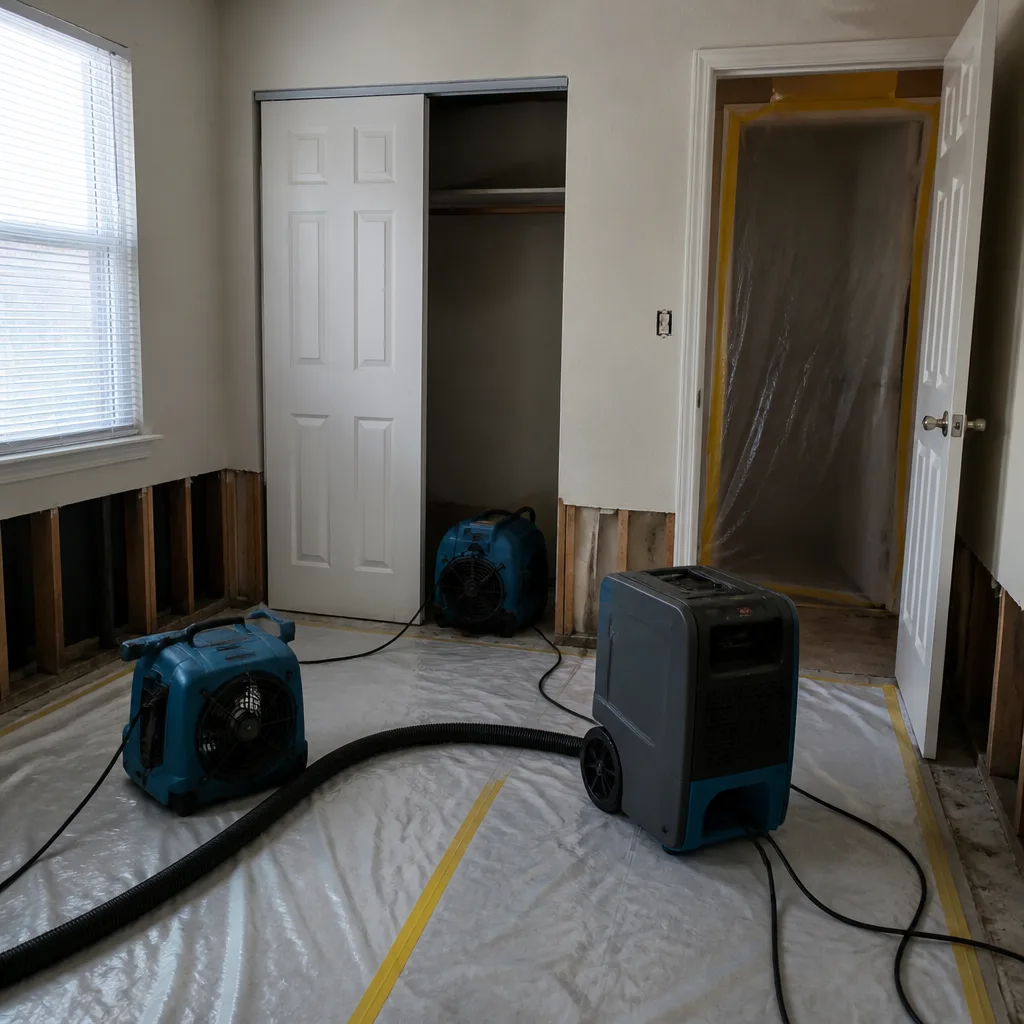 After
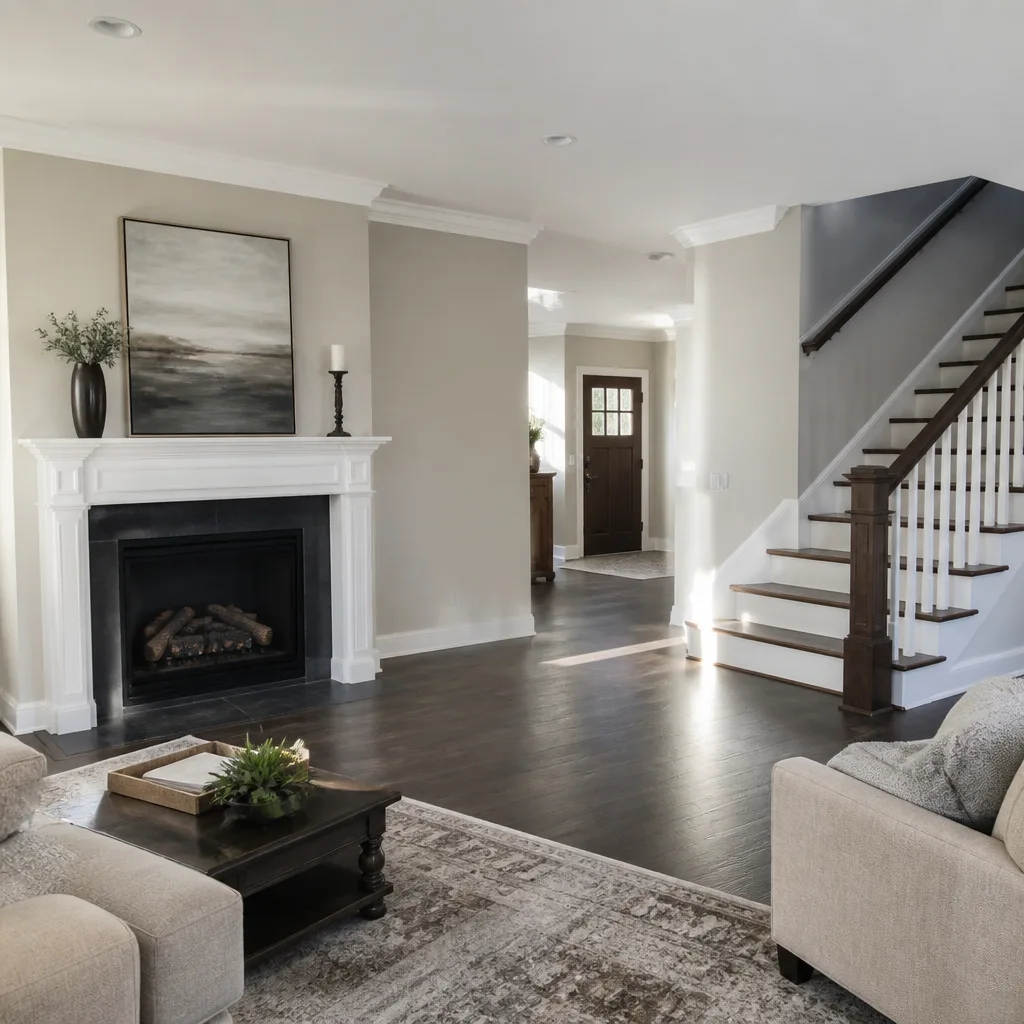
After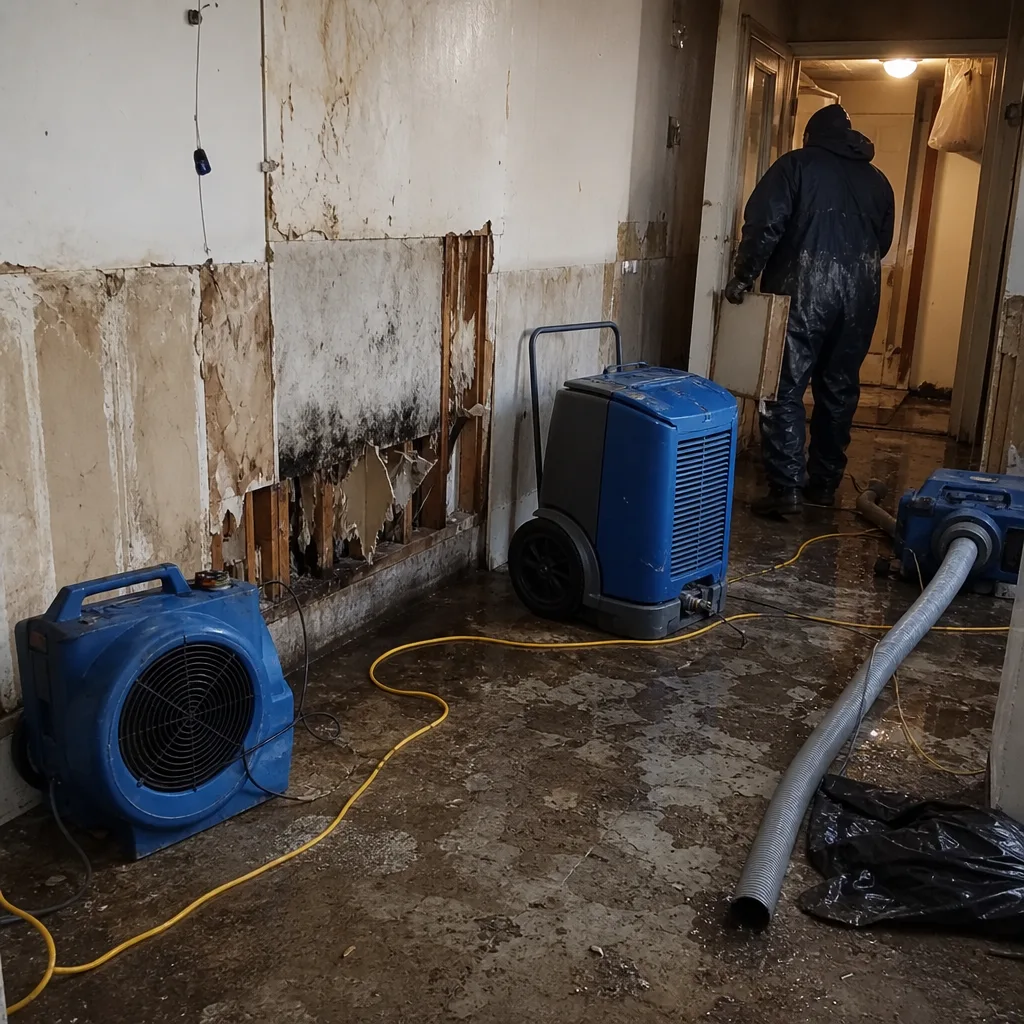 Before
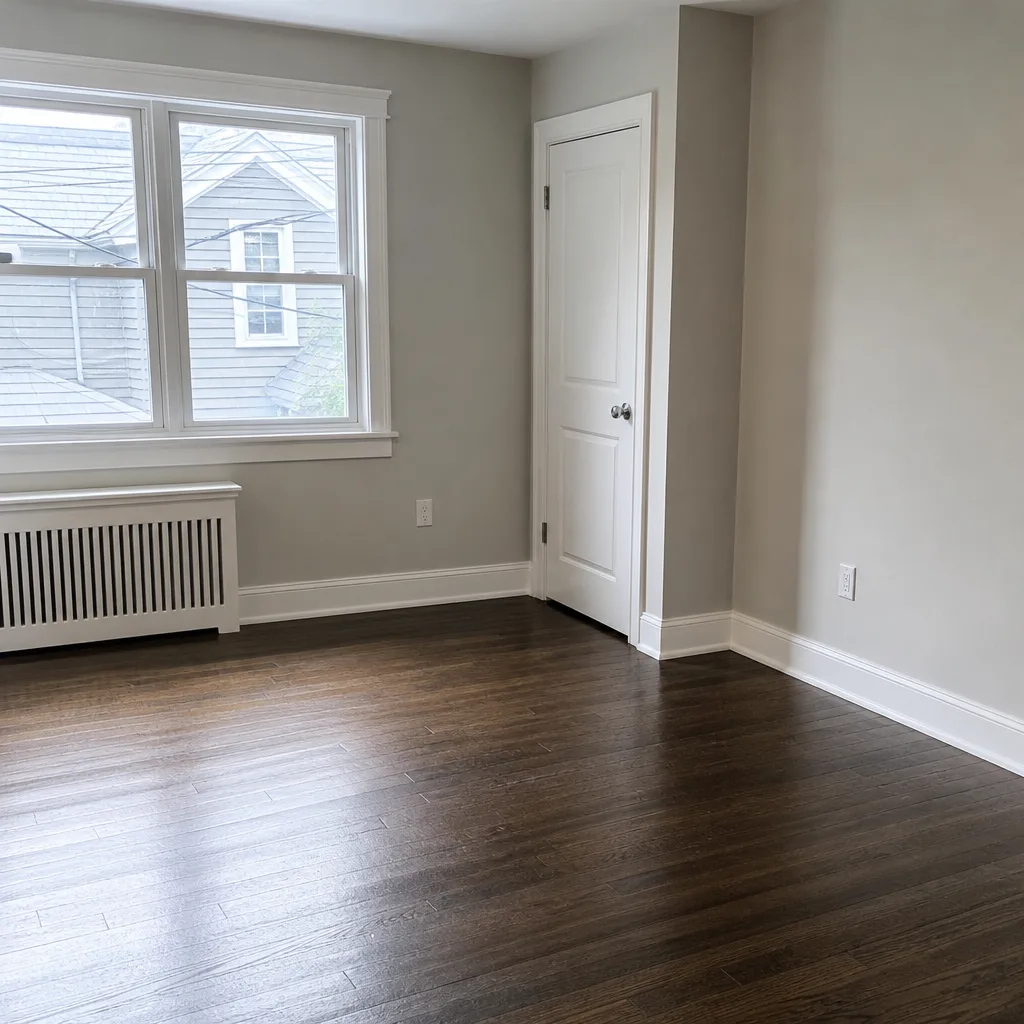 After
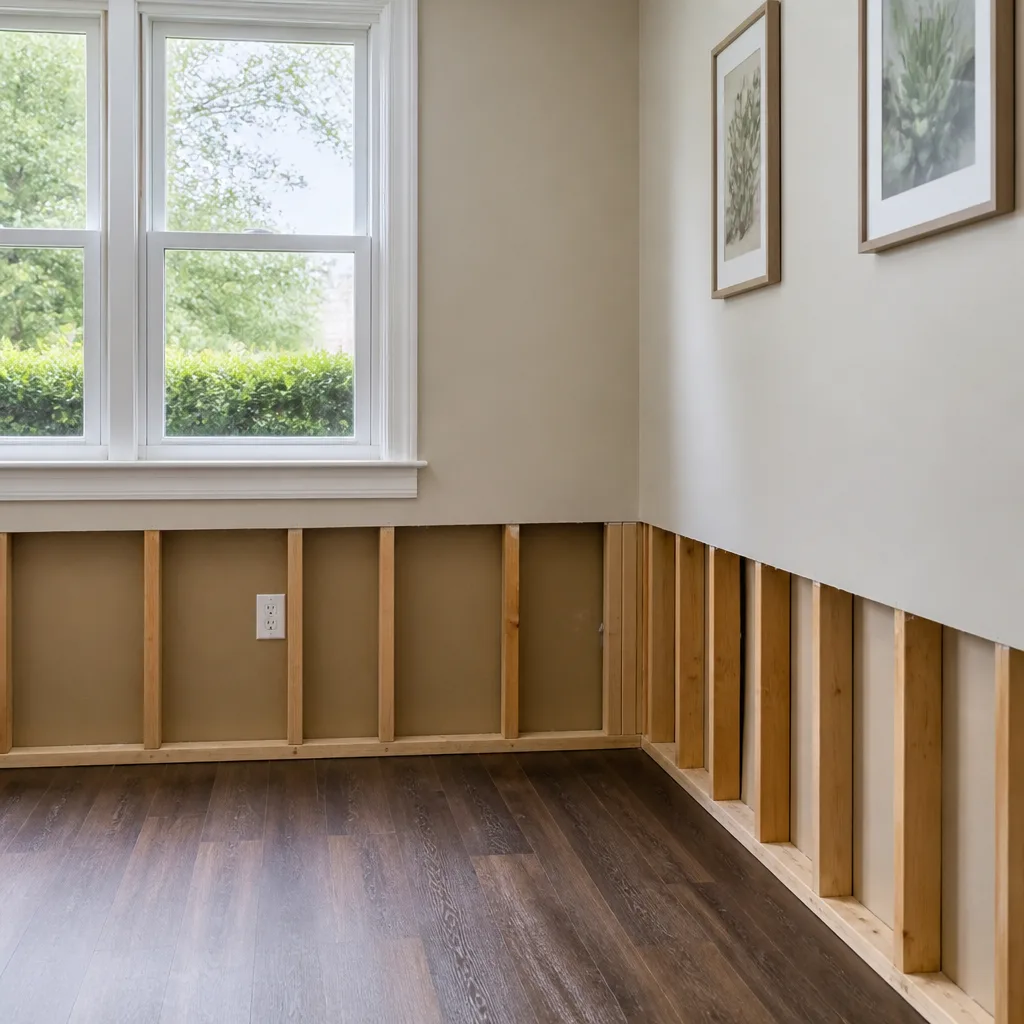
After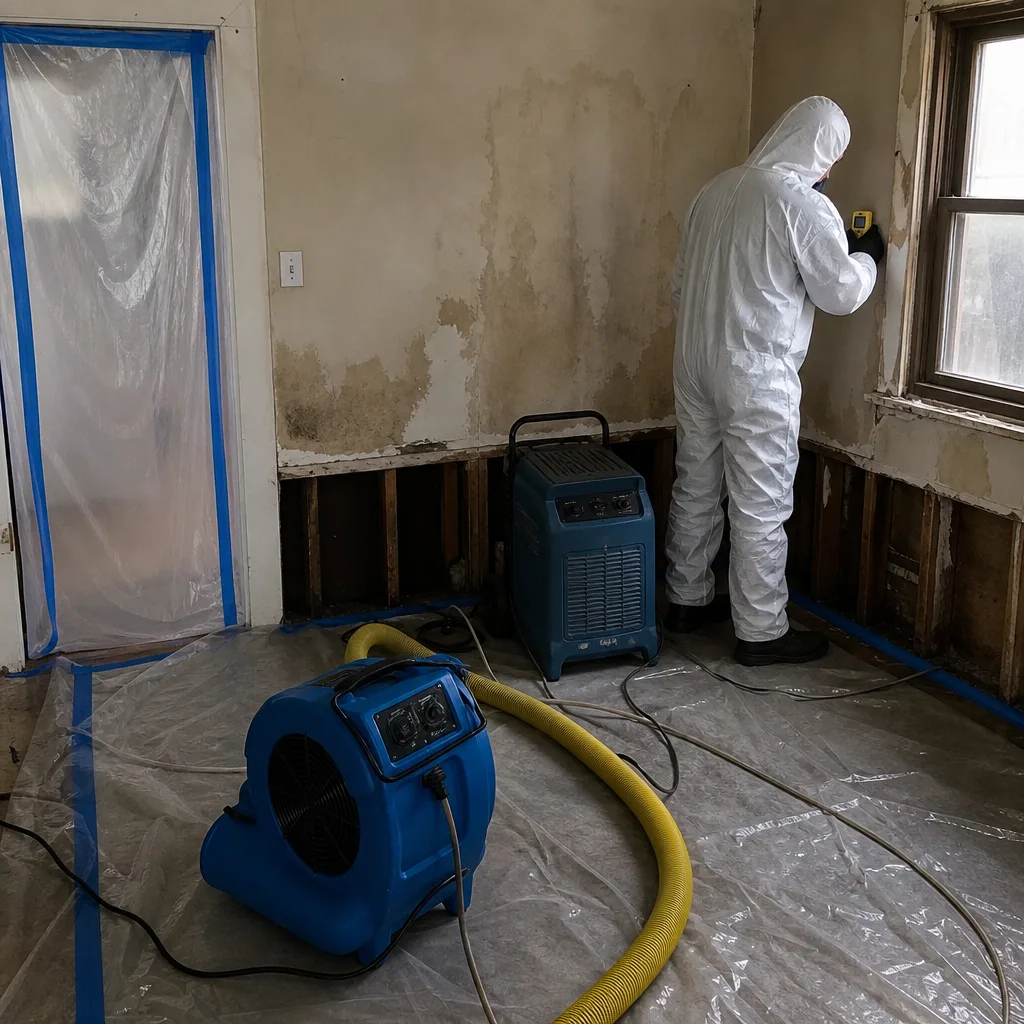 Before
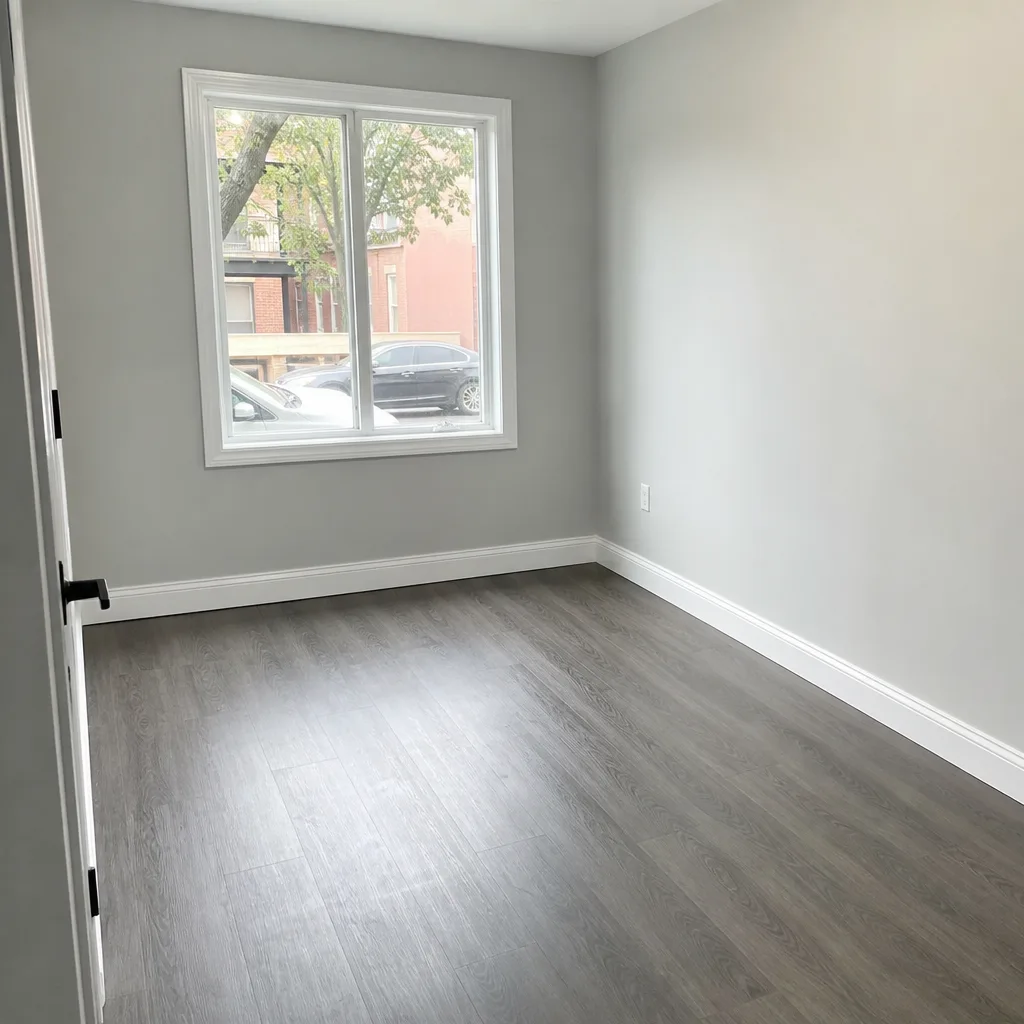 After
After24/7 Emergency Mold Remediation in Bushwick
Mold remediation in Bushwick typically costs $1,800-$6,500 depending on square footage, building type, and whether the moisture source is still active. Most jobs in the neighborhood run 3-7 days from containment to clearance testing. If you’ve got visible mold spreading across a wall or that musty smell that won’t quit, call (363) 300-2771 right now. Wade answers his own phone, and he can have a crew at your door inside 45 minutes. The first hour matters because mold colonies double roughly every 24 to 48 hours once moisture is present. In a Bushwick tenement with shared party walls, that clock is running against your neighbors too. We do free visual inspections, so there’s no charge to find out what you’re dealing with.
Understanding Mold Remediation Severity in Bushwick Properties
Not every mold problem in Bushwick is the same animal. A 12-square-foot patch of surface mold behind a bathroom vanity is a one-day job. A hidden colony feeding on a slow leak inside a converted brewery loft’s original brick walls is a structural event. We classify mold work by three factors: the size of the affected area, the type of material it’s growing on, and whether the moisture source is stopped or still running. In pre-war tenements, mold usually starts behind plaster and lath over brick party walls. Moisture meters calibrated for drywall often give false “dry” readings on those walls, which is why we use thermal imaging and probe meters built for masonry, not just gypsum. In post-1977 rebuilds, the cheaper gypsum board without vapor barriers means humidity moves through walls faster. And in converted lofts along Flushing Avenue and Knickerbocker, grandfathered industrial drains and concrete subfloors hold water invisibly for weeks. Containment, negative air pressure, HEPA air scrubbing, and clearance testing are standard on any job over 10 square feet. Smaller jobs still get containment but sometimes a simpler setup.
Why Bushwick Property Owners Choose Wade’s Restoration
- 45-minute response commitment. Wade heads out from the New York City office and can be inside Bushwick, walking your property, usually before the hour’s up.
- A live person on the phone, 24/7. No answering service. No voicemail at 2 a.m. Wade Ferris has answered his own cell since 2007.
- IICRC-certified crews. Wade’s team holds the AMRT (Applied Microbial Remediation Technician) and WRT (Water Restoration Technician) certifications, plus IFA and RIA affiliations.
- Free visual inspection. We won’t charge you to come look. A written estimate follows only if you want one.
- Direct insurance billing. We bill your carrier directly and deal with the adjuster ourselves. You don’t play telephone between two sides.
- One team from first cut to final coat. Extraction, drying, mold removal, and the reconstruction that follows. The same people who opened the wall close it.
Our Mold Remediation Process
Inspection & Assessment
We walk the property with thermal imaging and moisture probes built for the materials you actually have, be that brick, plaster, gypsum, or concrete. In a Bushwick loft, that means checking original floor drains and grandfathered plumbing stacks. In a tenement, it means reading moisture behind plaster over brick, which standard meters miss.
Containment & Negative Air Setup
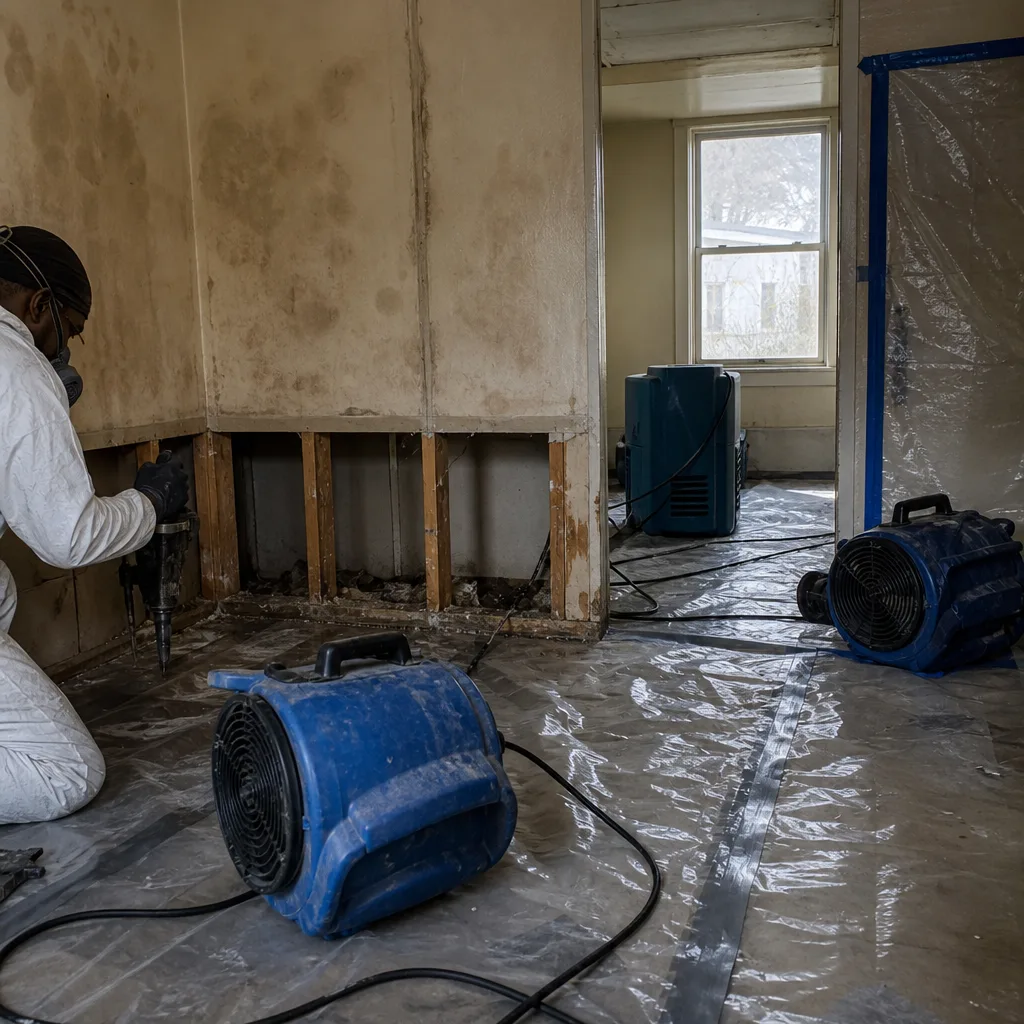
We seal the affected area with 6-mil poly and run HEPA-filtered negative air machines to keep spores from moving into the rest of your home. For shared-wall tenements, this step matters double: your neighbor’s air is 8 inches of brick away.
Drying & Dehumidification
Dri-Eaz dehumidifiers and Phoenix air movers run continuously once containment is set. Wade takes moisture readings every single day and hands you the full log at the end. That’s a practice almost nobody else in the trade does, and it’s why our drying actually verifies instead of guesses.
Removal & Cleaning
Affected drywall, insulation, and porous materials come out. Hard surfaces get HEPA vacuuming and antimicrobial treatment. On brick, we wire-brush and treat the masonry itself, not just the surface.
Air Quality Restoration
HEPA air scrubbers run through the final days of the job. We test the air before we pull containment. If the spore count hasn’t dropped to normal indoor levels, we don’t leave. It’s that simple.
Repairs & Restoration
We rebuild what we opened. Drywall, paint, trim, flooring as needed. The 90-Day Done Right Promise applies in writing: if it’s not done right, Wade makes it right. One call brings him back.
Need Emergency Mold Remediation in Bushwick Now?
Crews minutes away, answering live 24 hours a day. The sooner we start, the less it costs.
Working With Your Insurance Company
Insurance coverage for mold remediation in Bushwick comes down to the source of the water. If a covered peril caused it, say a burst supply line behind a wall, the mold remediation tied to that loss is usually covered. If it’s from long-term humidity or a pre-existing leak, it usually isn’t. Either way, Wade deals with your adjuster directly. From the first hour, we document everything: photos room by room, moisture readings with date and time stamps, and a line-item scope of work your adjuster can actually read. You don’t relay information between two parties. You don’t argue about protocol. You hand us the claim number and we handle the rest.
What We Provide Your Insurer
- Thorough documentation of the loss
- Photos of all damage, room by room
- Moisture readings and drying logs
- A detailed, line-item scope of work
- Direct coordination with your carrier
Built for Bushwick’s Loss Calendar
Bushwick’s mold season doesn’t follow a simple arc. January and February bring deep freezes that crack supply lines in unheated tenement stairwells and loft utility closets. Water follows the path of least resistance, which in a 1920s walk-up means down through three floors of plaster before anyone sees it. Spring thaw sends groundwater into basement apartments along the Jefferson Street corridor, where old cast-iron drains backed up by street-level root intrusion meet a season’s worth of melt. Summer thunderstorms dump water on Bushwick’s flat industrial-style roofs, which pond water because they were never pitched for drainage. That water finds its way to the top-floor units first. And the post-1977 rebuilds along Broadway and Bushwick Avenue, with their cheaper gypsum board and absent vapor barriers, turn any humidity spike into a mold problem in the shared walls. We know these patterns because we’ve worked them for years, in every season, in every building type.
Mold Remediation Across Bushwick’s Neighborhoods
Bushwick isn’t one neighborhood. It’s a patchwork of building eras stitched together block by block, and mold behaves differently in each. Around Maria Hernandez Park, the solid pre-war tenements with original plaster and cast-iron stacks hide moisture behind walls that newer moisture meters misread. Wade’s crew knows to trust thermal patterns and masonry probes here. Along Knickerbocker Avenue and the blocks around the Myrtle Avenue M line, the post-1977 fire rebuilds have a different problem: gypsum board without vapor barriers means mold moves fast through shared party walls. One apartment’s slow leak becomes the neighbor’s mold outbreak in a matter of weeks. Over by Flushing Avenue and the old brewery district, converted factory and brewery lofts are their own world. Those buildings still have original industrial floor drains and plumbing stacks grandfathered through residential conversion. The open concrete floors have no drainage slope, so water ponded against perimeter walls feeds mold that can spread across thousands of square feet before a single visible sign shows. We treat a loft on Bogart Street differently than a tenement on Wilson Avenue, because the buildings demand it.
Specialized Mold Remediation Services We Offer in Bushwick
Mold Inspection & Testing
A proper inspection in Bushwick means knowing what you’re looking at before you open a wall. We use thermal imaging to find cold spots, moisture probes to read actual moisture content, and air sampling when we need to know what’s floating. In tenements, we check party walls for moisture migration from adjacent units. In lofts, we trace drain stacks and check concrete subfloor moisture. You get a written report with numbers, not a vague “you’ve got mold.” A mold inspection in Bushwick typically runs $300-$600, and we credit that toward remediation if you hire us.
Mold Removal
Mold removal in Bushwick means full containment, negative air, and physical removal of the affected materials. Scrubbing surface mold off a wall doesn’t get the roots out of the gypsum or plaster behind it. In pre-war tenements, that often means opening a plaster wall, treating the brick behind it, and rebuilding with proper ventilation. In lofts, it means cutting out the affected drywall, checking the concrete subfloor underneath, and drying it before closing anything back up.
Black Mold Remediation
Stachybotrys, the “black mold” people worry about, grows on materials that have stayed wet for a long time, usually cellulose-heavy materials like drywall paper or old wood. Bushwick’s pre-war plaster over brick doesn’t feed black mold the way newer drywall does, but the gypsum board used in post-1977 rebuilds does. We treat it the same as any mold: contain it, remove it, dry the space, and test the air before we leave. The color doesn’t change the protocol, but the building type changes the approach.
Air Quality Restoration
After mold removal, the air in your home can still carry spores. We run HEPA air scrubbers for days, sometimes longer in tenements where shared walls can re-introduce spores from a neighbor’s unresolved problem. Final air testing should read clean. If it doesn’t, we don’t sign off. Air quality restoration as a standalone service runs $400-$900 depending on square footage and how many scrubbers the space needs.
Crawl Space Treatment
Some of Bushwick’s older tenements and converted buildings have crawl spaces under the front or rear extension. Those spaces are dark, damp, and rarely vented. Moisture & humidity control there means sealing the soil with a vapor barrier, running a dehumidifier sized to the space, and treating any mold on the joists. The alternative is moisture wicking up into the first-floor apartment for years. Crawl space treatments in Bushwick typically run $1,500-$4,000 depending on access and square footage.
What happens when you call
- 1
A real person answersNo phone trees - you reach a local pro.
- 2
You get an upfront price rangeHonest numbers before anyone is dispatched.
- 3
A background-checked tech heads outLicensed & insured, dispatched right away.
- 4
You approve before work beginsNothing starts until you say go.
Mold Remediation Costs in Bushwick, NY
A small contained mold job in Bushwick, say a bathroom wall or a closet, runs $1,800-$3,500. A mid-size job, one full room with containment and air scrubbing, sits at $3,500-$6,500. A converted loft with thousands of square feet of open floor and a hidden drain leak can hit $10,000 or more, because the affected area is so much bigger before anyone sees it. What moves the price: the size of the affected area, accessibility (basement tenement crawl spaces add labor), whether the moisture source is fixed or still leaking, and whether the job needs full reconstruction after removal. Insurance-covered jobs typically include reconstruction in the scope. Out-of-pocket jobs often mean we do the removal and drying, and you paint the wall yourself. Either way, the free visual inspection gives you a written scope before any money changes hands. No charge to come look. No obligation after.
We Also Serve Cities Near Bushwick
Wade’s Mold Remediation crew works regularly in the neighborhoods and cities around Bushwick, and we know the building types and failure patterns in each. We serve East New York with its post-war brick rowhouses, Jamaica with its mixed single-family and attached stock, Canarsie with its mid-century homes, and Glendale with its quieter residential blocks. If you’re anywhere near Bushwick and you’ve got a mold problem, call (363) 300-2771.
Serving Bushwick, NY - Our Local Coverage Area
We’re based in the Bushwick area and know this community well. Use the map below to see our service coverage - if you’re nearby, we can almost certainly help.
Bushwick Mold Remediation Questions, Answered
Why does Bushwick have more recurring mold problems in converted lofts than in the tenements?
Converted lofts in Bushwick have original industrial floor drains and plumbing stacks that were grandfathered through residential conversion permits, which means water can travel through non-standard paths and sit in concrete subfloors for weeks before anyone notices. The open floor plans spread moisture across thousands of square feet with no walls to stop it. Tenements, by contrast, compartmentalize water into rooms, making it easier to catch early. Call (363) 300-2771 if you suspect a hidden leak in a loft space.
What’s the proper drying protocol for mold in a Bushwick pre-war tenement with cast-iron drains?
The proper protocol is moisture mapping with masonry-capable probes, not standard drywall meters, because plaster over brick reads falsely dry. You need containment, negative air, and drying equipment sized to the actual moisture load in the brick, which dries slower than gypsum. Wade’s crew uses thermal imaging to find where the water actually is, then confirms with daily readings until the log shows dry. That log is yours at the end.
Can you remediate mold in a Bushwick loft without removing the original concrete floor if it wasn’t sealed?
Yes, in most cases. The concrete subfloor is porous, so it holds moisture, but it dries under the right conditions. We run Dri-Eaz dehumidifiers and Phoenix air movers over the slab while containment is up, and we monitor moisture content day by day. If the concrete was never sealed, we may recommend sealing it after drying to prevent future absorption. Full slab removal is almost never necessary for mold.
How fast does mold grow after a water event in an attached Bushwick tenement with shared party walls?
In an attached tenement, mold can colonize within 48 to 72 hours on drywall and other cellulose materials, and the shared brick party walls wick moisture between units. That means your neighbor’s slow leak can become your mold problem without any water entering your apartment directly. Speed matters more in attached housing than in detached homes.
What’s the difference between Category 1 and Category 3 water for mold risk in Bushwick’s basement apartments?
Category 1 water is clean: a burst supply line or a tub overflow. It carries low mold risk if dried within 48 hours. Category 3 is grossly contaminated: sewage backup, street water, or standing greywater. That water carries pathogens and organic matter that feed mold aggressively. In Bushwick basement apartments along Jefferson Street and around the M line, sewage backups through aging drain lines are the more common Category 3 source. Get it handled fast, and get containment up before anyone opens a wall.
How fast can someone get to my Bushwick apartment to look at mold?
Wade answers his own phone, and he can have a crew at your door inside 45 minutes for a visual inspection. That’s not a call-center promise. That’s a text from a guy in a truck heading your way. Inspection is free. Call (363) 300-2771.
Will my insurance cover mold remediation in Bushwick?
It depends on the source. A sudden, covered event like a burst pipe causing mold is generally covered. Long-term humidity or a leak that’s been running for months usually isn’t. Wade deals with your adjuster directly and documents everything from hour one, so if coverage applies, we make it easy to prove. If it doesn’t, we give you a straight scope so you know exactly what out-of-pocket looks like before we start.
Can we stay in our Bushwick apartment during mold remediation?
For small contained jobs, usually yes. For larger jobs with full containment and negative air, especially in tenements with shared walls or in basement units with Category 3 water, it’s often safer to stay elsewhere for a few days. We tell you the truth either way. We’re not here to sell you a hotel stay you don’t need, and we’re not here to let you sleep next to an open mold wall because it’s easier.
Our crew recently handled a mold remediation in a converted brewery loft off Flushing Avenue after a slow leak from a grandfathered industrial drain stack soaked the concrete subfloor for weeks before anyone noticed. We set up full containment with negative air pressure, used moisture mapping and structural drying with Dri-Eaz dehumidifiers and air movers, and removed Category 2 water-damaged drywall that had been installed over the original brick. The open floor plan meant the affected area was over 3,000 square feet, a scope of work that would rarely occur in a Bushwick tenement. That’s the difference between building types in this neighborhood, and it’s why you don’t want a company that treats them all the same.
If you’ve got mold in Bushwick, or you think you might, call (363) 300-2771. Wade Ferris answers. He’ll come look for free, give you a straight answer, and if there’s work to do, you’ll get a written scope before a single wall is opened. The 90-Day Done Right Promise applies in writing, and his name is on the truck.
Written by Wade Ferris, Owner at Wade’s Restoration, serving Bushwick since 2007.